Government Greenlights Chinese Embassy in London Despite Widespread Opposition
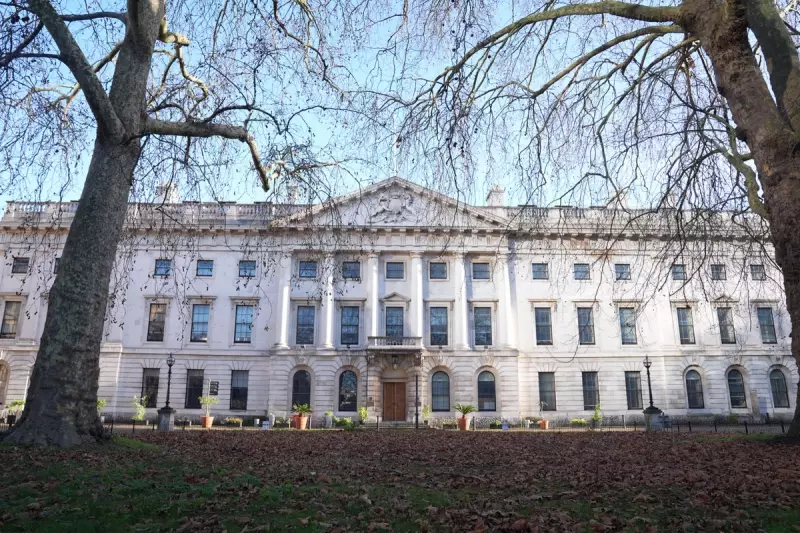
The UK Government has granted permission for China to construct a substantial new embassy in central London, a decision that has ignited significant controversy and could potentially lead to protracted legal challenges. Local Government Secretary Steve Reed formally approved the plans for the building at Royal Mint Court in Tower Hamlets, east London, situated near the historic Tower of London.
Security Concerns and Political Backlash
This approval comes despite vehement criticism from Members of Parliament across the political spectrum and various campaign groups, who have raised serious alarms about the potential for the embassy to serve as a base for espionage activities and security crackdowns. The Labour-led Joint Committee on the National Security Strategy had previously urged ministers to reject the application, warning that the embassy, which would be the largest of its kind in Europe, could effectively "create a hub for expanded intelligence-gathering and intimidation operations."
Specific concerns highlighted by critics include the proposed inclusion of what are described as hidden rooms within the complex and the site's concerning proximity to critical communication cables that are essential to the operational integrity of the UK's financial sector. In a notable development, MI5 Director General Sir Ken McCallum, in a joint letter with GCHQ's director to senior ministers, cautioned that while extensive mitigation measures had been developed, it is not realistic to expect to be able wholly to eliminate each and every potential risk associated with foreign diplomatic premises.

Government Justification and Diplomatic Implications
Mr. Reed defended the decision, stating it followed a "quasi-judicial process" based on evidence and established planning regulations. A Government spokesperson emphasised that the establishment of embassies is a normal facet of international relations and asserted that national security remains the paramount duty, with intelligence agencies having been involved throughout the entire planning process. The spokesperson also pointed to clear security advantages in consolidating China's seven disparate embassy sites across London into a single, large building, arguing it allows for more focused risk management.
The decision is seen as removing a significant diplomatic obstacle in the UK's relationship with President Xi Jinping's government. This clearance paves the way for Prime Minister Sir Keir Starmer to undertake a widely anticipated official visit to China, which political observers suggest could occur within the coming weeks.
Local Opposition and Legal Challenges
Residents living near the Royal Mint Court site have expressed fierce opposition and are mobilising to challenge the approval. Mark Nygate, treasurer of the Royal Mint Residents' Association, declared that "the residents are determined to keep fighting today’s decision." Critics of the scheme are already preparing to mount a legal challenge, with local groups fundraising to initiate a judicial review against the project.
The political reaction has been sharply critical. Senior Conservative figures, including shadow communities secretary Sir James Cleverly, labelled the move a "disgraceful act of cowardice," while shadow foreign secretary Dame Priti Patel accused the Prime Minister of having "sold off our national security." The Liberal Democrats described it as Sir Keir's "biggest mistake yet," and Reform UK stated the decision "represents a serious threat to national security."
Dame Priti also linked the approval to the ongoing detention of dual British-national Jimmy Lai in China, calling it unacceptable and a potential failure of diplomacy if his release is not secured during the Prime Minister's forthcoming visit. In response, Government ministers reiterated their strong criticisms of Mr. Lai's detention and commitment to pursuing his case on humanitarian grounds.
With the Government stating the decision is final unless successfully overturned in court, the stage is set for a fresh round of legal and political wrangling over this strategically and diplomatically sensitive site in the heart of the capital.