In the quiet outskirts of Honiara, a subtle but significant contest for influence is unfolding. Dozens of local community leaders gather in a church hall, not for a religious meeting, but for a training session orchestrated by Chinese police and their Solomon Islands counterparts. This scene encapsulates a broader geopolitical struggle, where China and Australia are vying to become the dominant security partner for this strategically vital Pacific nation.
Divergent Strategies in a Permanent Contest
For participants like community leader Ben Angoa, the appeal of China's approach is tangible. Alongside the training, China has provided solar lighting, sewing machines, footballs, and even noodle-making lessons. "We really love China," Angoa told The Guardian in late 2025, praising the direct "impact in the community" that he feels is lacking from other partners.
This community-focused engagement stands in stark contrast to the formal, institution-building strategy long favoured by Australia. Associate Professor Graeme Smith, a China and Pacific scholar at the Australian National University, notes the fundamental difference. "Australia's approach is through formal partnerships and that excludes the involvement of community leaders," he explains. "This approach obscures the fact that most disputes are managed by community leaders and not the formal police."

Cars, Advisers and a History of Involvement
Australia has historically viewed the Solomon Islands as within its sphere of influence. Following a collapse of law and order in the early 2000s, Canberra spearheaded a regional assistance mission, investing over $2.3 billion according to Lowy Institute analysis. The mission concluded in 2017, with a sense of accomplishment.
However, the landscape shifted dramatically. In 2019, Honiara switched diplomatic recognition from Taiwan to China, and by 2022, had signed a contentious security pact with Beijing. The arrival of Chinese police trainers sent ripples of anxiety through Canberra.
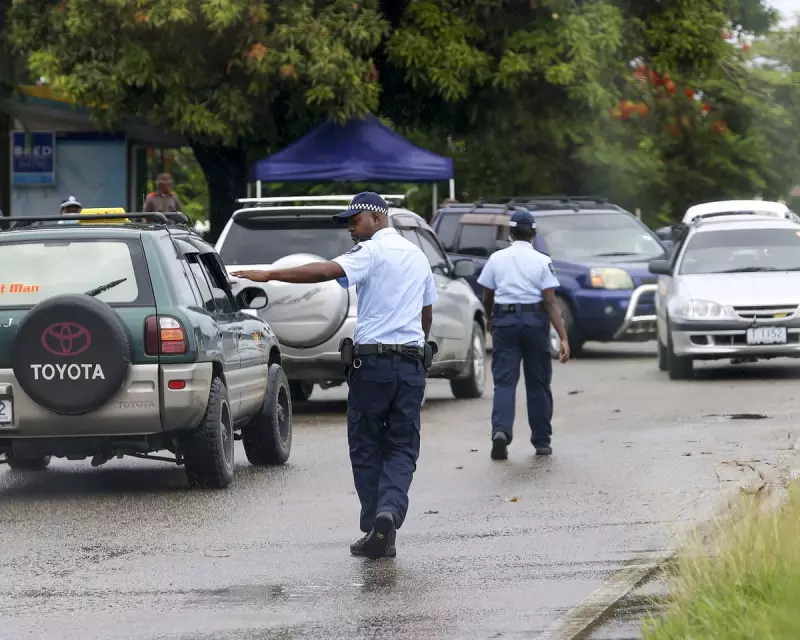
On the surface, both nations offer similar support. Both provide rotating police advisers and have donated so many vehicles that the Honiara police headquarters resembles a used car lot. Both supply weapons and host Solomon Islands officers for training abroad. Australia's programme, run by the Australian Federal Police, is budgeted at over $170 million, with a further $190 million pledged in 2024, though this initiative has reportedly stalled.
Yet, the scale and style differ. Beijing fields far fewer personnel—approximately a dozen trainers compared to Australia's larger contingent. But China's training sessions, rolled out across Honiara's communities, address local grievances like domestic violence, drunkenness, and youth unemployment. Professor Smith describes this as "the classic Chinese urban policing model which mixes control with paternalism."
The Battle for Hearts and Minds
Within Solomon Islands, opinions on which partner is more effective remain deeply divided. For Daniel Waneoroa, the Minister for Rural Development, international support is a "win-win," though coordinating multiple partners is challenging.
Former politician Felix Bosokuru believes China's methods are working. "Australia needs to remix the record and stop playing the same song," he argues, admitting his own scepticism turned to appreciation after attending a community session.
Senior opposition figure Peter Kenilorea Jr sees both value and farce in the rivalry—"so many cars"—but acknowledges critical Australian support, such as providing Guardian-class patrol boats. However, he warns of internal rifts within the police force, with senior figures perceived as pro-Beijing or pro-Canberra. "There is a battle for hearts and minds going on," Kenilorea states, pointing to Australian billboards recently erected around Honiara. When asked who is succeeding, his answer is blunt: "China is, definitely."
As both Pacific powers continue their engagement, the ultimate verdict on which policing model—and which geopolitical patron—will prevail in the Solomon Islands remains, for now, profoundly uncertain.