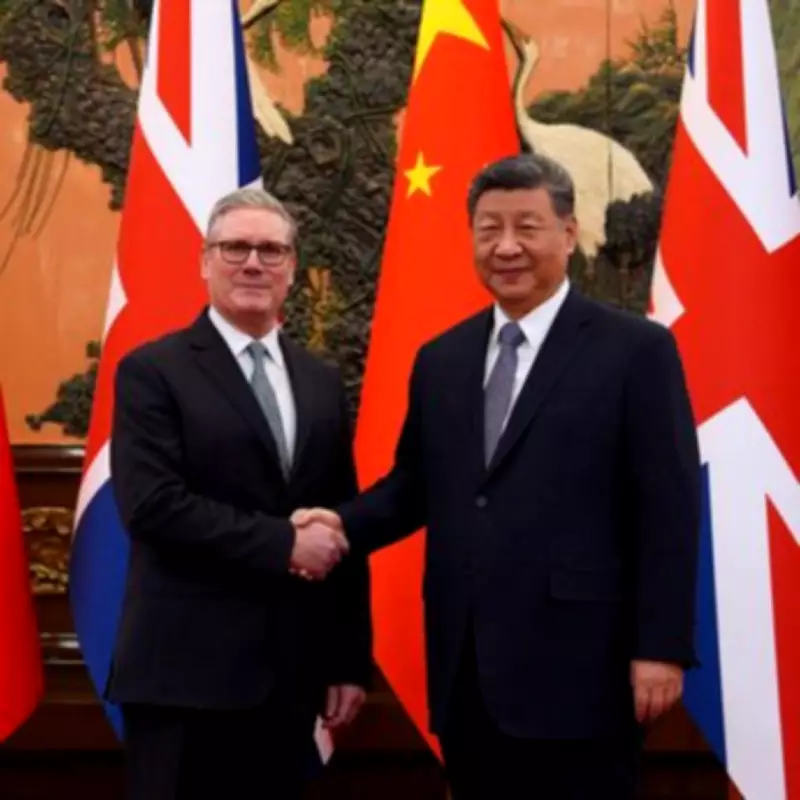
In a significant diplomatic development, China has officially lifted its ban on British politicians entering the country, Prime Minister Keir Starmer confirmed today. The announcement follows high-level talks between Starmer and Chinese President Xi Jinping during the Prime Minister's visit to Beijing this week.
Historic Talks Yield Breakthrough
Speaking to broadcasters from Shanghai, Prime Minister Starmer revealed that the restrictions, which had been in place since 2021, no longer apply to UK parliamentarians. "This has been a real cause for concern across Parliament," Starmer stated. "And therefore I did raise it and we had a discussion. And as a result, it's clear from the Chinese that the restrictions no longer apply."
The Prime Minister emphasized that President Xi Jinping personally confirmed that all British parliamentarians are now free to travel to China. Starmer described the outcome as vindication of his diplomatic approach, noting that such progress "doesn't happen if you stick your head in the sand."

Who Was Affected by the Sanctions?
The original sanctions, imposed in March 2021, targeted nine British citizens including five Members of Parliament and two peers. The list included prominent Conservative figures such as former party leader Sir Iain Duncan Smith, along with Nusrat Ghani, Tom Tugendhat, Neil O'Brien, and former MP Tim Loughton.
Also sanctioned were Labour peer Baroness Kennedy, crossbench peer Lord Alton, lawyer Sir Geoffrey Nice QC, and Newcastle University academic Jo Smith Finley. China implemented these measures in response to UK government actions concerning human rights abuses against Uighur Muslims in Xinjiang.
Parliamentarians' Stance on Sanctions
Prior to today's announcement, the sanctioned politicians had issued a joint statement warning against using their status as diplomatic leverage. They declared they would "rather remain under sanction indefinitely than have our status used as a bargaining chip to justify lifting British sanctions on those officials responsible for the genocide in Xinjiang."
The statement further emphasized their solidarity with "civil society organisations who remain targeted by the People's Republic of China" and their refusal to accept any reprieve that applied only to sitting lawmakers while others remained sanctioned.
Uncertainty Remains for Non-Parliamentarians
While Prime Minister Starmer confirmed the lifting of restrictions applies to parliamentarians, questions remain about the status of the sanctioned academics and former MP Tim Loughton. The Prime Minister's announcement specifically referenced parliamentarians, leaving unclear whether the sanctions relief extends to all originally targeted individuals.
This diplomatic breakthrough represents a notable shift in UK-China relations, coming after years of tension following the original sanctions imposition. Then-Prime Minister Boris Johnson had defended those sanctioned in 2021, stating they were "shining a light" on "gross human rights violations."
The development underscores the complex balancing act facing the UK government as it navigates relations with China while addressing human rights concerns. Starmer's successful negotiation on this issue marks a significant early achievement in his efforts to reshape Britain's international diplomatic engagements.