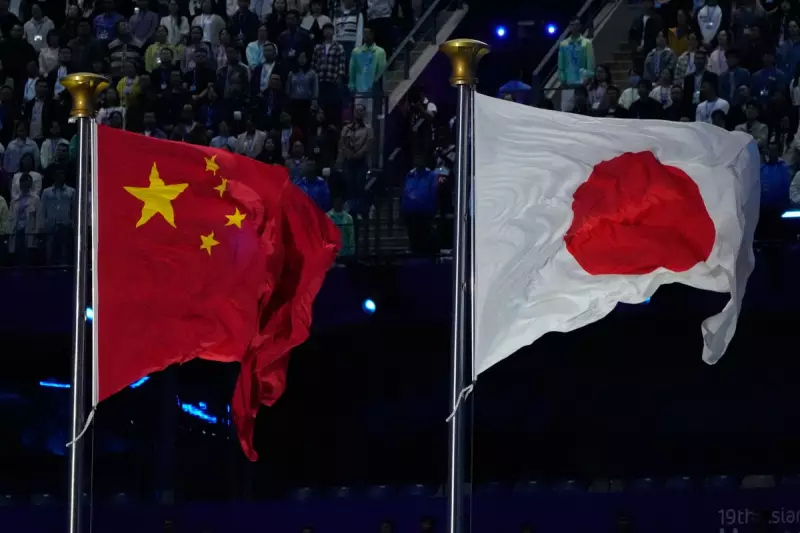
A week of heightened diplomatic and economic friction between East Asian neighbours China and Japan concluded on Friday, 9th January 2026, with no signs of de-escalation. The period saw Beijing rebuff Japanese appeals and Tokyo report delayed shipments to China, underscoring a significant deterioration in relations.
Diplomatic Standoff and Economic Pressure
The week's tensions were capped by two key developments. In Tokyo, Chinese Ambassador Wu Jianghao formally rejected a petition from Japan's Foreign Ministry to retract new export controls on "dual-use items" that could potentially be used by the Japanese military. Wu insisted China's actions were "entirely legitimate, reasonable and lawful" and a matter of national security.
Simultaneously, Japanese officials confirmed they were monitoring whether exports of agricultural, fisheries, and other goods to China were facing undue delays. The Kyodo news agency, citing trade sources, reported that shipments of Japanese sake and processed foods were being held up in Chinese customs, potentially targeted as symbolic of Japan.

Rhetoric and Regional Alignments
China's state media maintained a steady stream of criticism aimed at Japan's political leadership. The Communist Party's People's Daily published an editorial warning, "New militarism will lead Japan back into the abyss." The criticism, which specifically targeted the country's right wing, followed remarks made in November by Japanese Prime Minister Sanae Takaichi, who suggested she wouldn't rule out intervening if China used force against Taiwan.
In a pointed contrast, China warmly welcomed South Korean President Lee Jae Myung to Beijing, signing millions in new export contracts. Chinese state media highlighted that outgoing Chinese travellers to South Korea during the New Year period had surpassed those to Japan, a shift from recent warnings about travel safety in Japan.
Rare Earths and Economic Repercussions
The economic dimension of the dispute carries global implications, particularly concerning rare earth minerals. Japan's Chief Cabinet Secretary, Minoru Kihara, stated that existing Chinese export controls on rare earths had caused a "serious impact on global supply chains." Industry and Trade Minister Ryosei Akazawa noted the profound effect on Japanese industry, given that roughly 70% of its rare earth imports, vital for electronics and automotive sectors, come from China.
While Japanese officials urged for smooth international trade, they declined to comment on potential retaliatory measures. The diplomatic chill was briefly punctuated by a moment of courtesy, as a Chinese foreign ministry spokesperson expressed condolences upon learning of the death of a former Japanese ambassador to China.