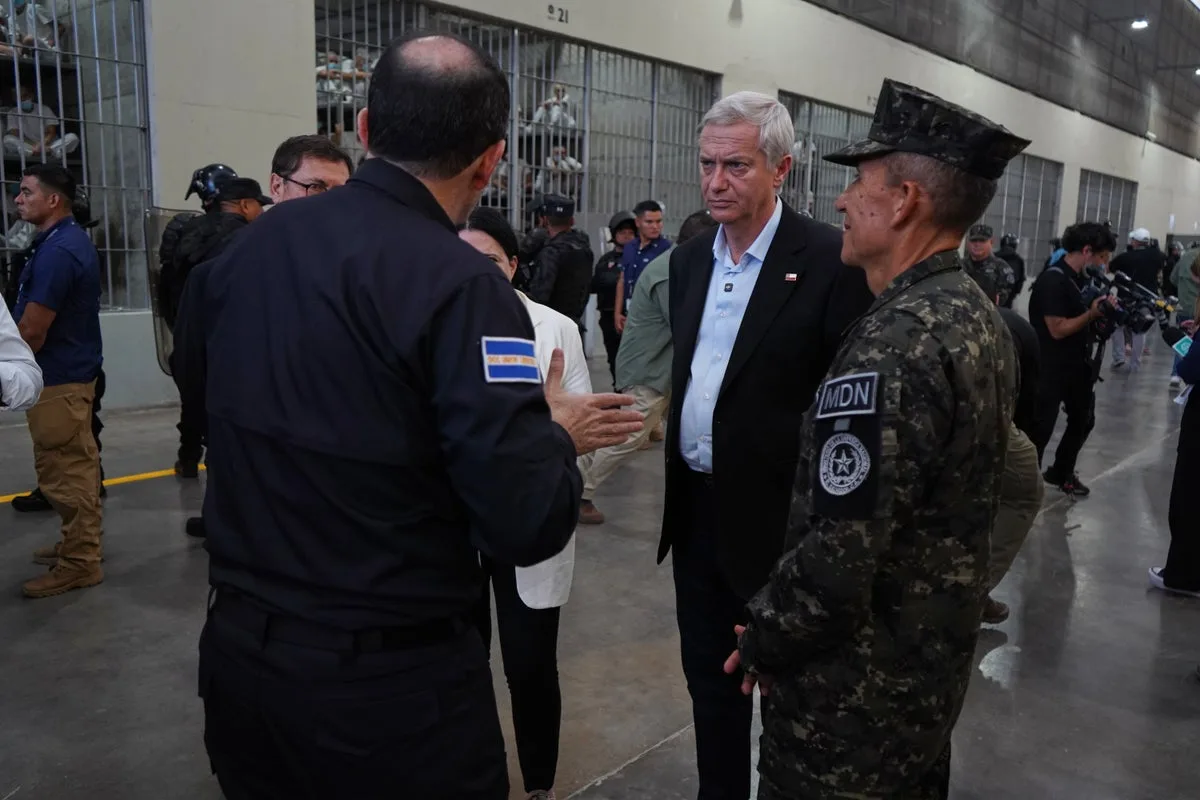
Chile's President-Elect Kast Tours El Salvador's Mega-Prison Before Security Talks
Chile's Kast Visits El Salvador Mega-Prison for Security Talks

Chile's far-right President-elect José Antonio Kast made a significant visit to El Salvador's massive Terrorism Confinement Center (CECOT) on Friday, touring the controversial facility designed for accused gang members. This inspection occurred immediately before his scheduled high-level meeting with Salvadoran President Nayib Bukele, where the primary agenda focused on combating organized crime through coordinated security strategies.

Symbolic Visit to Controversial Facility

The CECOT prison has generated persistent allegations of human rights violations since its establishment, yet simultaneously emerged as a powerful symbol for numerous right-leaning political figures across Latin America. These politicians frequently reference Bukele's uncompromising rhetoric advocating severe crackdowns on criminal organisations as a model worth emulating.

Kast, who prominently campaigned on stringent anti-crime policies during Chile's recent electoral cycle, documented his journey via social media platform X. He shared photographs showing himself aboard a helicopter en route to the prison facility, accompanied by his designated security minister for the incoming administration.

Policy Exchange and Adaptation Plans

In public statements, Kast emphasised that Chile must actively "import good ideas and proposals" to effectively confront organised crime networks, drug trafficking operations, and terrorist activities. El Salvador's presidential office released an official communication confirming that Chile's incoming government seeks firsthand understanding of the Salvadoran security model, with particular interest in assessing how specific elements might be adapted to Chile's distinct national context.

The statement declared: "We are ready to work hand-in-hand with our Chilean brothers," signalling openness to international cooperation on security matters. This diplomatic exchange occurs within a broader regional trend where multiple Central American nations are adopting similar punitive approaches to gang violence and criminal enterprises.

Regional Context and Replication Efforts

This prison visit follows closely after Costa Rican President Rodrigo Chaves initiated construction of a maximum-security prison modelled directly on CECOT's design, responding to escalating crime waves affecting his nation. Honduras previously proposed establishing a remote island prison facility specifically for gang members, while countries including Ecuador and Guatemala have implemented various measures targeting criminal organisations.

During brief remarks to journalists upon entering the mega-prison complex, Kast stressed the importance of Chile comprehensively understanding El Salvador's prison system, which he characterised as an integral component within a broader judicial and security framework. He noted this system enables authorities to maintain individuals involved in serious criminal activities—including gang members implicated in murders, torture incidents, and family terrorisation—under conditions of total isolation from general prison populations.

Critical Distinctions and Human Rights Concerns

Kast carefully clarified that El Salvador's prison system differs substantially from Chile's existing correctional infrastructure, explaining that the visit primarily aimed to study and comprehend its operational mechanisms rather than directly replicate its methods. This nuanced position acknowledges the significant controversy surrounding CECOT and Bukele's extensive anti-gang campaign, which has involved suspending certain constitutional protections for extended periods while detaining thousands accused of gang affiliations with minimal evidence or due process safeguards.

CECOT gained international attention earlier this year when the Trump administration coordinated the deportation of over 200 Venezuelan nationals to El Salvador for detention within the facility. Human rights organisation Socorro Juridico recently reported that at least 480 individuals have died in Salvadoran detention since Bukele declared a state of emergency in early 2022. Multiple human rights groups have documented instances of torture and extremely harsh living conditions within CECOT's confines.

Prison Specifications and Operational Details

The mega-prison complex possesses capacity for approximately 40,000 inmates across eight substantial cellblocks. Each individual cell typically accommodates between 65 and 70 prisoners simultaneously. Inmates receive no visitors, experience no outdoor access, and participate in no workshops, educational programmes, or rehabilitation initiatives designed to facilitate eventual reintegration into society following sentence completion.

Kast and his accompanying delegation initially met with El Salvador's security Cabinet members before conducting an observational tour of one prison cellblock to examine conditions under which the most dangerous alleged gang members are confined. The itinerary concluded with a private meeting scheduled between Kast and President Bukele at the presidential palace later that same day, where detailed security cooperation discussions were expected to advance.




