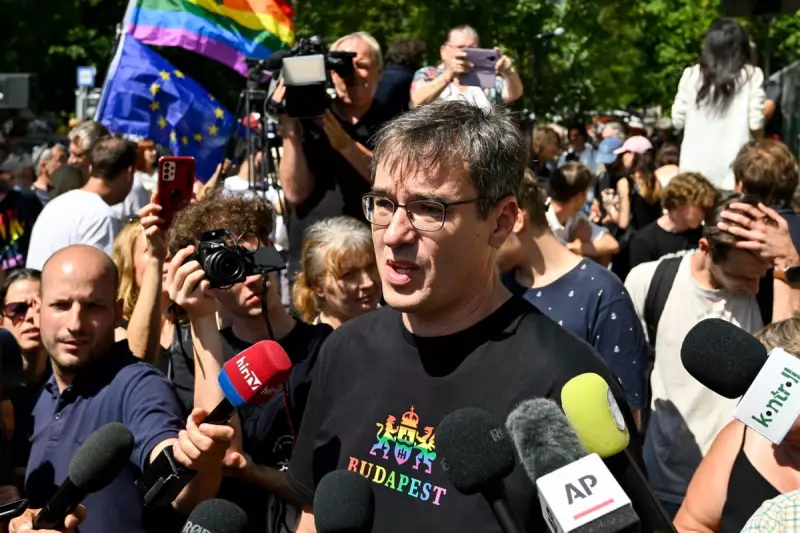
Authorities in Hungary have formally charged Budapest's liberal mayor for his role in organising a banned LGBTQ+ Pride event that took place in the capital last year. The charges represent a significant escalation in the ongoing conflict between Hungary's right-wing nationalist government and the country's liberal opposition.
Mayor Defies Government Prohibition
Gergely Karácsony, who has served as Budapest's mayor since 2019, became the subject of a police investigation following the Pride march on June 28. The event proceeded despite an explicit ban imposed by Hungary's government, with organisers claiming approximately 300,000 participants made it the largest Pride gathering in the nation's history.
The Budapest Chief Prosecutor's Office issued a statement confirming that Karácsony faces charges for organising an unlawful assembly in defiance of a prohibition order. Prosecutors have recommended that the mayor should receive a fine without undergoing a formal trial, citing his deliberate violation of the police ban.

A Defiant Response from City Hall
In a written statement, Karácsony declared himself a "proud defendant" and framed the charges as political persecution. "It seems that in this country, this is the price you pay if you stand up for your own freedom and the freedom of others," he wrote, adding a defiant message to his opponents.
The mayor did not dispute the prosecution's account of his involvement, acknowledging: "That is exactly what happened." He further elaborated on his position, stating: "I will never accept, nor resign myself to, the idea that in my homeland it could be a crime to stand up for freedom."
Legal Backdrop and Government Stance
The charges against Karácsony follow the passage of a contentious anti-LGBTQ+ law in March 2025 by Prime Minister Viktor Orbán's ruling party. This legislation specifically banned Pride events and granted authorities permission to employ facial recognition technology to identify participants in such gatherings.
The Hungarian government has maintained that Pride celebrations, which traditionally promote LGBTQ+ visibility and advocate for equal rights, violate children's rights to moral and spiritual development. This position was reinforced through a constitutional amendment last year that prioritised these rights over other fundamental protections, including the right to peaceful assembly.
International Criticism and Domestic Tensions
Orbán's administration has implemented several pieces of legislation that have drawn criticism from human rights organisations and European politicians. A 2021 law prohibiting any content depicting homosexuality to minors under 18 has been particularly controversial, with critics comparing Hungary's approach to similar restrictions in Russia.
The current charges against Budapest's mayor highlight the deepening political divide within Hungary, pitting the national government against municipal leadership in the capital. Karácsony's defiant stance suggests this legal action is unlikely to resolve the underlying tensions, potentially setting the stage for further confrontations between Hungary's political factions.