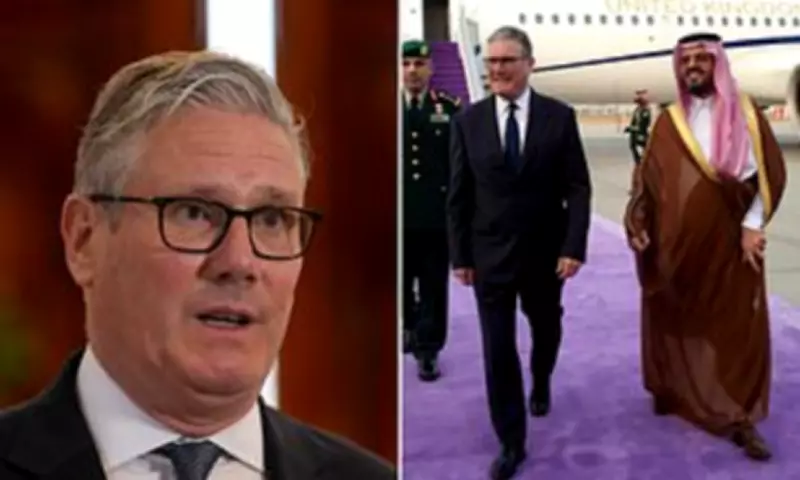
Britain's Diminished Global Role Under Starmer's Premiership
Just a few short years ago, the notion of Britain appearing irrelevant on the global stage would have been considered unthinkable. However, as Prime Minister Keir Starmer conducted a seemingly aimless tour of the Gulf region this week, it became painfully clear that the nation has been reduced to a mere bit player in the geopolitical arena. The ongoing conflict with Iran has sharply highlighted Sir Keir's inglorious role in consigning Britain to the margins of international diplomacy.
Defence Neglect and Military Humiliation
Sir Keir's dithering response at the outbreak of hostilities with Iran won him no admirers, and this has not gone unnoticed in the friendly Middle Eastern states he visited recently. Yet, whether by accident or design, the Prime Minister has been downgrading Britain's international standing long before the current conflict began. Nowhere is his disastrous record more apparent than in the shameful neglect of the Armed Forces.
Despite repeated warnings about the urgent need to reverse low levels of defence spending under successive governments, Sir Keir's response has amounted to little more than staggering indifference. Thanks to his apparent lack of interest, Britain's vastly diminished military strength has resulted in significant humiliation on the world stage over the past six weeks.

It took ten days into the Iran war before HMS Dragon, the only Royal Navy destroyer deployed to date, set sail for the eastern Mediterranean on a mission to protect British airbases in Cyprus. In an embarrassing development revealed earlier this week, the vessel had to be docked at an undisclosed location to undergo urgent repairs.
Even more concerning was last month's situation where the Royal Navy was reduced to asking Germany for the loan of a warship, raising serious questions about whether a Prime Minister with genuine respect for his office or nation would allow such circumstances to develop.
Domestic Security Concerns and Economic Setbacks
Britain's depleted defences are increasingly becoming a cause for concern on the domestic front as well. It now appears to be almost routine practice for Russia to send spy submarines and sanctioned oil tankers into British waters. Despite much public posturing from Starmer and his Defence Secretary John Healey, there is no indication that threats of dire consequences are causing Vladimir Putin any significant concern.
The challenges extend beyond the military sphere. With the rapid expansion of the artificial intelligence sector, there are untold opportunities for bright and talented young Britons to participate in a genuine global revolution that will transform lives in the coming years. However, British graduates and school-leavers risk missing out on these opportunities due to high energy costs and excessive red tape linked to the Labour administration's aggressive pursuit of Net Zero policies.
This week's decision by industry giant OpenAI to halt its Stargate UK project prompted Tory business spokesman Andrew Griffith to remark that "Ed Miliband's suicidal policy has just cost us another huge investment."
Historical Context and Current Reality
The history books show that Britain is no stranger to standing alone on the world stage. When the nation squared up to the evils of the Nazi empire in the early days of World War Two, it did so under the stewardship of brave and principled leaders. At that time, Britain stood alone but with singular determination and clear purpose.
Today, Britain finds itself alone once more, but this time lost in a sea of dither and delay under a Prime Minister whose defining characteristic appears to be his lack of conviction in anything substantial. The contrast between past leadership and current direction could not be more stark as Britain's global influence continues to wane.