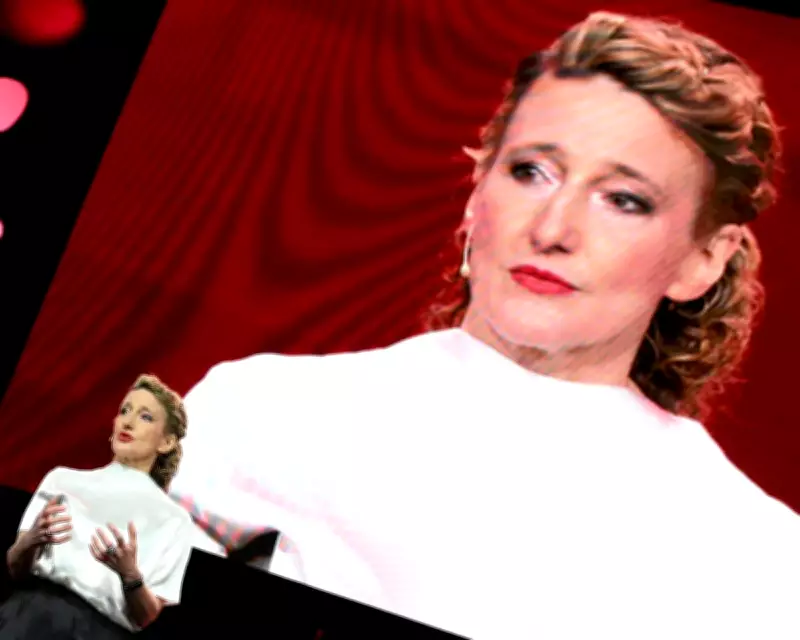
Berlin Film Festival Director Tricia Tuttle Faces Ousting Over Gaza Row
Hosting a major international film festival in Berlin has always presented unique challenges, but recent events suggest it may be becoming impossible. Unlike its competitors in Cannes, Venice, Toronto, and Sundance, the Berlinale operates in a national capital where global politics constantly intrude. This geographical reality shapes every aspect of the event, from programming to public perception.
The Political Pressure Cooker
The Berlin International Film Festival has long embraced its dual identity as both an industry platform and a public-facing cultural event. However, this openness comes with significant downsides. The festival's corridors are filled with local critics who interpret artistic choices as reflections of Berlin's cultural standing. Press conferences attract political journalists expecting clear-cut statements from filmmakers, while politicians attending galas feel compelled to align themselves with or against whatever appears on stage.
Compounding these challenges is the festival's timing during Berlin's gloomy late winter, when collective patience wears thin awaiting spring's arrival. This complex context framed the task facing Tricia Tuttle when she assumed the directorship in 2024.

The Controversy That May Cost Tuttle Her Position
Two years into her tenure, Tuttle faces potential dismissal following a politically charged edition of the festival. Germany's culture commissioner, Wolfram Weimer, has called an extraordinary board meeting to discuss her future. The immediate trigger appears to be a photograph showing Tuttle standing alongside filmmakers wearing keffiyehs and displaying Palestinian flags.
Although this action violated no German laws and initially attracted little media attention, it proved sufficient pretext in Germany's polarized cultural landscape. The deep divide between the country's historically pro-Israel political consensus and pro-Palestinian voices within the arts community has created an environment where such gestures carry disproportionate weight.
While a final decision on Tuttle's position was postponed, her continued leadership appears increasingly unlikely following this public rebuke.
A History of Impossible Expectations
Criticism of the Berlinale's political or artistic direction is nothing new, and Tuttle cannot fairly be accused of ignoring these challenges. Her predecessor duo, Carlo Chatrian and Mariette Rissenbeek, faced accusations of being too cinephile and insufficiently popular in their programming while avoiding political controversies. Before them, Dieter Kosslick endured 18 years of criticism for being too mainstream and overly enthusiastic about Berlin's political festival identity.
Tuttle approached this confusing mandate with visible commitment, notably by personally attending jury press conferences and photocalls. The controversial photograph emerged from such routine festival activities, taken a week before Syrian-Palestinian filmmaker Abdallah al-Khatib criticized Germany's position on Gaza during the closing gala. When jury president Wim Wenders faced attacks for his nuanced views on political cinema, Tuttle offered vigorous support.
Broader Implications for Cultural Leadership
Commercially, Berlin continues to trail behind Cannes and Venice as a launchpad for arthouse-to-mainstream crossover hits. This year's edition saw fewer major stars on red carpets and more films that had premiered elsewhere. However, these challenges aren't entirely Berlin's fault—last year's festival launched Richard Linklater's acclaimed Blue Moon, which has since been overlooked in awards conversations.
Under previous leadership, the Berlinale brought global attention to the Oscar-winning documentary No Other Land, demonstrating its capacity to spotlight important cinematic works. If Tuttle is removed, the position may become what many would consider a poisoned chalice, potentially deterring internationally respected filmmakers from accepting future invitations.

Germany's Cultural Crossroads
The Tuttle situation echoes earlier controversies at Documenta in Kassel, another major German cultural event intended to foster global exchange. When authorities encounter worldviews that diverge from Germany's official positions—particularly regarding Gaza—the response often involves suppression rather than dialogue.
German politicians frequently emphasize the need for Planungssicherheit (planning reliability) for industry amid global uncertainties, yet seem unwilling to extend similar stability to cultural institutions. Notably, the artistic directors of Cannes and Venice have maintained their positions for 19 and 14 years respectively, providing continuity that Berlin lacks.
Perhaps hosting a major festival that tolerates the world's contradictions is currently beyond Germany's political capacity. The government might consider retreating to safer cultural territory for years, potentially relocating to a less politically charged city like Bonn. Meanwhile, other European festivals in Locarno and San Sebastián stand ready to assume Berlin's former prominence should Germany abandon its ambitious cultural aspirations.