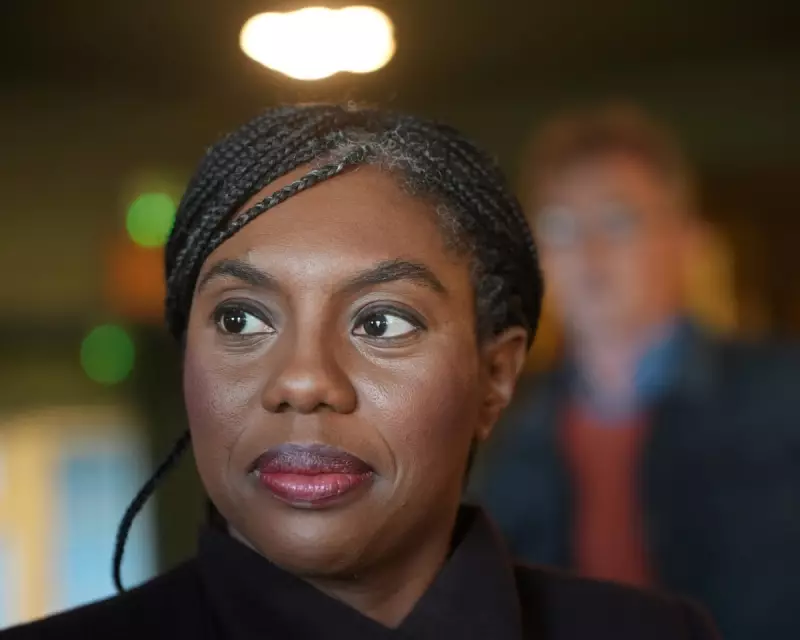
In a striking departure from the prevailing mood at Westminster, senior Conservative figure Kemi Badenoch has publicly defended the United States' military operation to capture Venezuelan President Nicolás Maduro. Over recent days, British politicians from across the spectrum have been reluctant to endorse the raid, which many see as a clear breach of international law.
A Shift from the Fence to a Firm Defence
Badenoch's stance marks a significant evolution. Over the weekend, her response was cautious and non-committal, mirroring the initial position of Labour leader Keir Starmer, as she claimed to need more information. Even as recently as yesterday, she appeared to be sitting on the fence.
However, in a detailed interview on BBC Radio 4's Today programme this morning, she took a definitive position. Badenoch declared that President Donald Trump's decision to authorise the raid was "morally … the right thing to do." She rooted her argument in personal experience, stating, "I grew up under a military dictatorship [in Nigeria], so I know what it’s like to have someone like Maduro in charge."

When pressed on whether sending special forces to seize a foreign leader was correct, she reiterated: "Morally, yes."
Questioning the 'Rules-Based Order'
Badenoch's defence extended into a broader critique of the international system. She implied that faith in a rules-based order sustained by international law was outdated. "As we all know, international law is what countries agree to," she explained. "Once people decide they don’t agree, there is no international law."
She pointed to the presence of Russian, Iranian, and Hezbollah forces in Venezuela, asking why concerns about international law were not raised then. Her comments aligned closely with the worldview expressed by Trump's deputy chief of staff, Stephen Miller, who recently stated the world is governed by "strength," "force," and "power."
Badenoch argued that the UK had been living in a post-Cold War fantasy, stating "we act as if it is still 1995" and warning that Britain was growing weaker in a world that respects strength. This bold position directly contrasts with the criticism voiced by MPs in the Commons last night, where Foreign Secretary Yvette Cooper faced calls for a more robust pushback against the US action.
Today's Political Agenda
Meanwhile, a busy day in UK politics is underway. Keir Starmer is chairing a cabinet meeting, with a significant portion dedicated to political strategy for the upcoming May elections. Later, he will travel to Paris to join a meeting of European leaders providing security guarantees to Ukraine, a summit also attended by Ukrainian President Volodymyr Zelenskyy and key Trump advisers.
Elsewhere, South West Water's chief executive faces a grilling by MPs over last month's water shortage, and Foreign Office minister Stephen Doughty gives evidence on disinformation campaigns aimed at undermining democracy.
Badenoch's forthright comments have ignited a fresh debate about Britain's role in a shifting world order, placing her at odds with both diplomatic convention and domestic political opinion.