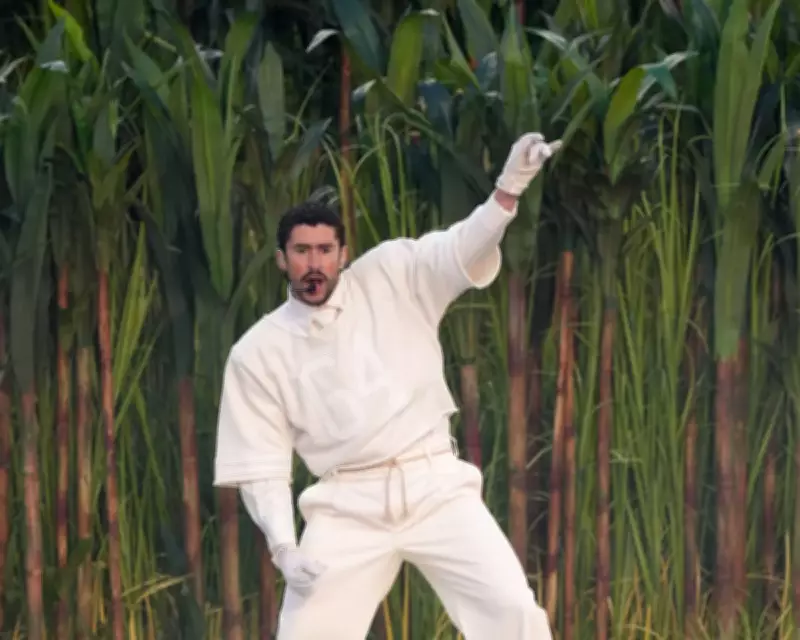
Bad Bunny delivered a groundbreaking performance at the Super Bowl LX halftime show, using his 14-minute set to challenge and expand the meaning of "American" identity. The Puerto Rican star's vibrant showcase moved beyond colonial tropes, embracing a hemispheric vision that placed the United States on equal footing with its neighbors.
A Celebration of Puerto Rican Culture
The performance was a dense, rich homage to Boricua joy, inviting repeated viewings to absorb every thoughtful detail. A standout moment occurred over nine minutes in, when the cuatro puertorriqueño, a traditional stringed instrument, took center stage. Played by the talented cuatrista José Eduardo Santana just before Ricky Martin's appearance, the cuatro's presence sparked profound questions about Puerto Rico's status.
Colonial Context and National Identity
For many Puerto Ricans, terms like "territory," "commonwealth," or "mainland" are uncomfortable euphemisms that obscure the reality of colonialism. Bad Bunny, a vocal advocate for Puerto Rican independence who flies the light blue flag associated with that cause, offered a clear counter-narrative. His performance asserted that Puerto Rico is an American country in the broadest sense—part of a larger family not centered on the United States.

This theme resonates in his music, such as the track "La Mudanza," where he references Eugenio Maria de Hostos, a Puerto Rican educator who dreamed of Antillean unity. Hostos, known as "El Gran Ciudadano de las Américas," envisioned a free Puerto Rico, and Bad Bunny's lyrics express a desire for his songs to accompany Hostos's burial in an independent homeland.
Redefining "American"
During the show, Bad Bunny declared "God Bless América" before listing countries across the hemisphere and leading a parade of flags. This act directly contested the United States' monopoly on the term "American," which applies to every nation in the Americas. The performance transformed the Super Bowl, a quintessentially "American" event, into a platform for inclusive redefinition.
Political and Cultural Reactions
Right-wing critics had previously argued that Bad Bunny, as a non-"American artist," didn't deserve the Super Bowl spotlight. Liberal responses often defended him by noting Puerto Rico's colonial ties to the U.S., but Bad Bunny's vision transcended this dichotomy. He joyfully invited the U.S. to a party where it wasn't the center of the universe, demonstrating that such inclusivity can be celebratory and fun.
For Puerto Ricans and broader audiences, the halftime show was more than entertainment; it was a powerful statement on dignity, respect, and hemispheric unity. By showcasing Puerto Rican culture on a global stage, Bad Bunny challenged viewers to rethink ingrained colonial narratives and embrace a more expansive understanding of American identity.