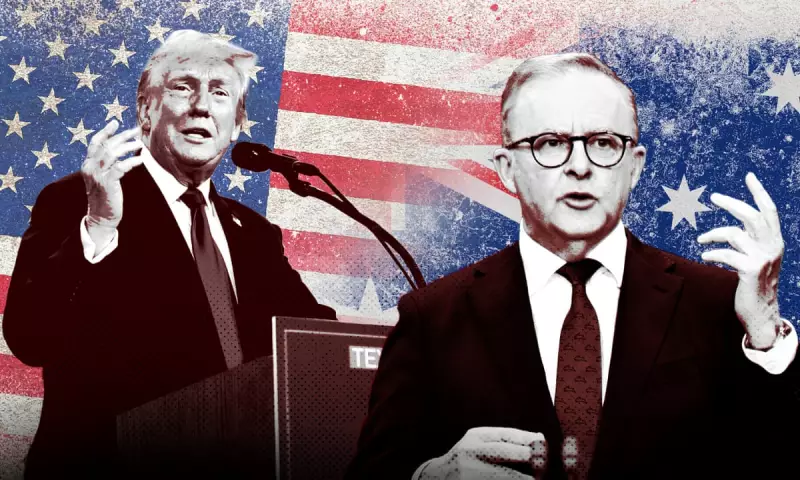
Australia Faces Diplomatic Dilemma Over Trump's Controversial Peace Initiative
International law experts and diplomatic sources are warning that Australia's potential accession to Donald Trump's self-styled "board of peace" represents a significant threat to the nation's sovereignty and international reputation. The proposed body, which has extended invitations to controversial global figures, is being described as fundamentally incompatible with Australia's democratic values and foreign policy interests.
Questionable Membership Raises Immediate Concerns
The composition of Trump's proposed peace board has raised immediate red flags among Australian analysts. The inclusion of figures like Vladimir Putin and Viktor Orbán alongside property developers, while excluding representatives from Gaza itself, suggests an organisation more concerned with power dynamics than genuine conflict resolution. As Professor Ben Saul, Challis Chair of International Law at the University of Sydney, observes: "It's shaping up to be the kind of body or the kind of company that Australia would absolutely not wish to keep."
Saul further argues that participation would represent "a serious mistake for Australia to join an organisation like this, which doesn't have the kinds of safeguards for international law and which would frankly not be in Australia's national interest." This sentiment reflects broader concerns about the erosion of international legal frameworks under the Trump administration.

Political Responses Reveal Cautious Approach
Australian political figures have adopted measured positions regarding the controversial invitation. Deputy Prime Minister Richard Marles stated that Australia "welcomes" the invitation, which remains under active government consideration, while emphasising the need to "talk that through with America to understand what this means and what is involved." The opposition has similarly adopted a wait-and-see approach, requesting more information about the board's objectives, structure, and implications.
More critical voices have emerged from the political fringes. Greens defence spokesperson David Shoebridge condemned Trump's approach, accusing him of "trying to sell Palestinian sovereignty for US$1bn per seat while Palestinians are still being bombed and starved under the so-called 'ceasefire'." Former Labor senator Doug Cameron argued on social media that Australia should reject the proposal outright, stating: "We should work with and support the UN, not ... autocrats and Trump sycophants. Big test for our sovereignty, leadership, and dignity. Time to show some backbone."
Diplomatic Coordination Behind the Scenes
Anonymous diplomatic sources reveal that Australian officials have been consulting with counterparts from like-minded liberal democracies about how to respond to Trump's proposal. One source told media outlets that Australian participation was "inconceivable," while others emphasised the importance of coordinating a polite refusal with other nations to avoid diplomatic isolation. The challenge lies in declining the invitation without appearing to collude against the United States or provoke retaliatory measures from the Trump administration.
Professor Saul notes Australia's recent diplomatic caution: "I think it's unfortunate that Australia has been very weak on pushing back against US violations of international law under Trump over the last year. We've been absolutely in appeasement mode, trying to keep the security alliance afloat, trying to dodge punitive economic penalties, such as tariffs." This delicate balancing act reflects Australia's complex position as a middle power navigating an increasingly unstable international environment.

Historical Parallels and Future Risks
The proposed board's structure and objectives raise troubling historical parallels. The inclusion of Tony Blair, a key architect of the Iraq War launched on questionable intelligence, on the board's executive committee underscores concerns about the organisation's credibility and purpose. Furthermore, the board's charter, despite being authorised by a UN Security Council resolution to oversee Gaza's postwar transition, makes no specific mention of Gaza, instead granting itself a vague mandate to seek "enduring peace in areas affected or threatened by conflict."
Australia's prosperity as a trade-dependent island nation has been built upon the international rules-based order established after the Second World War. Joining Trump's board would represent a fundamental shift away from this framework toward what experts describe as a "realist fistfight" where powerful nations bully weaker ones. As Saul explains: "It's not genuine multilateralism, it's the US trying to legitimise the exercise of US superpower and trying to get others on board."
Broader Implications for Australian Foreign Policy
The decision about whether to join Trump's board represents more than a simple diplomatic choice; it reflects fundamental questions about Australia's future foreign policy direction. Participation would commit Australia to what critics describe as "the very worst excesses of the Trump regime" including potential support for military interventions, resource exploitation, and coercion of allies. The price of a permanent seat—reportedly set at US$1 billion—comes with the condition of operating under Trump's "dominion and total control."
As the international order faces unprecedented strain, Australia's response to this proposal will signal whether the nation prioritizes short-term alliance management or long-term commitment to international law and democratic values. The warning from experts is clear: joining this board would represent "a disastrous act of national sabotage" that sacrifices Australia's independent foreign policy for fleeting approval from what they characterize as a "vain, volatile ersatz emperor."