In a significant diplomatic setback for Myanmar's military rulers, the Association of Southeast Asian Nations has formally refused to recognise the country's recently concluded general election. The 11-member regional bloc declined to endorse what it considers a sham vote orchestrated by the junta to legitimise its control.
Regional Bloc Withholds Recognition
Philippine foreign secretary Theresa Lazaro confirmed ASEAN's position during the association's first major meeting of the year in Cebu, stating the bloc had "not endorsed the three phases of the election that were held." This represents a clear rebuke to Myanmar's military government, which seized power in a February 2021 coup that ousted the elected administration of Aung San Suu Kyi.
Election Conducted Amid Civil Conflict
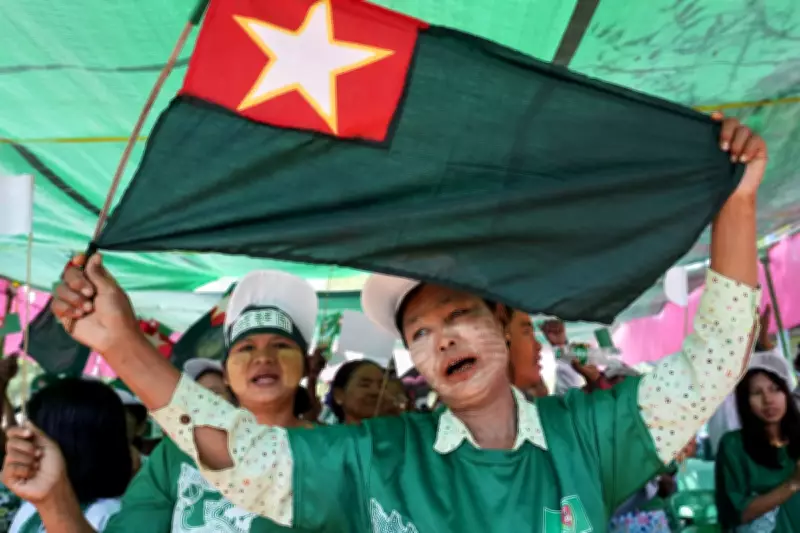
The three-phase general election, held between December and January, took place against a backdrop of raging civil war and widespread ethnic violence. Voting was cancelled in numerous areas due to ongoing fighting between military forces and armed ethnic groups, alongside local resistance movements that emerged following the coup.

According to official results released on Thursday and Friday, the military-backed Union Solidarity and Development Party secured an overwhelming parliamentary majority. The party captured 232 of the 263 seats in the lower house and 109 of the 157 declared seats in the upper house.
Preordained Outcome
The sweeping victory was widely anticipated given the election's exclusion of major opposition parties and severe restrictions on political dissent. Myanmar's political system further guarantees the military 25 percent of parliamentary seats, ensuring continued military influence even under civilian administrations.
Junta chief Min Aung Hlaing, expected to play a central role in the next administration, defended the election's legitimacy, describing it as a step toward stability. The military government reported 55 percent voter turnout, significantly lower than the 70 percent participation recorded in previous elections.
International Responses Diverge
While ASEAN withheld recognition, China offered congratulations to Myanmar for holding what it called "a steady and orderly general election with active turnout." Chinese foreign ministry spokesman Guo Jiakun stated Beijing's readiness to "continue deepening the comprehensive strategic cooperation with Myanmar."
Singapore's foreign minister Vivian Balakrishnan emphasised that "meaningful political progress in Myanmar requires a cessation of hostilities, inclusive dialogue and participation by all stakeholders." He added that "these preconditions are necessary for a government with legitimacy and a measure of popular support to emerge."
Deepening Political Crisis
The military's seizure of power in 2021 triggered widespread protests, violent crackdowns, and the imprisonment of politicians, activists, and protesters. The subsequent civil conflict has created one of Southeast Asia's most severe humanitarian and political crises.
ASEAN diplomats gathered in the Philippines, which currently holds the bloc's rotating presidency, amid growing international pressure to help resolve Myanmar's civil war. The regional association's refusal to recognise the election represents a major obstacle to the military junta's efforts to gain international legitimacy and normalise diplomatic relations.