Artist Files War Crime Case in Paris Over Israeli Strike That Killed Parents in Lebanon
A Lebanese-French artist has initiated a legal complaint in a Paris court, demanding an investigation into an Israeli bombing of his family home in Beirut that resulted in the deaths of his parents and a domestic worker, asserting the attack may qualify as a war crime. This suit, submitted to the French war crimes unit on Tuesday, represents an uncommon instance where an individual is pursuing war crimes charges related to an Israeli bombing, marking the first time a French court has accepted a case concerning Israel's military actions in Lebanon.
Background and Details of the Attack
Israel has faced numerous accusations of war crimes for targeting civilians, public infrastructure, and medical personnel, as well as for forced displacement in Lebanon and Gaza, yet no one in the country has been held legally accountable. Additionally, Israel has been accused of committing genocide in Gaza. The artist, Ali Cherri, stated, "Our demand is that an investigation is opened so that we know for a fact what happened, to name this attack as a war crime against civilians, and hopefully being able to name the people responsible for this."
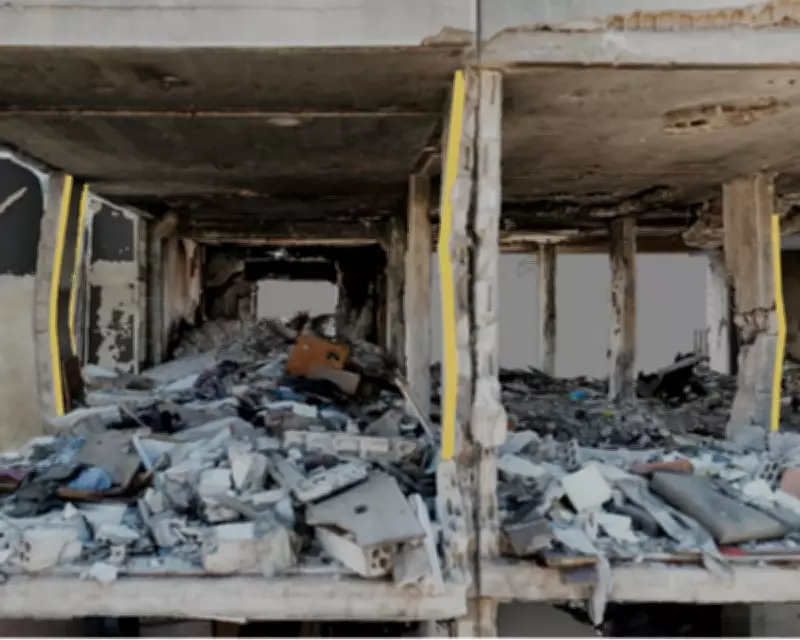
Cherri's family home, constructed by his grandparents decades ago in central Beirut, was bombed by Israel just hours before a ceasefire was established between Hezbollah and Israel on 26 November 2024. During the 13-month war, Israeli strikes killed approximately 4,000 people in Lebanon. No evacuation warning preceded the strike, which damaged three floors of the apartment building. The victims included Cherri's parents, Mahmoud Naib Cherri, 86, and Nadira Hayek, 76, their employee Birki Negesa, and four other civilians.

Forensic Evidence and International Response
In February, Amnesty International conducted an investigation into the strike, concluding there was no evidence of a military target at the time of the attack and recommending it be investigated as a war crime. Forensic Architecture, a UK-based investigative rights group that assisted in preparing the legal complaint, created a detailed 3D model of the struck building. Their analysis identified the munition used as a GBU-39, a 250lb (115kg) guided bomb produced by the United States and commonly employed by Israel in attacks on Gaza and Lebanon.
The group emphasized that the use of such a guided munition underscores the targeted nature of the attack and demonstrates the Israeli army's responsibility. A digital model illustrates the structural impact of the blast, including on yellow-highlighted columns, providing visual evidence of the devastation. Heba Morayef, Amnesty International's regional director for the Middle East and North Africa, remarked, "Amidst a longstanding pattern of serious violations of international humanitarian law by Israeli forces in Lebanon, and as Israel once again steps up its attacks, if war crimes unit prosecutors open an investigation into this complaint, this would offer a rare opportunity to examine Israel's actions in a European court given the general impunity it usually enjoys."
Broader Context and Personal Impact
Cherri highlighted the significance of this case amid renewed fighting between Israel and Lebanon, where he observes similar incidents to the bombing of his parents' home being repeated. On 2 March, Hezbollah launched rockets at Israel, prompting an Israeli aerial campaign and ground invasion of Lebanon that has killed 1,318 people so far. Tragically, Mohammed Shehab, a photographer who collaborated with Forensic Architecture to document the Cherri family's apartment building, was killed in an Israeli strike on his home on 11 March, along with his three-month-old daughter, with his wife critically injured—circumstances Forensic Architecture described as similar to the strike on the Cherri home.
Reflecting on his motivations, Cherri expressed, "Either you accept that you're a victim and accept your fate, like unfortunately a lot of Lebanese have to do. Or you take it as a responsibility for all the other people who can't go through this legal process." While he remains pessimistic about holding anyone in Israel criminally liable, he believes filing the case is crucial for accountability and justice.