Afghanistan's government has formally accused Pakistan's military of conducting a severe artillery attack on the outskirts of an eastern Afghan city this Sunday, resulting in civilian casualties and escalating tensions between the two neighbouring nations. The incident marks the latest episode in a renewed and intense period of fighting that has erupted between Afghanistan and Pakistan, representing the most severe conflict between the two countries in decades.
Details of the Shelling Incident
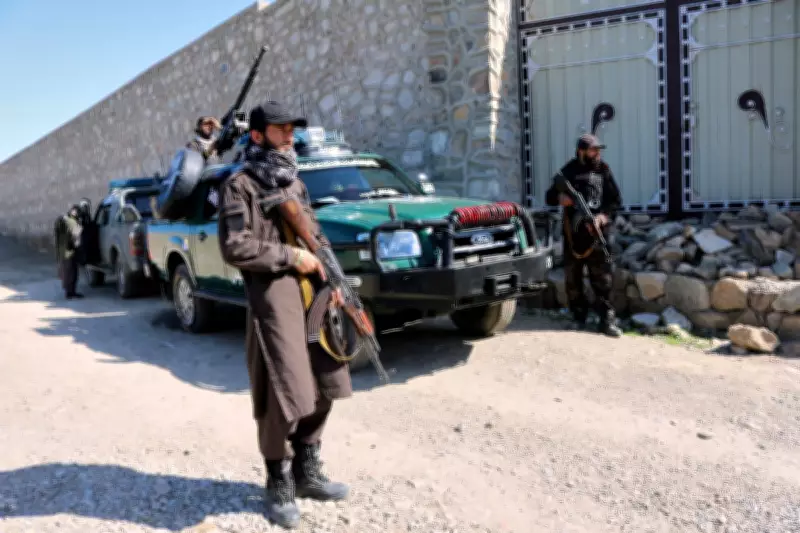
According to Afghan deputy government spokesman Hamdullah Fitrat, the attack occurred on Sunday afternoon, targeting rural areas and civilian homes on the outskirts of Asadabad in Kunar Province. Fitrat stated that "mortars and other heavy weaponry" were deployed in the assault. In a post on social media platform X, accompanied by photographs of wounded children, he provided preliminary figures indicating that one person had been killed and sixteen others were wounded, with the majority of casualties being women and children.
There has been no immediate response from Pakistani authorities regarding these specific accusations. This silence follows a pattern of disputed claims and denials that have characterised the recent cross-border hostilities.

Background of the Escalating Conflict
The current wave of fighting began in late February when Afghanistan launched a cross-border raid into Pakistan. Afghan officials described this action as retaliation for what they claimed were deadly Pakistani airstrikes on Afghan border areas that exclusively killed civilians. Pakistan, however, asserted that its strikes were aimed at militant targets.
The conflict has since intensified, with Pakistan declaring last month that it was in an "open war" with Afghanistan. This declaration has alarmed the international community, particularly given the region's history as a haven for militant organisations, including al-Qaida and the Islamic State group, which have been attempting to resurface.
Recent Clashes and Civilian Impact
The fighting has involved repeated cross-border clashes and airstrikes inside Afghanistan, including several incidents in the capital, Kabul. Earlier this month, Afghanistan alleged that a Pakistani airstrike hit a drug treatment hospital in Kabul, killing more than 400 people. The United Nations humanitarian affairs office has noted that the total death toll from that incident is still under verification. Pakistan has disputed this claim, denying it targeted civilians and stating it struck an ammunition depot instead.
In an effort to de-escalate, the two sides declared a temporary truce last week ahead of the Muslim holiday of Eid al-Fitr, following mediation by Saudi Arabia, Turkey, and Qatar. However, this ceasefire expired earlier this week, and renewed fighting erupted on Wednesday. Afghan officials reported that at least two civilians were killed in eastern Afghanistan during these latest skirmishes.
Underlying Tensions and Failed Diplomacy
Tensions between Afghanistan and Pakistan have remained high for several months. The most recent fighting has effectively overturned a Qatari-mediated ceasefire established in October, which had previously halted clashes that resulted in dozens of casualties among civilians, security forces, and militants. Notably, the two nations differ significantly in their reported casualty figures from these incidents.
The core of the dispute lies in Pakistan's accusation that Afghanistan provides a safe haven for militants who carry out attacks inside Pakistan, particularly the Pakistani Taliban. This group is separate but closely allied with the Afghan Taliban, which seized power in Afghanistan in 2021 during the chaotic withdrawal of U.S.-led troops. Kabul consistently denies these allegations.
Peace talks held in Istanbul during November failed to produce a long-term solution, leaving the region in a precarious state. The inability to reach a diplomatic resolution continues to fuel the cycle of violence and retaliation, with civilians increasingly caught in the crossfire. The international community watches with concern as the situation threatens to destabilise an already volatile region.