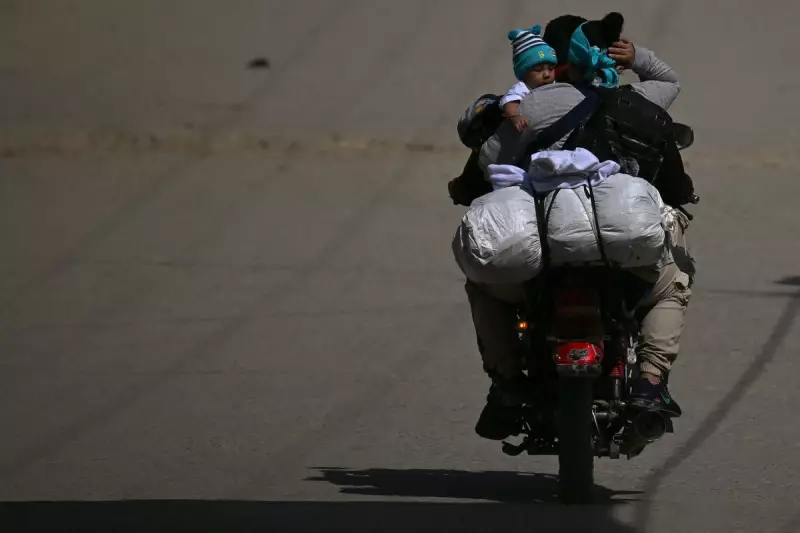
More than three hundred civilians have been forced to abandon their homes in north-eastern Colombia, seeking sanctuary in the border city of Cúcuta following a surge in rebel violence. The fighting underscores the fragile security situation in a region long plagued by drug trafficking and armed insurgencies.
Mass Displacement from a Volatile Border Zone
Colombia's Human Rights Ombudswoman, Iris Marín, confirmed the displacement via social media platform X on Monday night. She stated the individuals had fled from the municipalities of Tibu and El Tarra, where violent clashes first erupted in December.
The city of Cúcuta, which sits directly on the frontier with Venezuela, had already been preparing for a potential influx of people. This preparation followed the controversial U.S. military raid in Venezuela on Saturday, which resulted in the capture of President Nicolás Maduro. In response, the Colombian government deployed tanks and additional troops to the border area.

A Perennial Battleground for Control
The Catatumbo region is a significant coca-producing area and has for decades been a battleground where drug traffickers and various rebel groups vie for territorial control. The latest violence is part of a broader offensive by the National Liberation Army (ELN) against a rival faction known as the FARC-EMC.
The humanitarian toll has been severe. Last year alone, over 56,000 people were displaced from Catatumbo, and at least 80 were killed in the conflict. The ongoing crisis led the Colombian government to suspend peace talks with the ELN, which had begun in 2022.
"Once again we call on rebel groups to cease combat and leave the civilian population out of the conflict," Ombudswoman Marín implored in her statement.
Border Fears and a Calm Response
Despite initial concerns, Colombian officials report that a feared large-scale influx of Venezuelan refugees following the U.S. operation has not yet materialised. The political situation in Venezuela appears to have stabilised somewhat, with Maduro's Vice President, Delcy Rodríguez, sworn in as interim leader.
On Tuesday, Gloria Arriero, director of Colombia's National Immigration Service, provided reassurance. She stated that foot traffic across the Simon Bolivar International Bridge linking the two countries had not changed significantly since the attack.
"We feel calm, because the flows of people have not augmented," Arriero said at a news conference, noting that approximately 60,000 people continue to enter and leave Cúcuta each day.
Nevertheless, the fresh displacement of hundreds of Colombians serves as a stark reminder of the persistent instability in border regions, where civilian populations remain caught in the crossfire of complex, overlapping conflicts.