
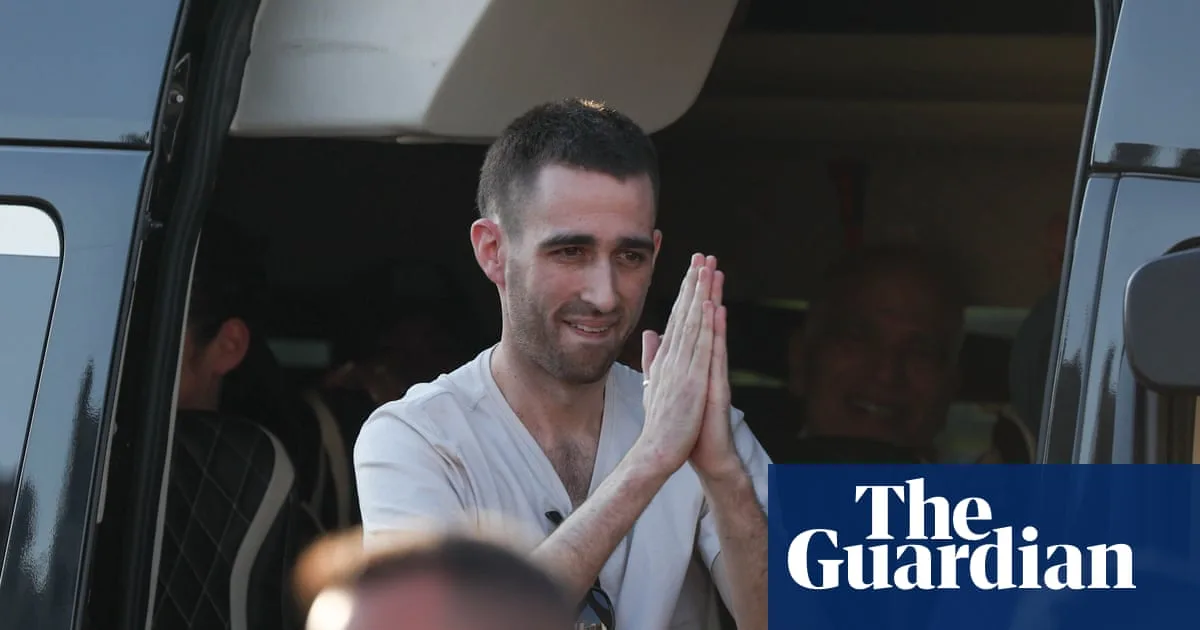
Twenty living Israeli hostages have returned to Israel after 737 days in captivity in Gaza, with recovery and rehabilitation now the primary focus. The condition of the hostages, all men aged 21 to 48, remains largely unknown, though Israel's foreign ministry confirmed that Alon Ohel, 24, suffered serious injuries including the loss of vision in one eye.
The hostages were handed over to the Red Cross in Gaza on Monday before being transported to the Re'im military base in southern Israel for reunions with their families and initial medical evaluations. Helicopters were on standby to airlift them to one of three hospitals—Sheba, Ichilov, or Rabin—for further treatment if needed. Earlier freed hostages appeared gaunt and weak, and doctors have warned of complex psychological and medical needs.
Prof Hagai Levine, head of the health team for the hostages' families, said he had repeatedly warned of the “grave danger” to the health of the hostages and their families. “We now hope that, with the return of all of the hostages, we can begin a process of full rehabilitation – for the survivors of captivity, for the families, and for society as a whole,” he stated. “Medical, psychological, and social rehabilitation is a long and complex process that requires responsibility, coordination and cooperation.”
The Rabin Medical Centre in Petah Tikva has established a Returning Hostages Unit after treating former captives released in earlier exchanges. The hospital, Israel's second largest, provides care from a range of specialists including physiotherapists, speech and occupational therapists, psychologists, and nutritionists, and offers rooms for families. The Israeli government has prepared welcome kits for each returnee containing clothing, personal equipment, a laptop, a mobile phone, and handwritten messages from Prime Minister Benjamin Netanyahu and his wife Sara.
Experts stress that rehabilitation is a long process, with complications potentially arising months or years later. Rabin has established Israel's only long-term Hostages Rehabilitation Unit, continuing support even after discharge. British-Israeli hostage Emily Damari, freed in January, told the New York Times she faced months of rehabilitation and surgery for wounds sustained during her abduction.
A spokesperson at Sheba Medical Centre, reportedly preparing to receive 10 hostages, said the process would take time. “Once the hostages are returned, they are reunited with their families first, and then they will go through a series of medical examinations and it could take a long time because they’ve been in captivity for two years,” they said. “We’re not going to push them at all. The most important thing is to reintegrate them with their families, society, and whatever they need we will give them.” The Hostages and Missing Families Forum noted, “The process does not end with release – it begins with it.”




