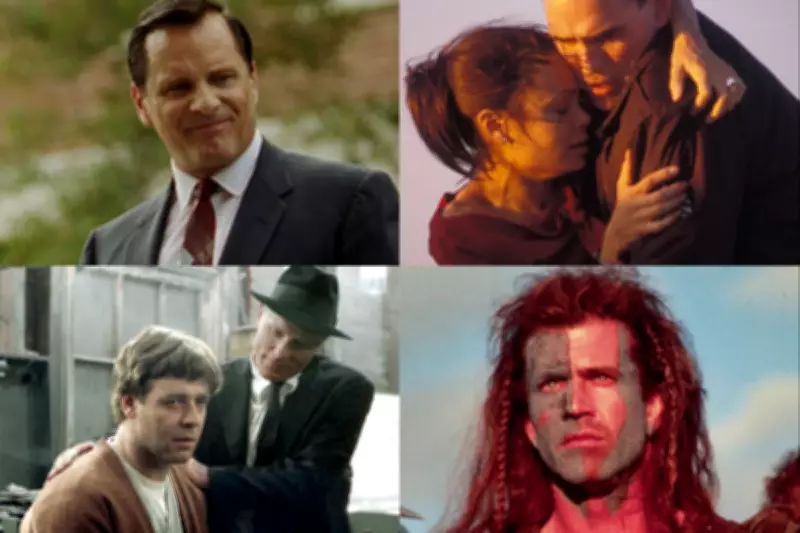
Oscars 2026: The 10 Most Questionable Best Picture Winners in Academy History
To secure the Best Picture Oscar, a film must possess undeniable qualities that resonate with voters. Throughout cinematic history, only 94 films have claimed this coveted award. Unlike the Golden Globes, selected by the Hollywood Foreign Press Association, or critics' awards, the Oscars are decided by approximately 10,000 members of the Academy—industry professionals whose choices carry significant weight.
However, even this distinguished group occasionally makes perplexing decisions. By the time the Oscars conclude the awards season, a herd mentality often prevails. When other ceremonies have already honored films like The King's Speech or The Shape of Water, Academy members tend to follow suit, making surprising winners rare.
Despite this, several films have controversially snatched glory that many argue belonged elsewhere. Below, we explore the ten worst recipients of Hollywood's most prestigious accolade.

10. The Life of Emile Zola
Prestige frequently influences Oscar outcomes, which explains how the stodgy literary biopic The Life of Emile Zola triumphed at the 1937 ceremony. It is a solid, worthy production featuring a grandstanding performance by Paul Muni as the campaigning French novelist, albeit under heavy makeup. Yet, the notion that it ranks among the "few truly great pictures of all time," as its publicity claimed, is widely regarded as absurd.
9. Green Book
Green Book recounts the true story of an unlikely friendship between a black classical pianist, portrayed by Mahershala Ali, and his bigoted Italian-American driver, played by Viggo Mortensen. In a 2020 interview with The Independent, Mortensen defended the film, stating that criticisms were "hurtful" and "destructive," while lamenting that Green Book had become a pejorative term. Nonetheless, many critics view it as an ignominious winner—trite, saccharine, and problematic in its portrayal.
8. Around the World in 80 Days
This amiable big-budget travelogue, directed by Englishman Michael Anderson and starring David Niven as the intrepid Phileas Fogg, is enjoyable but hardly groundbreaking. Its Best Picture Oscar is often attributed more to the marketing prowess of producer Mike Todd than to cinematic brilliance, raising questions about the influence of promotion over artistry.
7. Crash
Paul Haggis's Crash offers a decent, well-intentioned exploration of racism and violence in contemporary Los Angeles, featuring a heartfelt ensemble cast. However, it pales in comparison to Robert Altman's superior Short Cuts. Persistent speculation suggests it won primarily because some Academy voters were reluctant to award the gay-themed western Brokeback Mountain.
6. Chicago
Strong marketing campaigns are crucial for Oscar success, and the now-disgraced producer Harvey Weinstein mastered this art. His relentless tactics—from aggressive trade press advertising to strategic awards screenings—were arguably as instrumental in the victory of the mediocre musical Chicago as the creative talents involved, highlighting the role of lobbying in awards outcomes.
5. A Beautiful Mind
This film is not without merit; it delves into mental illness and mathematics through a love story, with Russell Crowe delivering a fine performance as John Nash. Yet, Ron Howard's biopic falls short of classic status, benefiting from a particularly weak year in cinema to secure its Best Picture Oscar.
4. Marty
The 1955 winner Marty, scripted by Paddy Chayevsky, suffers in comparison to its earlier live TV adaptation. While Ernest Borgnine's film performance is competent, it lacks the tragic depth Rod Steiger brought to the small-screen version, making the Oscar win feel like a lesser achievement.
3. Out of Africa
Memorable for its stunning Kenyan landscapes and Meryl Streep's eccentric accent, Out of Africa is often criticized as mushy and undeserving of its Oscar. Its picturesque scenes, reminiscent of a David Attenborough documentary, fail to elevate it beyond sentimental melodrama.

2. Braveheart
Mel Gibson's rousing medieval epic, famous for its blue-faced warriors and historical inaccuracies, tapped into debates about Scottish devolution and independence. While it boosted tourism and features thrilling battle sequences, many question whether these elements justify a Best Picture award over more nuanced contenders.
1. The Greatest Show on Earth
From a modern perspective, awarding the 1952 Best Picture Oscar to Cecil B. DeMille's circus epic is baffling. With a lengthy runtime and decent stunts, it pales beside timeless nominees like High Noon and The Quiet Man, leading many to believe Academy voters were not taking the decision seriously.