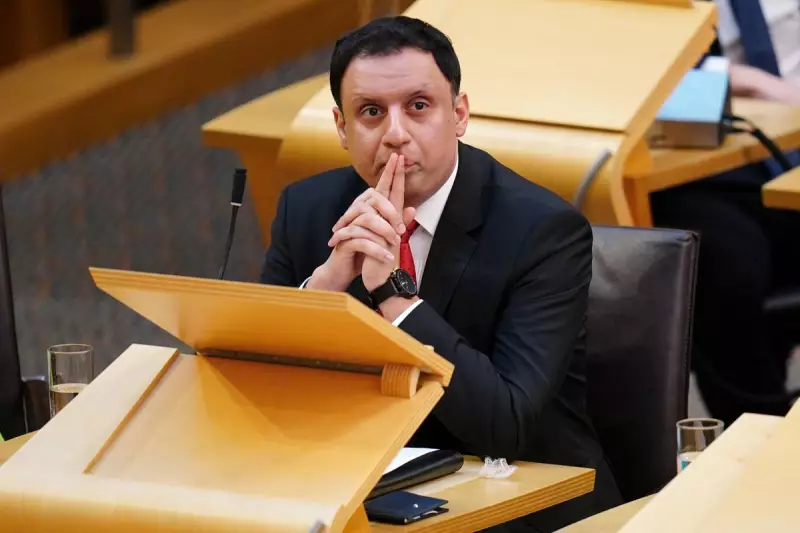
Scottish Labour leader Anas Sarwar has declared his party will not attempt to block the Scottish Government's forthcoming budget, a significant move ahead of the crucial May election.
Sarwar's Pre-Budget Pledge
In a notable intervention before the budget's publication, Sarwar stated that Scottish Labour would not make the budget fall. The announcement came during an interview with ITV Border, just days before Finance Secretary Shona Robison is due to present her tax and spending plans to the Scottish Parliament on Tuesday, 8 January 2026.
Sarwar emphasised that while his party would not oppose the Scottish National Party (SNP) government's proposals, the real political battleground would be shaped after the Holyrood election in May. He framed this as a potential "game-changer" for Scotland's direction.

Reserving the Right for Post-Election Action
When pressed on the specific implications of his statement, the Labour leader outlined a clear strategic position. He confirmed that a potential Scottish Labour government, if elected in May, would reserve the right to implement significant financial changes.
"We will reserve the right to look at whether emergency provisions are needed or an alternative budget, or an emergency budget is needed after the election in May," Sarwar stated. He argued this approach was necessary to meet the aspirations and needs of the Scottish people, suggesting the current government's plans may be insufficient.
Political Reactions and Conservative Criticism
The announcement prompted an immediate and sharp response from political opponents. Scottish Conservative leader Russell Findlay condemned Sarwar's position as an "astonishing decision to give a free pass to the SNP budget."
Findlay accused Labour of weakness, suggesting First Minister John Swinney would be "delighted" by the move. He positioned the Scottish Conservatives as the sole party willing to challenge the SNP and other left-wing parties in Holyrood, whom he accused of planning high taxes to fund an "out-of-control benefits bill."
This development sets the stage for a highly charged budget process, where the focus shifts from immediate parliamentary arithmetic to the longer-term fiscal vision each party will present to voters ahead of the May election.