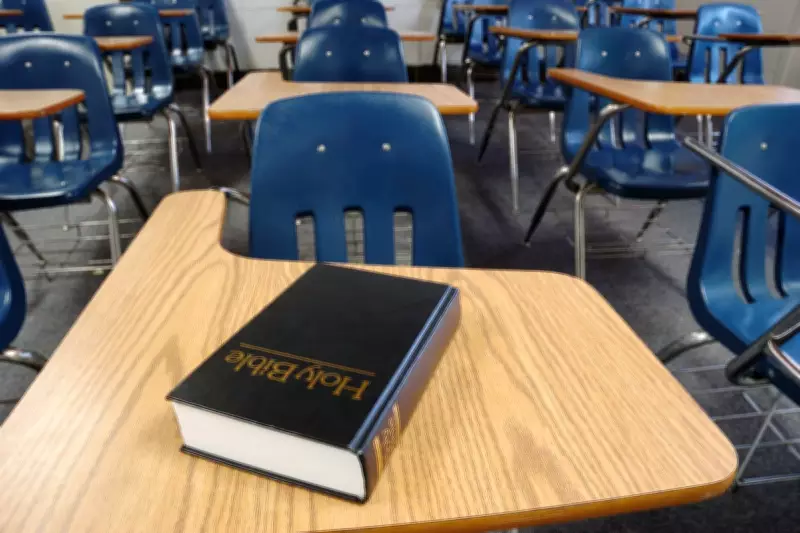
Texas Education Board Proposes Mandatory Biblical Passages in Public School Curriculum
The conservative-dominated Texas State Board of Education is currently deliberating a controversial proposal that would mandate students in public schools to read specific passages from the Bible as part of their English literature curriculum. This initiative represents the latest effort by conservative policymakers to integrate Christian teachings into state education systems, raising significant constitutional questions.
Proposed Reading List Includes Old and New Testament Stories
According to documents reported by the New York Times, the proposed reading list would require middle school students to study at least fifteen biblical passages during English lessons. The selections would include well-known stories such as Jonah and the Whale, David and Goliath, and Lamentations 3 from the Old Testament, alongside New Testament passages like The Definition of Love. The list would be integrated with existing literary works including The Diary of Anne Frank, Martin Luther King Jr.'s "I Have a Dream" speech, Homer's "The Odyssey," various Shakespearean plays, and poetry by Edgar Allan Poe.
Constitutional Concerns and Advocacy Group Opposition
The proposed changes have ignited strong opposition from civil liberties organizations and educational advocates. Chris Line, legal counsel for the Freedom from Religion Foundation, emphasized that "Texas public schools exist to educate, not indoctrinate." He warned that mandating biblical readings sends a clear message that the state favors Christianity over other religions and non-religious perspectives, potentially violating the Establishment Clause of the First Amendment.

Rocio Fierro-Perez, political director for the Texas Freedom Network watchdog organization, expressed concerns that the curriculum changes would create a narrow, Texas-centric historical perspective. "If adopted as written, these recommendations would essentially leave our children able to recite disconnected Texas facts, but it would really undermine their ability to understand a global economy and the role that Texas plays outside of the state," she told KFOX14.
Board Members Defend Cultural Literacy Approach
Will Hickman, a Republican board member representing Houston who serves as secretary, defended the inclusion of biblical stories as essential cultural education. "In my view, these stories are on the education side and are establishing cultural literacy," Hickman told the Texas Tribune. "And there's religious concepts like the Good Samaritan and the Golden Rule and Moses that all students should be exposed to." Hickman has separately proposed removing numerous existing literary works from the curriculum to accommodate additional biblical passages including Noah's Ark and Adam & Eve.
Recent Context and Financial Incentives
This proposal follows last year's adoption of Bluebonnet Learning, a controversial educational framework that critics argue incorporates Christian principles into secular education. While adoption remains optional for school districts, those implementing Bluebonnet Learning receive $60 per student in state funding—$20 more than districts using other state-approved materials. The board, comprising five Democrats and ten Republicans, is scheduled to meet to consider these academic proposals.
Legal Precedents and Ongoing Religious Debates
The debate occurs against a backdrop of recent legal battles over religion in Texas schools. Last year, a federal judge blocked a state law requiring the Ten Commandments in every public school classroom, ruling that forced daily viewing likely violated First Amendment religious freedom protections. Despite this ruling, Texas Attorney General Ken Paxton has encouraged schools to pursue legal avenues to "begin the legal process of putting prayer back in classrooms." In a public letter, Paxton stated, "In Texas classrooms, we want the Word of God opened, the Ten Commandments displayed, and prayers lifted up." Several other Republican-led states have attempted similar measures, facing consistent legal challenges.
The proposed curriculum changes also include increased emphasis on U.S. and Texas history across nearly all grade levels, further intensifying debates about educational priorities and religious neutrality in public institutions.