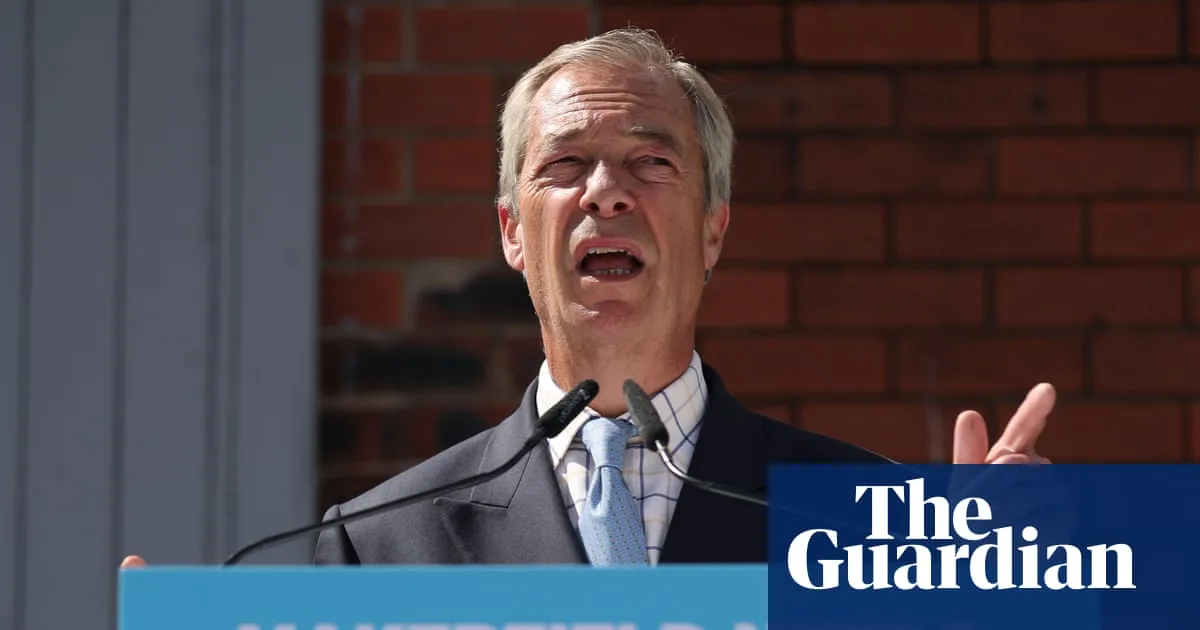
Reform Party Plans to Revive Grammar Schools Through Free School Framework
The Reform Party, led by Nigel Farage, has signalled a potential seismic shift in England's education landscape by proposing to lift the longstanding ban on establishing new grammar schools. This prohibition was instituted nearly three decades ago in 1998 under Tony Blair's Labour government and has remained unaltered despite numerous advocacy efforts to permit their creation.
Understanding Grammar Schools and Their Historical Context
Grammar schools are state-funded secondary institutions that admit pupils based on academic ability, contrasting with non-selective comprehensive schools. Prospective students typically undergo entrance examinations assessing skills like verbal reasoning and mathematics to secure a place.
These selective schools trace their origins to the 16th century, but the modern grammar school system was formalised by the 1944 Education Act. They formed one pillar of the Tripartite System, alongside secondary technical schools and secondary modern schools, designed to educate the top 25% of academically gifted students as identified by the 11-plus exam.
The Tripartite System was largely dismantled in England and Wales between 1965 and 1976, leading many grammar schools to convert into comprehensives or independent institutions. Today, only 163 grammar schools remain in England, primarily concentrated in a handful of local authorities that maintained selective systems, while others exist as isolated entities within predominantly comprehensive areas.
Reform's Proposed Mechanism for Change
Reform, which has appointed former Conservative minister Suella Braverman as its education spokeswoman, aims to circumvent the ban by utilising the existing free school system. Free schools are publicly funded but operate independently of local authority control, providing a potential pathway for new grammar schools without requiring substantial additional expenditure.
A Reform source explained to the i Paper: 'That way you're not committing extortionate new amounts of money; you're just saying we're not banning things for the sake of banning things, and that selection is something that we shouldn't distrust.'
The Ongoing Debate Surrounding Selective Education
The prospect of expanding grammar schools reignites a deeply polarised debate about educational equity and opportunity.
Critics of grammar schools contend that selective systems exacerbate social divisions, effectively segregating children from wealthier backgrounds, who are often destined for university and high-paying careers, from those from working-class families, who may be funneled into less lucrative roles. Opponents also argue that the system disadvantages late developers, whose full potential might be stifled by a single examination at age 11.
Proponents of grammar schools counter that these institutions deliver exceptional academic results, with some of the highest exam performances nationally. Advocates maintain that selective schools offer a vital opportunity for bright students from disadvantaged backgrounds to access a high-standard education without the financial burden of private school fees.
The Reform Party's policy proposition sets the stage for a significant ideological battle over the future structure of state education in England, challenging a policy consensus that has held for over a quarter of a century.






