Westminster Holds Key to Fuel Cost Relief in Northern Ireland, O'Neill Insists
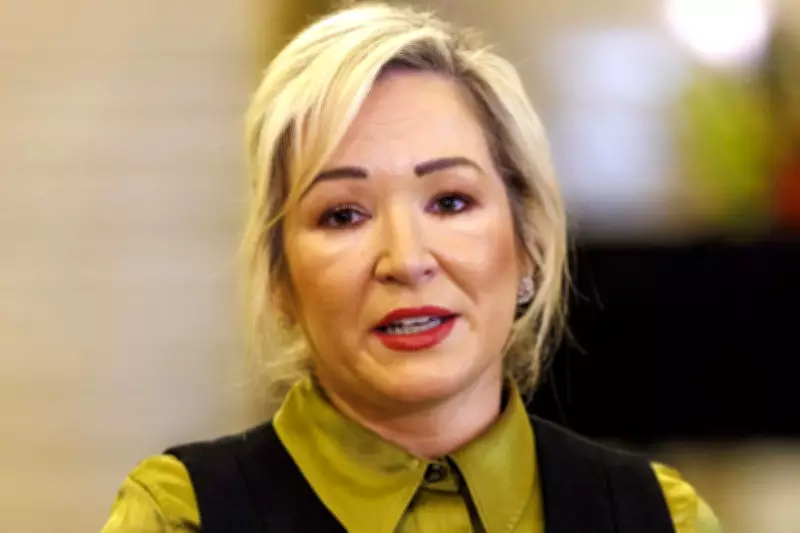
First Minister Michelle O'Neill has declared that political decisions to provide relief for people in Northern Ireland struggling with soaring fuel costs must be made at Westminster, not Stormont. The statement comes amid criticism that the powersharing Executive has failed to take action to respond to the escalating financial pressures on households.
Executive "Carrying the Can" for London Decisions
Speaking at Stormont as MLAs returned from recess, Ms O'Neill argued that the Executive is "carrying the can" for policy decisions made in London. She emphasized the limited fiscal powers of the Assembly, stating that the necessary levers to help people—such as cutting tax on fuel—reside exclusively at Westminster.
"People understand that the Assembly has a limited number of fiscal powers," Ms O'Neill said. "The levers that you reach for to help people actually sit in Westminster, whether that is cutting tax on fuel, then it has to be done at a Westminster level."

She added that she is "not apologetic of banging on the door of Westminster on behalf of the people that I represent" and stressed that only Westminster can take these critical decisions.
Global Context and Rising Anger
Fuel costs have surged globally due to the US-Israel war with Iran, exacerbating the cost-of-living crisis in Northern Ireland. Ms O'Neill and deputy First Minister Emma Little-Pengelly recently wrote to Prime Minister Sir Keir Starmer, urging him to introduce a support package for the region.
Meanwhile, fuel protests along motorways in the Republic of Ireland continue to cause traffic disruption, with social media posts calling for similar demonstrations in Northern Ireland. When asked about the protests, Ms O'Neill acknowledged that "people are angry" and are watching global volatility, governments prioritizing militarization over aid, and political choices that neglect everyday struggles.
Political Reactions and Divisions
DUP leader Gavin Robinson expressed concern over potential protests, stating that he does not believe those facing the cost-of-living crisis will benefit from being stuck in traffic jams. "I don't think anyone who is struggling with fuel costs would benefit from sitting in an idling queue with their engines turning over and their fuel being wasted," he said.
Mr Robinson supported the First Ministers' letter to the Prime Minister, emphasizing that Westminster alone can address issues like VAT and duty on fuel. However, Alliance Party deputy leader Eoin Tennyson accused the DUP and Sinn Fein of "bickering, petty point-scoring and blame-shifting" during a time of crisis.
SDLP leader Claire Hanna countered that the Executive is not without power, urging collaboration with the Secretary of State to implement measures within their authority. "The default reaction to every crisis can't just be a letter to London," she asserted, highlighting the need for proactive local action alongside UK government support.
As tensions mount, the debate underscores the complex interplay between devolved and central governance in tackling urgent economic challenges.