Former US President Donald Trump has reignited a geopolitical debate by asserting that the United States 'needs' Greenland to ensure its security in the rapidly changing Arctic region. This statement underscores the island's pivotal role in global defence and trade dynamics, a point of contention with its sovereign ruler, Denmark.
The Geopolitical Chessboard of the High North
Greenland's position, with 80% of its landmass lying above the Arctic Circle, makes it the world's largest island and a linchpin for North American defence. Its strategic importance was first cemented during World War II when American forces occupied it to prevent a Nazi takeover and to safeguard vital North Atlantic shipping routes. Today, that significance is magnified by climate change, which is thinning polar ice and opening new sea lanes, intensifying competition for access and resources.
The island is a self-governing territory of Denmark, a longstanding NATO ally. Both the Danish government and Greenland's own administration have firmly rejected any notion of a US purchase or transfer of sovereignty, insisting that Greenland's future rests solely with its approximately 56,000 inhabitants, predominantly Inuit.

Mineral Wealth and Military Might
Beyond location, Greenland's value is twofold: immense mineral resources and established military infrastructure. The island is a rich source of rare earth minerals, essential components for smartphones, computers, electric vehicle batteries, and other advanced technologies. As Western nations, including the US, seek to reduce reliance on China's market dominance, Greenland's deposits have become a focal point of economic strategy.
Militarily, the US Department of Defence already operates the remote Pituffik Space Base in northwestern Greenland, established under the 1951 Defence of Greenland Treaty with Denmark. This base is critical for US and NATO missile warning, defence, and space surveillance. Furthermore, Greenland forms part of the strategic GIUK (Greenland, Iceland, United Kingdom) Gap, a naval chokepoint where NATO monitors Russian movements in the North Atlantic.
Rising Tensions and Regional Responses
The Arctic, once a zone of cooperation, is now an arena of renewed rivalry. Russia has moved to bolster its military capabilities in the polar region, citing concerns over NATO activities. Meanwhile, China declared itself a 'near-Arctic state' in 2018 and proposed a 'Polar Silk Road,' ambitions that drew sharp criticism from former US Secretary of State Mike Pompeo.
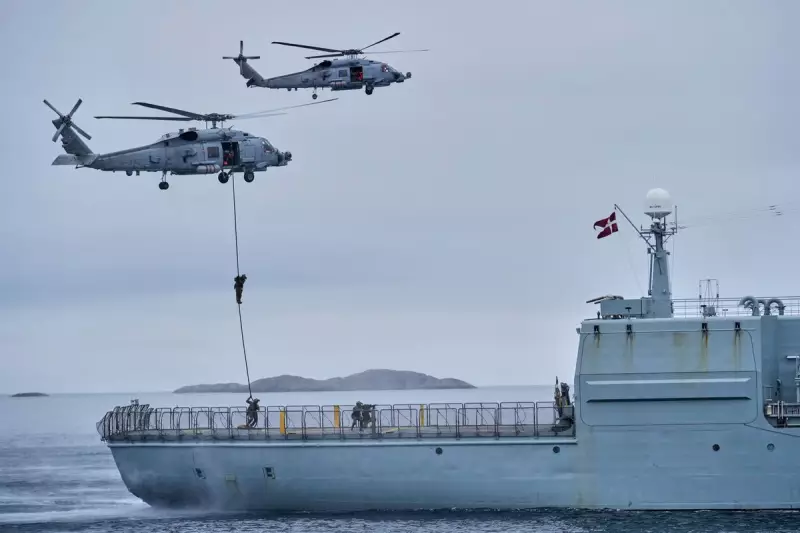
In response, Denmark is strengthening its regional posture. In the past year, it announced a 14.6 billion-kroner (approximately $2.3 billion) agreement with Greenland and the Faroe Islands to enhance surveillance and sovereignty capabilities. This investment will fund new Arctic naval vessels, long-range drones, and satellite capacity. Denmark's Joint Arctic Command, headquartered in Nuuk, and the elite Sirius Dog Sled Patrol maintain a constant presence on the island.
The convergence of climate change, resource competition, and heightened military postures by global powers ensures that Greenland will remain at the heart of Arctic security debates for the foreseeable future, regardless of who occupies the White House.