A palpable sense of uncertainty, not celebration, grips the streets of Caracas in the wake of an unprecedented US military operation on South American soil and the dramatic capture of Venezuela's president, Nicolás Maduro. As the dust settles, the capital's three million citizens are grappling with the aftermath of the controversial nocturnal assault, with many prioritising stockpiling essentials over any form of revelry.
Fear and Confusion on Caracas Streets
The dominant emotion on Sunday, 24 hours after the raid, was one of profound anxiety. Griselda Guzmán, a 68-year-old pensioner, summed up the mood as "uncertainty" while queuing with her husband to buy supplies. The couple, who asked not to be fully identified, feared further drama in the coming days. Across the city, similar scenes unfolded, with long queues forming outside supermarkets and pharmacies.
Leandro, a 24-year-old, voiced shock as he waited in a line of 100 people alongside his partner, Sauriany, and a group of nuns. "Who could have imagined that this would happen? That right at the start of the year they’d bomb our country while everyone was asleep?" he asked. While some quietly welcomed the removal of a leader blamed for years of economic ruin, most expressed confusion and fear of a crackdown by the remaining regime.

Regime Holds Firm as Regional Tensions Rise
Despite Maduro's capture, his political structure remains largely intact. On Sunday, the head of the armed forces, General Vladimir Padrino López, announced that military chiefs had recognised Vice-President Delcy Rodríguez as Venezuela's acting president following what he termed the "cowardly kidnapping" of Maduro and his wife. Former US President Donald Trump indicated a willingness to deal with Rodríguez, stating she was prepared to do what was necessary "to make Venezuela great again."
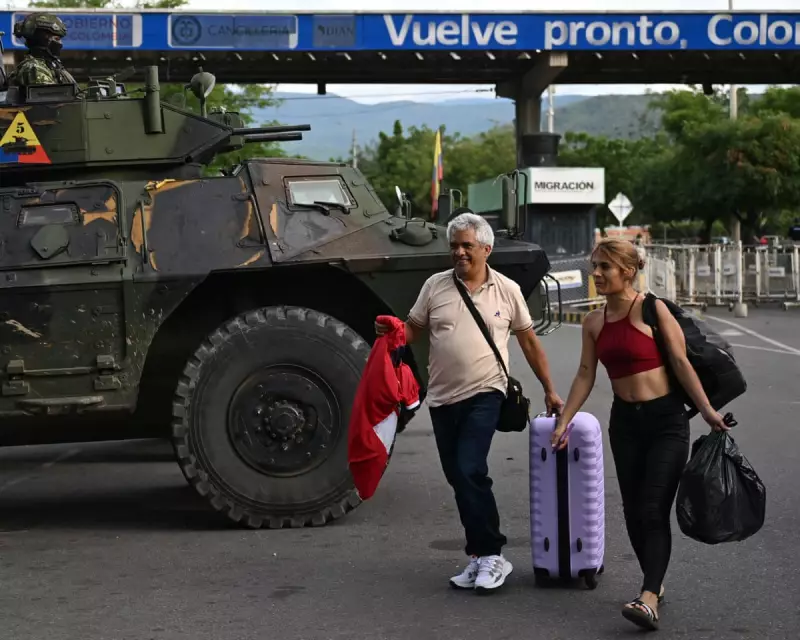
The US action has sent shockwaves through the region. The governments of Spain, Brazil, Chile, Colombia, Mexico, and Uruguay jointly warned it set "an extremely dangerous precedent for peace and regional security." In a tangible sign of escalating tensions, Colombian President Gustavo Petro ordered 30,000 troops to the border with Venezuela. Armoured personnel carriers were stationed at the key border crossing in Cúcuta.
A Divided City Braces for What Comes Next
For many in Caracas, the US intervention has not resolved the nation's deep-seated problems. Antonio Guzmán, 71, likened it to removing a single pawn from a chess game, leaving the fundamental situation unchanged. Others, like video-maker Gabriel Vásquez, 29, were traumatised by the 2am explosions that rocked the city, plunging his neighbourhood into darkness and cutting off water and communications.
While some, like Griselda Guzmán, felt a grim satisfaction seeing Maduro handcuffed, calling him "the biggest fool on Earth," outrage was also widespread. Sauriany argued passionately that Venezuela's problems were for Venezuelans to solve, stating, "They [the US] aren’t Venezuela’s owners." The National Liberation Army (ELN), a Colombian rebel group with a presence in Venezuela, condemned Trump's "imperial" onslaught and vowed to confront it.
As citizens stockpile food and essentials, the future remains deeply uncertain. With Maduro facing trial in New York, an interim government in Caracas, and military forces mobilising along the Colombian border, Venezuela enters a volatile new chapter where the only certainty is more uncertainty.