A palpable sense of uncertainty and fear, rather than celebration, gripped the streets of Caracas on Sunday, just one day after a historic and controversial US military operation on Venezuelan soil resulted in the capture of President Nicolás Maduro.
A City Braces for More Turmoil
The immediate priority for many citizens was not political debate but preparation. Griselda Guzmán, a 68-year-old pensioner, fought back tears as she queued with her husband to stock up on essential supplies. The extraordinary events of Saturday, 24 hours prior, had left the capital's three million inhabitants bracing for further drama.
Across the city, similar scenes unfolded. Sauriany, a 23-year-old administrative worker, and her partner Leandro joined a queue of about 100 people outside a supermarket, waiting to buy flour, milk, and butter. Leandro expressed shock at the nocturnal attack. "Who could have imagined that this would happen? That right at the start of the year they’d bomb our country while everyone was asleep?" he asked.

While some quietly welcomed the demise of the leader they blame for years of economic ruin and repression, open celebration was scarce. Locals cited a dual fear: potential crackdowns by the remnants of Maduro's regime and a profound scepticism that the US intervention would bring meaningful change.
Confusion and Condemnation Following the Raid
The pre-dawn blitz on Saturday traumatised the city. Gabriel Vásquez, a 29-year-old video-maker, described being woken by a "gigantic" explosion around 2am, with aircraft circling overhead and his neighbourhood plunged into darkness. "I thought that any time my house could get bombed too," he recalled, noting that his area still lacked water, electricity, and phone reception on Sunday.
The military action, described by the Venezuelan government as a "cowardly kidnapping," has drawn sharp international criticism. The governments of Spain, Brazil, Chile, Colombia, Mexico, and Uruguay jointly warned it set "an extremely dangerous precedent for peace and regional security."
In a significant development, the head of Venezuela's armed forces, Vladimir Padrino López, announced that military chiefs had recognised Vice-President Delcy Rodríguez as the country's acting president. This move followed indications from former US President Donald Trump that he was prepared to deal with Rodríguez, claiming she was "essentially willing to do what we think is necessary."
Regional Tensions Rise as Troops Mobilise
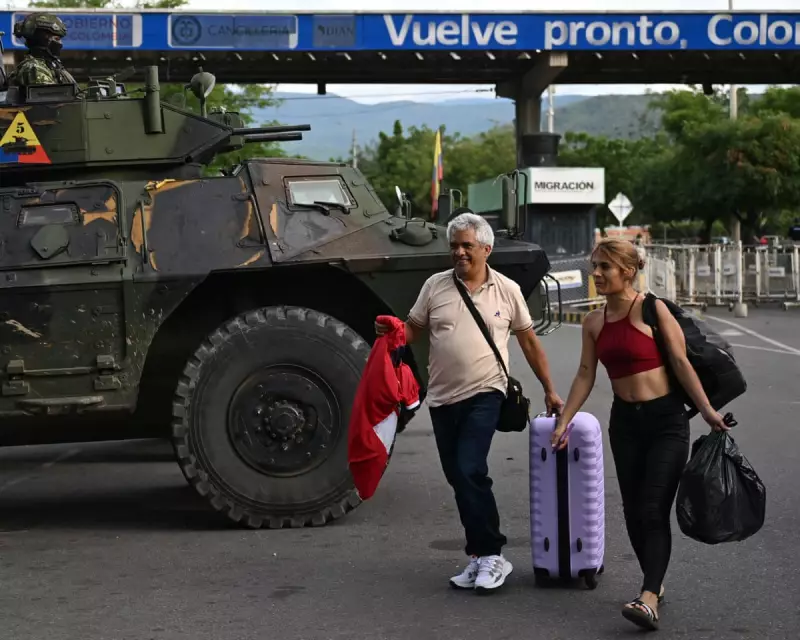
The political shockwaves are being felt across South America. In a direct response to the crisis, Colombian President Gustavo Petro ordered 30,000 troops to reinforce the border with Venezuela. Military vehicles, including armoured personnel carriers, were stationed at the key border crossing in the city of Cúcuta, signalling concerns over potential spillover instability.
The National Liberation Army (ELN), a Colombo-Venezuelan rebel group, condemned Trump's "imperial" onslaught and vowed to confront the attack on Venezuelan sovereignty.
Back in Caracas, the mood remains one of anxious waiting. As Antonio Guzmán, Griselda's 71-year-old husband, surmised while preparing for an uncertain future: "Nothing has happened yet … this only started yesterday. We still don’t know what is really going on." The sentiment captures a nation poised on a knife-edge, its immediate fate hanging in the balance between foreign intervention and entrenched domestic power structures.