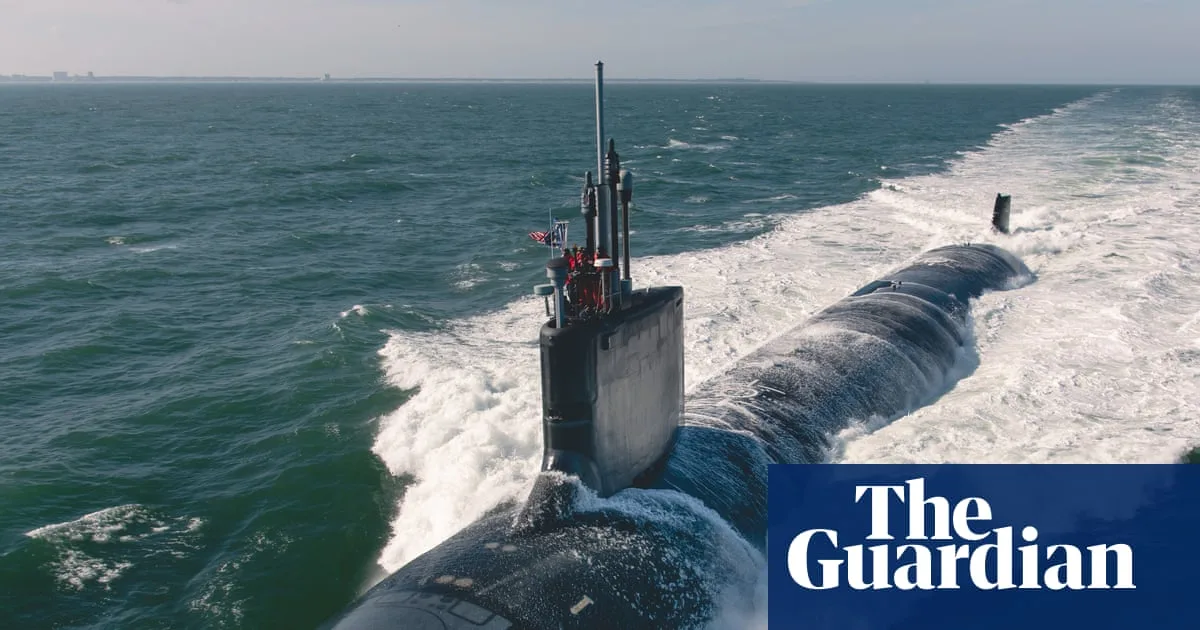
A new report from the United States Congressional Research Service has openly considered an alternative to the planned sale of nuclear-powered submarines to Australia under the AUKUS security pact. The analysis explores the possibility of the US retaining control of Virginia-class attack submarines, operating them from Australian bases under American command, rather than transferring ownership to Australia as originally intended.
Concerns Over Taiwan Conflict and Submarine Availability
The report, released on 26 January, highlights concerns that selling three to five Virginia-class submarines to Australia could weaken US military capabilities in a potential conflict with China over Taiwan. It argues that submarines under Australian command might not be available for US use in such a crisis, whereas US-operated boats could be deployed directly. This stance is bolstered by statements from Australian Defence Minister Richard Marles and the chief of navy, indicating Australia has made no promises to support the US in a war over Taiwan.
Alternative Military Division of Labour
Under the proposed alternative, the US would not sell any Virginia-class submarines to Australia. Instead, these boats would remain in US Navy service and be operated out of Australian bases, alongside US and UK submarines already scheduled to rotate through the region. This setup aims to maintain a stronger deterrent against Chinese aggression by ensuring submarines are under US command for potential conflict scenarios.
The report suggests that Australia could redirect funds saved from not purchasing submarines to invest in other defence capabilities. These might include long-range anti-ship missiles, drones, loitering munitions, B-21 long-range bombers, or systems for defending Australia against attack. Such investments could enable Australia to support US missions as a subordinate force, focusing on non-submarine military roles.
Cybersecurity and Proliferation Risks
Cybersecurity concerns are also raised in the report, noting that hackers linked to China are highly active in attempting to penetrate Australian government and contractor computers. Sharing nuclear submarine technology with Australia could increase the attack surface, providing more entry points for cyber intrusions by China, Russia, or other nations.
Additionally, Australia's strict nuclear non-proliferation laws, under the Treaty on the Non-Proliferation of Nuclear Weapons, mean its submarines can only be armed with conventional weapons. The report argues this could limit future options, such as arming submarines with US nuclear-armed sea-launched cruise missiles to enhance deterrence.
US Shipbuilding Challenges and Legislative Hurdles
The debate over submarine sales is further complicated by ongoing issues in US shipbuilding. American shipyards have struggled to meet production targets, building only about 1.1 to 1.2 Virginia-class submarines per year since 2022, against a need for two per year to meet US Navy requirements. The US fleet currently has 49 submarines, short of a goal of 66, raising questions about the feasibility of supplying boats to Australia.
Legislation passed by the US Congress prohibits the sale of any submarine to Australia if it is needed for the US fleet. The president must certify that relinquishing a submarine will not degrade US undersea capabilities, adding another layer of scrutiny to the AUKUS plan.
Arguments for Retaining the Current AUKUS Arrangement
Despite exploring alternatives, the report also makes a case for sticking with the original AUKUS arrangement. Selling Virginia-class submarines would send a strong signal of collective determination between the US, Australia, and the UK to counter China's military modernisation. As the US has never sold a complete nuclear-powered submarine to another country, not even the UK, such a sale would underscore the depth of this commitment and enhance deterrence in the Indo-Pacific.
Furthermore, accelerating the establishment of an Australian submarine fleet could present China with a second allied decision-making centre for attack submarine operations in the region, complicating Chinese military planning. The report compares this assistance to historical US support for the UK and France in developing their nuclear submarine fleets and arsenals.
Background on AUKUS Pillar One
Under AUKUS pillar one, Australia is set to acquire technology for a fleet of conventionally armed, nuclear-powered submarines. The plan involves two stages: first, purchasing three to five Virginia-class submarines from the US by 2032, pending presidential certification that US capabilities are not diminished; and second, building up to eight AUKUS submarines in Australia, based on a UK design, with the first expected in the early 2040s. The program is forecast to cost Australia up to A$368 billion by the mid-2050s, with Australia responsible for securing nuclear waste for thousands of years.
Previous reports have flagged potential submarine shortages for sale to Australia, but Australia has previously rejected any division of labour alternative. The Guardian has approached Defence Minister Richard Marles for comment on this latest report, as discussions continue to shape the future of the AUKUS alliance and its strategic implications in the Indo-Pacific.




