The US Navy has issued a robust denial of claims that its warships operating in the Middle East are experiencing food shortages, as tensions with Iran continue to escalate. This response comes after a USA Today report raised serious concerns about the adequacy of meals provided to servicemembers aboard vessels like the USS Tripoli and USS Abraham Lincoln.
Navy Leadership Rejects Allegations
In a firm statement, the Chief of Naval Operations, Admiral Daryl Caudle, declared that recent reports alleging food shortages and poor quality aboard deployed ships are categorically false. He emphasized that both the USS Abraham Lincoln and USS Tripoli have sufficient food onboard to serve their crews with healthy options.
'The health and wellbeing of our Sailors and Marines are my top priority, and every crew member continues to receive fully portioned, nutritionally balanced meals,' Caudle asserted. His statement, however, did not directly address or mention the specific USA Today investigation that prompted these concerns.

Defense Secretary Echoes Denial
Defense Secretary Pete Hegseth similarly dismissed the allegations, labeling them as 'more FAKE NEWS from the Pharisee Press'. He confirmed that his team had verified logistics statistics for both ships, noting they carry over 30 days of Class I food supplies, with Naval Forces Central Command monitoring this daily for every vessel.
'Our sailors deserve - and receive - the best,' Hegseth stated, reinforcing the Navy's position that operational readiness and crew welfare are being maintained.
Family Concerns and Photographic Evidence
The controversy stems from USA Today's publication, which included interviews with family members of soldiers expressing fears that their loved ones are going hungry. The report was accompanied by photographs showing what appeared to be meager portions served to personnel.
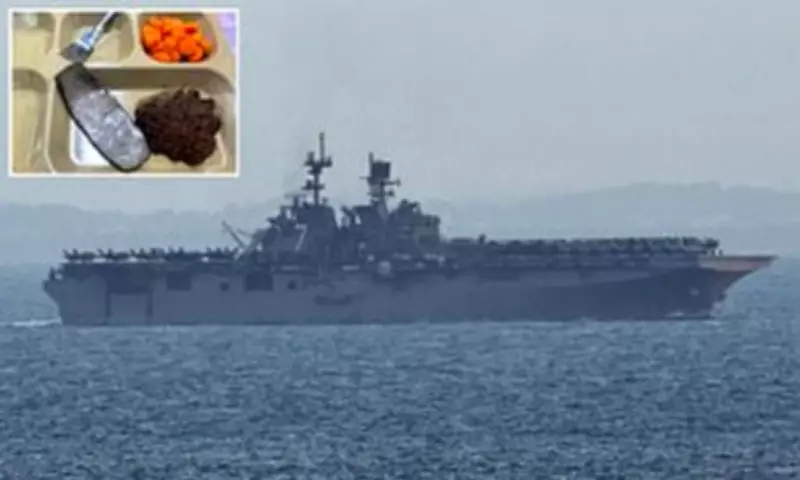
One anonymous father revealed that his daughter, a Marine aboard the USS Tripoli, sent him a picture of a mostly empty tray containing just a small serving of shredded meat and a single folded tortilla. Another parent received a mid-April photo from the USS Abraham Lincoln depicting a tray with boiled carrots, a few scoops of ground beef, and a gray slice of dry-looking meat.
Karen Erskine-Valentine, a West Virginia pastor who spoke to a parent of a child on the Lincoln, described the food as 'tasteless' and claimed sailors are 'hungry all the time', adding a personal dimension to the logistical concerns.
Mail Delivery Issues Addressed
Further complicating matters, USA Today reported that care packages from families have not been reaching troops due to an indefinite suspension of mail deliveries to military ZIP codes. David Coleman, a US Postal Service spokesperson, clarified that no military mailings are being returned to senders and assured they will eventually arrive.
In his statement, Admiral Caudle announced that the temporary suspension on mail has been lifted, attributing it to combat operations. 'Our logistical network is highly adaptable, and we remain committed to supporting our warfighters as they execute Operation Epic Fury,' he said, highlighting the Navy's efforts to maintain supply chains.
Operational Context and Navy Assurance
The USS Tripoli and USS Abraham Lincoln are currently deployed in the Middle East as part of ongoing military operations related to the conflict with Iran. The Navy has emphasized its unmatched logistics capability to sustain operations at sea, with routine menu adjustments described as a method to optimize endurance and keep warships operational.
'The US Navy possesses an unmatched logistics capability to sustain operations at sea, and routine menu adjustments are simply how we optimize our endurance to keep our warships in the fight,' Caudle explained, framing the issue within broader strategic considerations.
Despite the strong denials from top officials, the contrasting accounts from families and visual evidence continue to fuel debate over the conditions faced by servicemembers in a volatile region, underscoring the challenges of maintaining morale and supply lines during prolonged deployments.