US-Israel Military Operation Intensifies with Fifth Day of Strikes Across Iran
Deadly strikes continued to rain down on Iran as dawn broke on Wednesday, marking the fifth consecutive day of a joint United States and Israeli military operation against the Islamic Republic. The Israeli military announced early Wednesday that it had launched a broad wave of strikes targeting multiple locations within Iran, while Iranian state media reported missile impacts in cities throughout the country.
Retaliatory Strikes and Escalating Regional Conflict
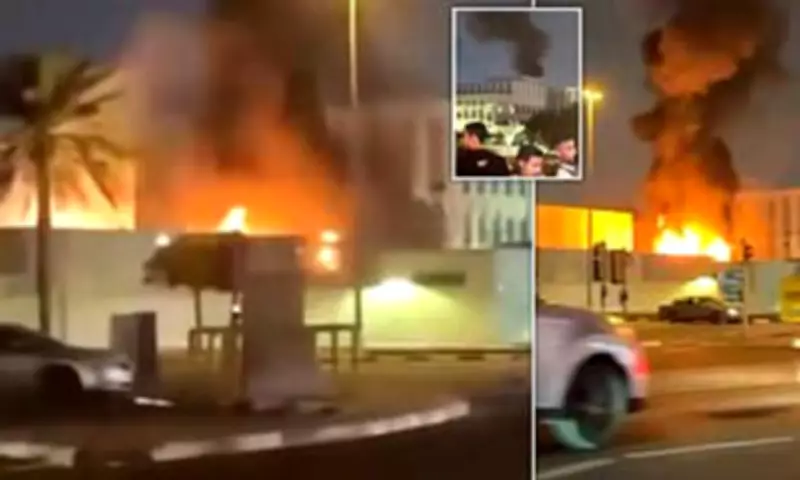
In response, Iran has conducted retaliatory strikes reported in the United Arab Emirates, Saudi Arabia, and Jordan. Notably, Iranian forces struck a CIA station at the US Embassy in Saudi Arabia, causing structural damage and prompting personnel to shelter in place, according to reports from the Washington Post. The regional conflict shows no signs of abating, with tensions reaching a critical point.
US Military Deployment and Casualty Details
Approximately 50,000 US troops in the Middle East have been assigned to the ongoing war against Iran, with additional forces en route to the region, as confirmed by an official speaking to The New York Times. The operation, dubbed Operation Enduring Freedom, has already claimed the lives of six US soldiers. Authorities announced on Tuesday that the fallen included decorated servicemembers and a mother-of-two.

The Pentagon identified four soldiers killed in a drone strike on a command center in Port Shuaiba, Kuwait, on Sunday:
- Capt. Cody A. Khork, 35, of Winter Haven, Florida
- Sgt. 1st Class Noah L. Tietjens, 42, of Bellevue, Nebraska
- Sgt. 1st Class Nicole M. Amor, 39, of White Bear Lake, Minnesota
- Spc. Declan J. Coady, 20, of West Des Moines, Iowa
Sgt. Amor was just days away from returning home to her husband and two children when she was killed. Her husband, Joey Amor, described her being in a state of constant concern prior to the attack, noting that she had been moved to a less defensible location due to fears of an imminent assault.
Investigation into Security Failures and Leadership Response
Authorities are currently investigating the deadly strike in Kuwait. A source familiar with the incident told CNN that the command center lacked adequate shielding from missiles or drones. Additionally, three officials informed CBS News that there had been prior discussions about whether the tactical operations center should have been used, as it concentrated too many personnel in a vulnerable location.
Despite these concerns, Defense Secretary Pete Hegseth insisted on Monday that the strike hit a fortified tactical operation center, claiming only one projectile breached air defenses. In response to the casualties, President Donald Trump vowed to avenge the fallen soldiers, praising them as true American patriots while warning that further losses may occur as the operation continues.
Origins of the Operation and Iranian Leadership Changes
The Trump administration stated that the decision to strike Iran was aimed at targeting its nuclear weapons program. According to Axios, President Trump ordered the launch of Operation Epic Fury on Saturday following a phone call from Israeli Prime Minister Benjamin Netanyahu. The call, part of months of intensive coordination between the two leaders, provided intelligence that Iran's Supreme Leader and top advisors were meeting at a specific location in Tehran.
The strike resulted in the death of Ayatollah Ali Khamenei and several top officials. However, Iran's leadership remains undeterred, having named Khamenei's son, Mojtaba Khamenei, as the new supreme leader on Tuesday.
Logistical Challenges and Strategic Objectives
As the military operation progresses, concerns have emerged regarding the sustainability of anti-drone defenses in Gulf states. A source indicated to the Daily Mail that supplies of interceptors could be depleted within four days due to unprecedented usage rates. Meanwhile, the joint US-Israeli offensive is reportedly seeking to incite an armed uprising in Iran, leveraging a Kurdish fighting force and thousands of volunteers armed since 2024.

President Trump has affirmed his willingness to deploy additional US troops to Iran if necessary, emphasizing a commitment to the ongoing mission.
International Reactions and Diplomatic Tensions
Canadian Prime Minister Mark Carney has expressed regret over his government's initial support for the military operation, criticizing the US and Israel for acting without United Nations engagement or consultation with allies. Carney clarified that Canada will not participate in military actions against Iran but will assist in diplomatic efforts to reach a negotiated settlement. He stressed the importance of diplomatic engagement involving broader international parties to prevent a wider conflict.
The situation remains fluid, with ongoing strikes and geopolitical maneuvering shaping the future of the region.