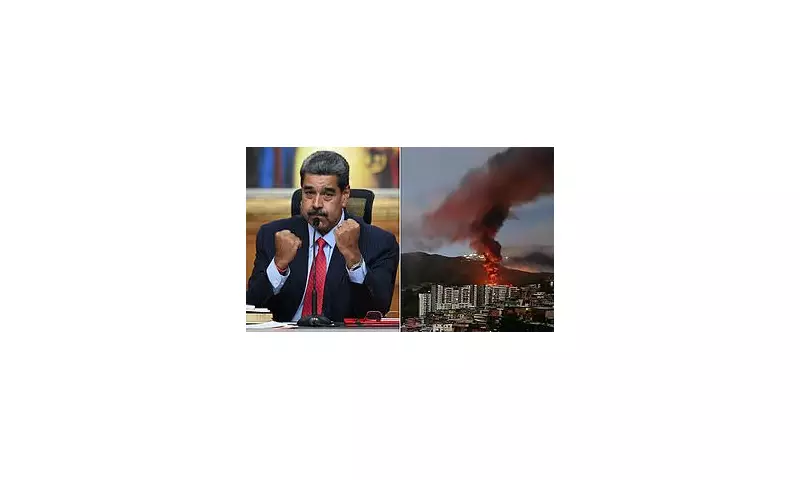
In a move that has sent shockwaves across the globe, the United States has taken control of Venezuela following a dramatic military operation that resulted in the capture of the country's president, Nicolás Maduro.
The Dawn Raid on Caracas
In an extraordinary assault in the early hours, US special forces descended from helicopters directly into President Maduro's compound, Fort Tiuna, in central Caracas. The operation was supported by fighter jets launching air strikes across the Venezuelan capital. Elite Delta Force troops overcame dozens of armed guards in a fierce gun battle before reaching Maduro as he fled his bedroom with his wife, Cilia Flores.
Former US President Donald Trump, who watched events unfold from his Florida residence, stated that Maduro was apprehended just as he tried to enter a panic room. "He made it to the door, he was unable to close it," Mr Trump said, likening the scene to a television show and suggesting it was the greatest military operation since the Second World War.

Trump's Declaration and International Reaction
Speaking from a position of triumph, Donald Trump declared that the US would now 'run the country' until a proper transition of power could be arranged. He announced that American oil companies would be sent to Venezuela to repair infrastructure and 'start making money for the country'.
The international response has been sharply divided. Britain and France welcomed the development, with Prime Minister Keir Starmer stating the UK shed "no tears" for Maduro's regime. French President Emmanuel Macron said the Venezuelan people were "rid of Nicolas Maduro's dictatorship". Conversely, Russia condemned the arrest as an 'act of armed aggression', while China accused the US of violating international law and threatening regional peace.
Maduro's Fate and the Path Ahead
Described by the US as a 'narco-terrorist', the 63-year-old Maduro and his wife are now facing trial in New York on drugs and weapons charges. He was pictured blindfolded on board the USS Iwo Jima and is currently held at a detention centre in Brooklyn. His regime has been blamed for thousands of extrajudicial executions and the economic collapse of Venezuela.
The operation's success was aided by a CIA spy in Caracas who tracked Maduro's movements intimately, and US forces spent weeks rehearsing in a replica of his compound. Trump revealed he did not seek Congressional authority, fearing leaks, and had previously offered Maduro a peaceful exit, which was refused.
US Deputy Secretary of State Christopher Landau proclaimed Venezuela was experiencing a 'new dawn', stating "The tyrant is gone. He will now - finally - face justice for his crimes." The immediate political future remains uncertain, with Vice-President Delcy Rodriguez asserting power but rejecting US intervention, despite Trump's claims of her cooperation.