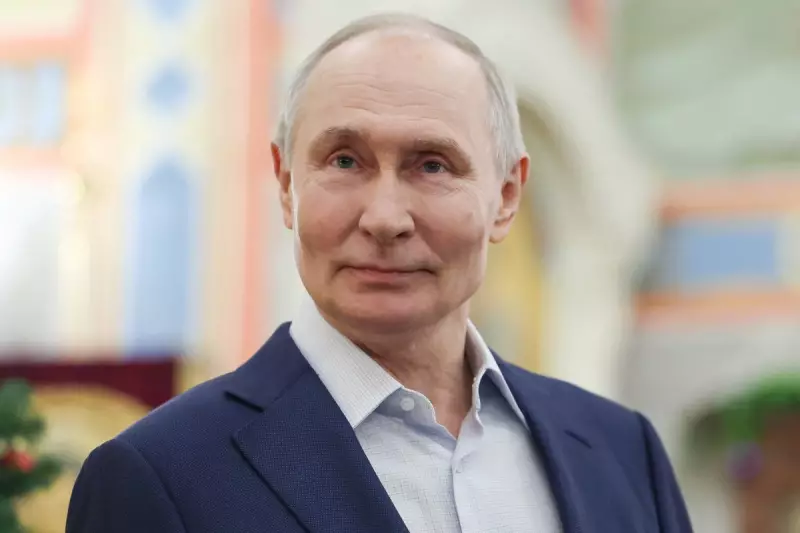
A stark warning has been issued that the United Kingdom and its NATO allies are being held back by an 'outdated nuclear doctrine' in the face of the ongoing threat from Vladimir Putin's Russia. The critical assessment comes from a new report authored by former military chief Sir Jock Stirrup for the think tank Policy Exchange.
Deterrence Requires More Than Nuclear Threats
The report, published on Thursday 8 January 2026, argues that Western powers failed to prevent Russian aggression in Ukraine because they did not exercise deterrence in terms that were meaningful to the Kremlin's leadership. It states that effective deterrence relies on a full spectrum of military capabilities, not nuclear weapons alone.
Sir Jock's analysis points to a concerning decline in Britain's intellectual capacity for nuclear deterrence strategy. To address this, the report recommends that the UK and NATO conduct large-scale military exercises that incorporate a nuclear element, thereby sending a clearer and more credible signal to potential adversaries.

Starmer's Peacekeeping Pledge and the Scale of the Challenge
The international situation continues to escalate, with recent events such as the US and UK seizing a Russian-flagged oil tanker linked to Venezuela heightening tensions. This has prompted European leaders to re-evaluate defence spending and their reliance on the United States, especially in light of comments from former US President Donald Trump.
Amid this volatile backdrop, Prime Minister Sir Keir Starmer announced that the UK and France have committed to sending forces to Ukraine in the event a peace deal and ceasefire are agreed. The troops would serve as a peacekeeping mission. However, former military figures have suggested that a force of at least 50,000 troops would be necessary to effectively deter further Russian aggression, indicating the significant scale of the potential commitment.
Re-evaluating Western Defence Postures
The Policy Exchange report serves as a urgent call to action for the UK and its allies. It concludes that to credibly counter the threat from Moscow, a fundamental upgrade of conventional and nuclear military capabilities is required. The warning underscores that without modernising its approach to deterrence, the West risks further miscalculation and conflict.
The combined developments of the critical report and the Prime Minister's conditional troop commitment highlight a pivotal moment for UK and European security policy, as leaders grapple with the long-term challenge posed by Russia.