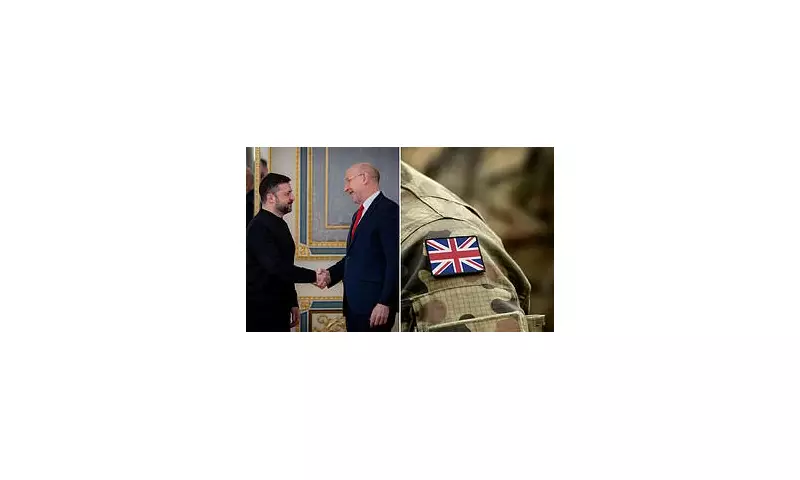
Defence Secretary John Healey has announced a major £200 million funding package to prepare British troops for potential deployment to Ukraine in the event of a ceasefire with Russia.
Funding for Readiness and Equipment
The announcement follows Mr Healey's one-day visit to Kyiv on Friday, where he met with President Volodymyr Zelensky to discuss plans for the proposed Multinational Force Ukraine. The substantial investment will be used for critical upgrades, including vehicle and communications system modernisation, counter-drone protection, and other essential equipment to ensure forces are combat-ready.
John Healey stated: 'We are surging investment into our preparations following the Prime Minister's announcement this week, ensuring that Britain's armed forces are ready to deploy, and lead, the Multinational Force Ukraine, because a secure Ukraine means a secure UK.'

President Zelensky expressed gratitude for the UK's continued support, emphasising the importance of a clear allied response framework should Russian aggression resume after any peace deal.
Multinational Force and Strategic Messaging
The initiative aligns with Prime Minister Sir Keir Starmer's Wednesday pledge to contribute British personnel to a 'coalition of the willing' reassurance force. While the total size of the western contingent, which includes French soldiers, remains undisclosed, reports suggest it could involve around 15,000 personnel, with the UK potentially providing half. Mr Healey has been cautious about revealing specific numbers, arguing that doing so would 'only make [Vladimir] Putin wiser'.
The funding news emerged against a backdrop of severe escalation. Just one day prior, Russia launched a massive barrage of over 200 drones and 20 missiles against Ukrainian civilian and energy targets. This assault included the use of an experimental hypersonic Oreshnik missile, a nuclear-capable intermediate-range ballistic missile (IRBM), fired from deep within Russian territory at a target near Lviv.
British Defence Intelligence assessed that the Oreshnik strike, aimed near NATO and EU borders at Europe's largest underground gas storage facility, was 'almost certainly intended as strategic messaging'. The missile, which can generate temperatures near 4,000°C, is believed to be in limited, costly supply in Moscow's arsenal.
Drone Production and Regional Security
During his visit, Mr Healey also confirmed that production of new 'Octopus' drones for Ukraine will begin this month. These UK-made drones are designed to intercept Russian attack drones at a fraction of the cost. The government aims to produce thousands per month to bolster Ukraine's defences.
This series of announcements underscores the UK's deepening strategic commitment to Ukrainian security beyond immediate weapon supplies, focusing on long-term deterrence and preparedness within a multinational framework. The move signals a significant shift towards planning for a post-ceasefire security architecture in Eastern Europe.