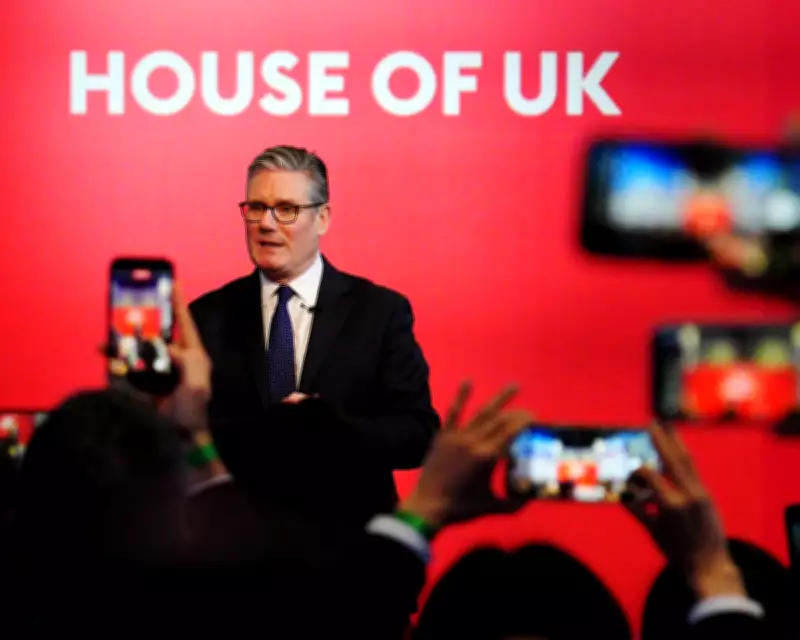
Sir Keir Starmer attended the House of UK reception in China on Friday, where he articulated a vision for the United Kingdom's future relationship with the European Union that extends beyond existing agreements. The Labour leader emphasised that the UK "should not just follow through on what we've already agreed," signalling a proactive stance on deepening ties with Brussels.
Prospect of Renewed Defence Talks Emerges
Diplomatic sources have revealed that the UK and the European Union are actively exploring the possibility of restarting negotiations on closer defence cooperation. This development comes as Sir Keir Starmer stressed his ambition to "go further" in strengthening the UK's relationship with Brussels. The impetus for renewed dialogue follows the collapse of talks in November 2025 regarding UK participation in the EU's substantial €150 billion Security Action for Europe (Safe) defence fund.
Diplomatic Engagements and Agenda
Maroš Šefčovič, the EU's trade commissioner, is scheduled to visit London for talks next week. While trade, energy, and fisheries are officially on the agenda, diplomatic insiders indicate that the UK is keen to discuss restarting defence negotiations at the earliest opportunity. Šefčovič will meet with Nick Thomas-Symonds on Monday for the annual EU-UK Partnership Council meeting, the body established to oversee the post-Brexit agreement between the two parties.

Although defence is not currently listed on the formal agenda for these talks—with the UK understood to be prioritising progress on food and drink matters—the subject remains a significant point of discussion behind the scenes. Furthermore, Šefčovič and EU economy commissioner Valdis Dombrovskis are due to meet Chancellor Rachel Reeves to discuss geoeconomic issues, with additional meetings planned with Business Secretary Peter Kyle.
Collapse of Previous Negotiations
The previous round of talks for the UK to join the Safe defence fund broke down in November 2025. The collapse was attributed to disputes over the financial terms of entry, with sources claiming the EU had set what was perceived as an excessively high price for participation. While France has denied responsibility for the breakdown, diplomatic sources suggest that tensions persist between Paris and other member states, particularly Germany, which is reportedly eager for UK involvement in Safe "as soon as possible."
Conditions and Preconditions
European sources indicate that France sought to make UK participation in the Safe fund conditional on London's involvement in a second defence programme. This additional programme, agreed upon by EU leaders in December, involves a €90 billion loan to Ukraine, securitised against Russian frozen assets held in Belgium. Germany, however, opposes attaching any such preconditions to UK accession.
Brussels sources have privately admitted that the failure to reach an agreement in November was "an embarrassment," especially given that both sides had previously declared the prospect of "enhanced cooperation" through Safe at a summit hosted by Sir Keir Starmer and European Commission President Ursula von der Leyen in May of the preceding year.
Shifting Political Landscape and Appetite for Deal
There is understood to be a renewed appetite on all sides for a deal that would see the UK join a future round of the Safe defence fund. This shift in sentiment has been partly influenced by the evolving geopolitical landscape, including former US President Donald Trump's threats regarding Greenland and his criticism of NATO. These developments have underscored the importance of bolstering European defence capabilities through strengthened partnerships.
Starmer's Vision for Broader Cooperation
Speaking in Beijing, Sir Keir Starmer did not specifically mention defence but elaborated on his vision for a closer UK-EU relationship that extends into new areas beyond existing trade agreements. He identified potential sectors for future agreements, including chemicals and automotive industries, which face impending tariffs for non-electric vehicles from next year. The UK is also negotiating the details of a youth mobility scheme, with Starmer seeking a cap on participant numbers and a fixed duration for free travel arrangements.

"I think we should not just follow through on what we've already agreed. I think the relationship with the EU and every summit should be iterative," Starmer stated. "We should be seeking to go further. And I think there are other areas in the single market where we should look to see whether we can't make more progress. That will depend on our discussions and what we think is in our national interest."
He further clarified, "But what I'm indicating here is – I do think we can go further. And the place to look is the single market, rather than the customs union, which doesn't now serve our purpose very well."
Internal and External Pressures
Sir Keir Starmer faces mounting pressure from within his own party to pursue closer ties with the European Union, particularly as relations with the United States have become increasingly uncertain under the Trump administration. Stella Creasy, Labour MP and chair of the Labour Movement for Europe, commented on this growing sentiment.
"There's now a growing recognition our future lies with restoring a strong working relationship not just on defence but on national and economic security," Creasy observed. "That means everything should be on the table in talks with EU countries."
Financial Discrepancies and Industry Implications
Sources close to the government revealed significant financial discrepancies that contributed to the previous negotiation breakdown. The EU had reportedly demanded that the UK contribute approximately €2 billion to the Safe fund, while British officials believed a contribution "in the hundreds of millions" was more appropriate. The Safe fund operates by raising money on credit markets, which is then lent to member states over 45 years to procure military equipment ranging from ammunition to drones and missiles.
The fund's primary objective is to enable the EU to rapidly enhance its defence capabilities—a goal that has gained additional urgency due to perceived uncertainties in transatlantic support. While the UK is currently ineligible to apply for Safe loans, joining the programme under third-country rules would allow British defence companies to tender for procurement contracts, potentially providing a substantial boost to the UK's defence industry.
Future Opportunities for Dialogue
Additional opportunities for the EU and UK to discuss defence cooperation may arise at a political summit in Washington on Wednesday, convened by Marco Rubio to discuss critical minerals. The Foreign Office is expected to send a minister to participate in these discussions.
Regarding the prospect of renewed defence cooperation, one source close to the government remarked, "The UK government was prepared to pay a certain amount, but there was a huge gap between the parties. Europe needs the UK, so they thought this could all be revisited and fixed. And there was a political obstacle. The UK government is open to a second go but clearly if the EU came back with the same kind of proposition, it would be the same answer. It was very much the French who were seen as pushing this unreasonable position."
As diplomatic engagements continue, the exploration of renewed UK-EU defence cooperation talks represents a significant development in post-Brexit relations, reflecting both geopolitical necessities and evolving political will on both sides of the Channel.