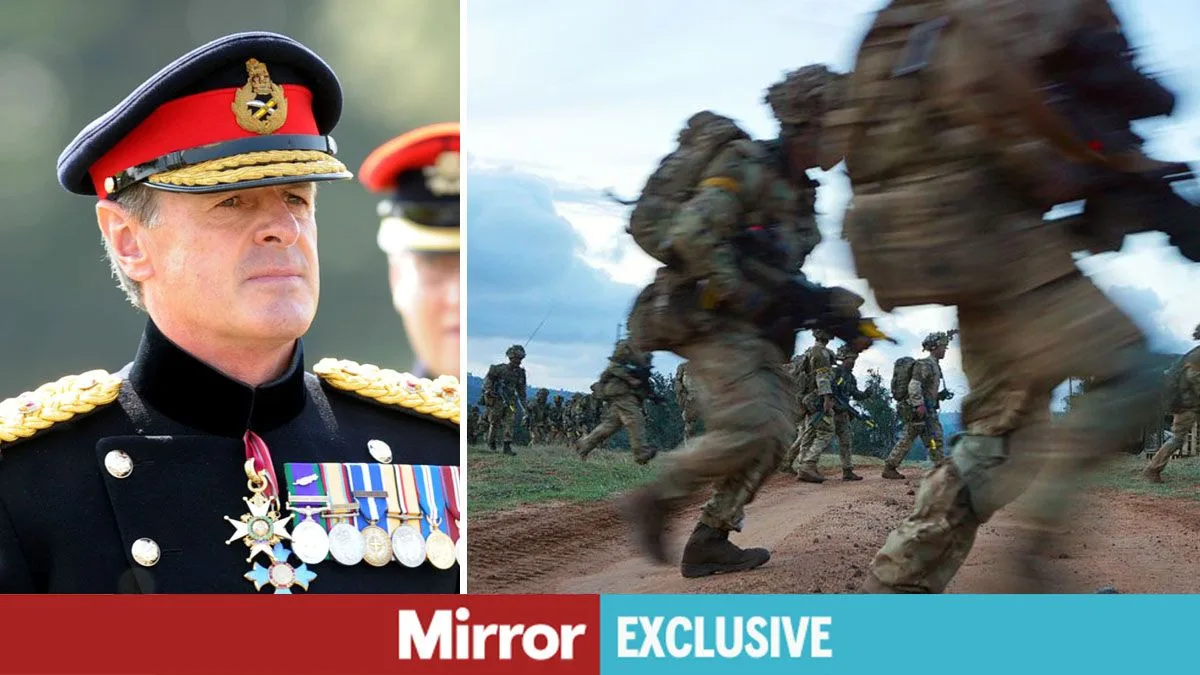
The spectre of conscription has re-entered British political discourse, sparking a fierce national debate about the future of the UK's defence and the potential return of mandatory national service. This comes amid heightened global tensions and concerns over the preparedness of the armed forces.
What is Conscription and Could It Really Return?
Conscription, commonly known as the draft, is the compulsory enlistment of people into a country's armed forces. In the UK, it was last used in the form of National Service between 1949 and 1960, with the last servicemen being discharged in 1963. The current British military is a professional, volunteer force.
However, recent comments from senior military figures and a subsequent review have thrust the concept back into the spotlight. The debate was ignited by the head of the British Army, General Sir Patrick Sanders, who suggested the UK might need a "citizen army" to prepare for a potential land war. While he did not explicitly call for conscription, his remarks opened the door to the discussion.
In response, Downing Street and the Ministry of Defence were quick to state that there are no plans to reintroduce conscription. A government spokesperson firmly said, "The British military has a proud tradition of being a voluntary force. There is no suggestion of a return to conscription."
The Political and Public Divide
The topic has revealed clear dividing lines. Former Defence Secretary and current Deputy Prime Minister, Grant Shapps, dismissed the idea, emphasising the government's commitment to a volunteer military. Conversely, some backbench MPs and defence analysts argue that with a shrinking regular army and growing threats, all options must be considered to bolster national resilience.
Public opinion is also mixed. Proponents argue that national service could instil discipline, provide skills for young people, and create a larger pool of trained personnel in case of a major conflict. Critics contend it would be an infringement on personal liberty, logistically challenging, and potentially ineffective for modern, high-tech warfare which requires years of specialist training.
Who Would Be Affected by a Modern Draft?
If conscription were ever to be reintroduced, it would require an Act of Parliament. Historically, National Service applied to healthy men aged 17 to 21. In a modern context, any new scheme would likely be subject to intense debate over its scope, including whether it would apply to women as well as men, and what exemptions might be allowed for health, education, or conscientious objection.
The logistics would be immense. The UK currently has around 75,000 regular army troops, a figure that has steadily declined. Training hundreds of thousands of conscripts would require a massive investment in infrastructure, instructors, and equipment.
The UK is a signatory to the European Convention on Human Rights, which permits conscription for military service or for alternative service in cases of conscientious objection. Any move to implement a draft would inevitably face legal and human rights challenges.
Looking Ahead: A Last Resort
For now, the official position from Westminster remains unchanged. The government is focusing on recruitment and retention within the existing volunteer forces. The debate, however, underscores a broader anxiety about the UK's defence posture in an increasingly volatile world and the need for a sustained public conversation about the nation's security.
While the return of the draft remains a distant and politically contentious possibility, its discussion serves as a stark reminder of the evolving nature of global threats and the continuous need to evaluate how a nation prepares to defend itself.




