
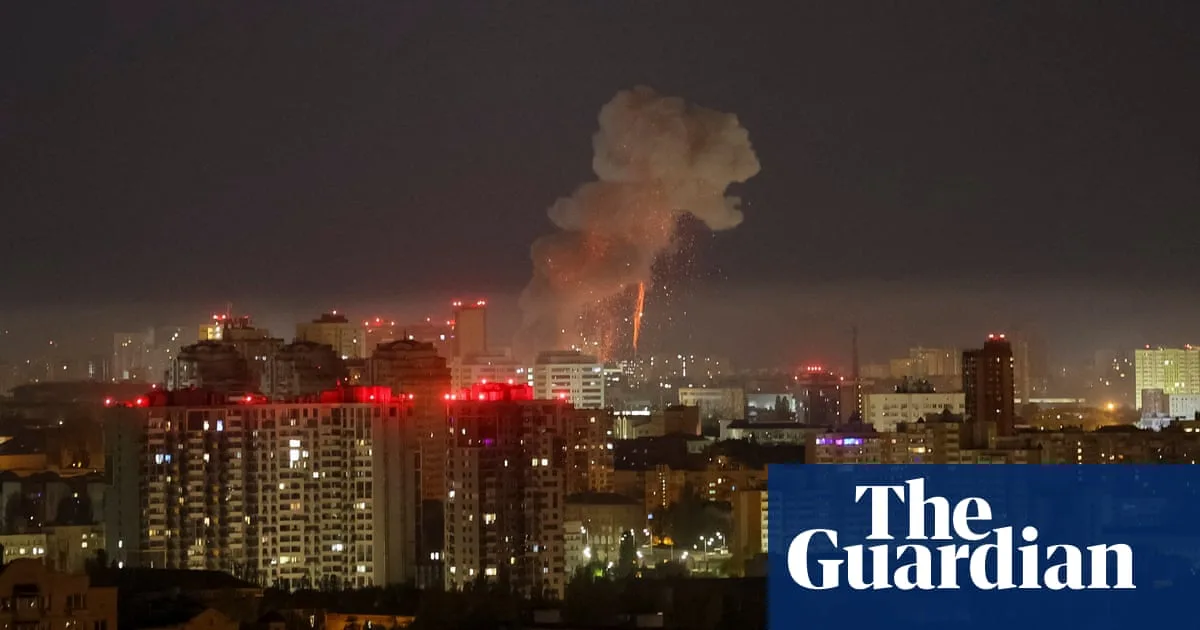
Volodymyr Zelenskyy has accused Russia of using a North Korean ballistic missile in a deadly strike on Kyiv that killed 12 people, highlighting the Kremlin's deepening reliance on Pyongyang's military support. The Ukrainian president said the missile, believed to be a KN-23, struck a residential block in the Sviatoshynskyi district early on Thursday. “If the information that this missile was made in North Korea is confirmed, this will be further proof of the criminal nature of the alliance between Russia and Pyongyang,” he said.
The claim underscores the growing material role North Korea plays in the war. Despite denials from Moscow and Pyongyang, evidence gathered by experts—including satellite imagery, social media videos, and intelligence reports—reveals extensive weapons transfers. By the start of this year, North Korea had supplied Russia with 148 KN-23 and KN-24 ballistic missiles, according to Ukraine's military spy agency. The KN-23 carries warheads of up to one tonne, making it more powerful than Russian equivalents.
A joint investigation by Reuters and the Open Source Centre (OSC) tracked 64 shipments of North Korean munitions to Russia over 20 months, using a special fleet of Russian carriers. The shipments contained nearly 16,000 containers, likely including over 4 million artillery shells and rockets. One shipment was made as recently as 17 March. The OSC said its analysis “reveals a sobering truth: since September 2023, North Korea has shipped…potentially worth several billions of dollars”.
North Korean munitions now account for up to 70% of rounds used by Russian artillery units, according to a Ukrainian military expert cited in the report. “North Korea’s contribution has been strategically vital,” said Hugh Griffiths, former coordinator of a UN sanctions panel on North Korea. “Without Chairman Kim Jong-un’s support, President Vladimir Putin wouldn’t really be able to prosecute his war in Ukraine.”
In addition to older ammunition, Pyongyang has sent newer weapons such as multiple-launch rocket systems and long-range artillery, which have been field-tested in Ukraine. Experts note that while some older hardware has poor accuracy, the provision of new missile technology enhances Russia's attack capabilities. The 38 North report listed artillery and mortar shells, multiple rocket launchers, and self-propelled guns among the items supplied.




