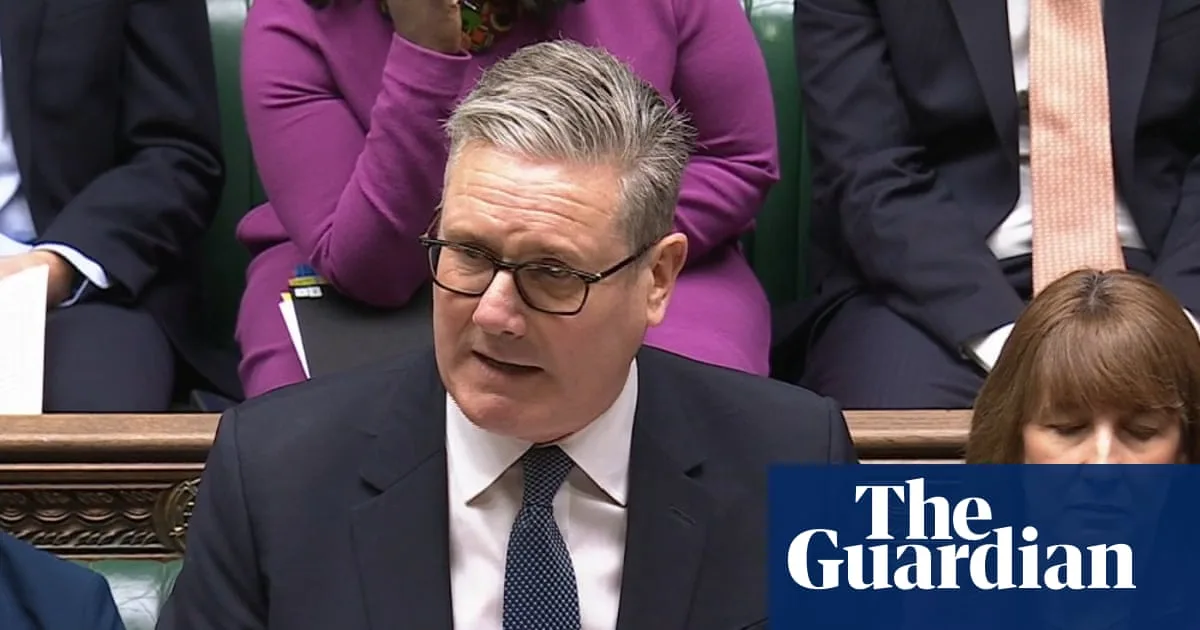
Prime Minister Keir Starmer has made a major commitment to the House of Commons, promising that Members of Parliament will be given a vote before any British troops are deployed to Ukraine in the event of a peace deal with Russia.
A Pledge of Parliamentary Scrutiny
The pledge was delivered during Prime Minister's Questions on Wednesday, following the signing of a significant joint declaration in Paris. The UK, France, and Ukrainian President Volodymyr Zelensky agreed to a framework that could allow for international "boots on the ground" in Ukraine, but strictly after a ceasefire is in place. Mr Starmer emphasised that any deployment would be for defensive and deterrent purposes, focused on supporting Ukraine's capabilities.
"If there were to be a deployment of British troops to the region there would be a vote," the Prime Minister told the Commons. He clarified the conditions, stating, "Deployment would only be after a ceasefire to support Ukraine's capabilities, to conduct deterrent operations and to construct and protect military hubs."
Details of the Franco-British Plan
The core of the agreement, signed on Tuesday, involves Britain and France establishing protected military facilities on Ukrainian soil. These hubs would be used to store weapons and equipment, helping Kyiv to defend itself in the long term. Mr Starmer confirmed that the specific number of personnel required would be determined by military planning and presented to Parliament ahead of any vote.
He faced questioning from Tory MP Kemi Badenoch, who pressed him on the scale and role of any potential force. "Can he at least confirm how many troops would be sent to Ukraine and whether they would be in a combat role?" she asked. In response, Mr Starmer reiterated the post-ceasefire, non-combat nature of the proposed mission, designed for construction, protection, and deterrence.
Legal Framework and Next Steps
The Prime Minister was adamant that any deployment would require a "legal instrument" and would be preceded by both a debate and a vote in the Commons. "I would put that matter to this House for a debate beforehand and for a vote on that deployment - that is consistent with recent practice and I'll adhere to that," he stated, committing to a statement to MPs at the earliest opportunity.
Speaking alongside President Zelensky in Paris, Starmer struck a determined but cautious tone. He asserted that work towards a lasting peace was "more advanced than ever," but placed the responsibility for a deal squarely on Vladimir Putin, accusing the Russian leader of continuing his "warmongering." The PM cited recent Russian strikes on Ukrainian infrastructure, including a hospital in Kyiv, as evidence that Putin is not ready for genuine peace talks.
This commitment to parliamentary approval sets a clear precedent for how a Starmer government would handle major decisions on military deployment, ensuring democratic oversight remains central to UK defence policy in the ongoing conflict.




