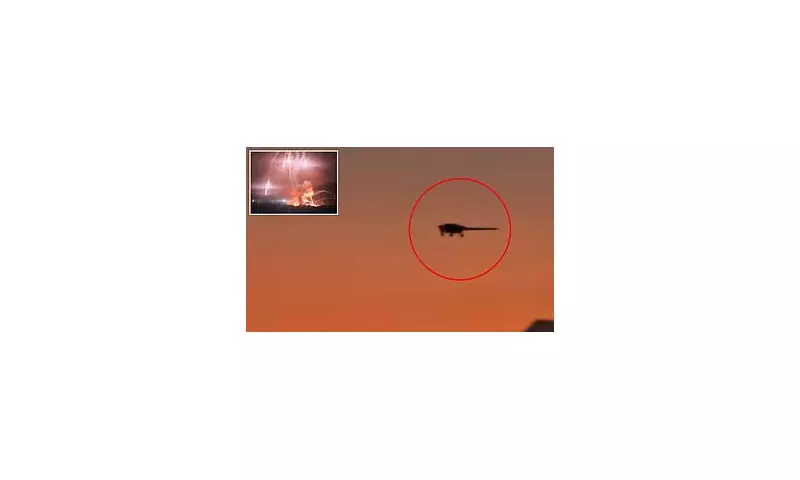
First images have surfaced of a top-secret American stealth drone deployed in the audacious operation to capture Venezuelan leader Nicolás Maduro, as he faces drug charges in a New York court. The footage, shared online, shows a US Air Force RQ-170 Sentinel landing at a base in Puerto Rico at sunrise on January 3, immediately following the raid.
Covert Surveillance Preceded Dawn Raid
According to reports, at least one of these elusive RQ-170 drones played a role in the overnight mission to detain President Maduro and his wife. The United States does not recognise Maduro as Venezuela's legitimate leader. The New York Times, citing unnamed officials, revealed that the CIA had quietly been flying these stealth drones over Venezuela for months. Their mission was to track Maduro's movements and build a detailed picture of his daily routines in preparation for the strike.
The drones operated overhead in Venezuelan airspace, particularly around the capital Caracas, though their exact flight paths remain classified. Military analysts have drawn parallels between this long-term, covert monitoring and the intelligence gathering that preceded the 2011 operation against Osama bin Laden.

The Sentinel's Secretive Capabilities
The RQ-170 Sentinel, designed by Lockheed Martin's famed Skunk Works division, is built precisely for such high-stakes missions. It provides surveillance of high-value targets inside hostile territory and supports special operations teams. In this case, it aided the Delta Force unit that ultimately captured Maduro.
Despite being in service for around 20 years, the Air Force only acknowledged the drone's existence in December 2009. It is believed only 20 to 30 RQ-170 drones are in service, operated primarily by the 432nd Wing at Creech Air Force Base in Nevada—a facility located less than 100 miles from the notorious Area 51 test site.
The unmanned aircraft is equipped with advanced sensors for mapping and tracking, infrared cameras for night vision, and sophisticated tools for intercepting communications.
A Coordinated Assault Involving Cyber Warfare
The drone operation was just one part of a massive coordinated assault. Over 150 aircraft took part in the raid, launching from multiple bases across the region. Simultaneously, US cyber warfare units played a crucial role by plunging the target area into darkness.
As the operation, codenamed Absolute Resolve, began, a massive power outage hit the area around Fuerte Tiuna, Venezuela's largest military complex in Caracas. Experts stated that US cyber forces had spent years mapping digital targets in Venezuela, carefully ensuring civilian facilities like hospitals were not affected.
US Air Force General Dan 'Razin' Caine, Chairman of the Joint Chiefs of Staff, explained that the joint air component dismantled Venezuelan air defences to ensure safe passage for helicopters. President Trump later appeared to confirm the cyber blackout, stating, "It was dark, the lights of Caracas were largely turned off due to a certain expertise that we have."
The released clips, potentially filmed at the former Roosevelt Roads Naval Air Station in Puerto Rico, capture the distinct growl of the drone's jet engines and its blinking lights against the dawn sky, offering a rare glimpse into the shadowy world of modern covert operations.