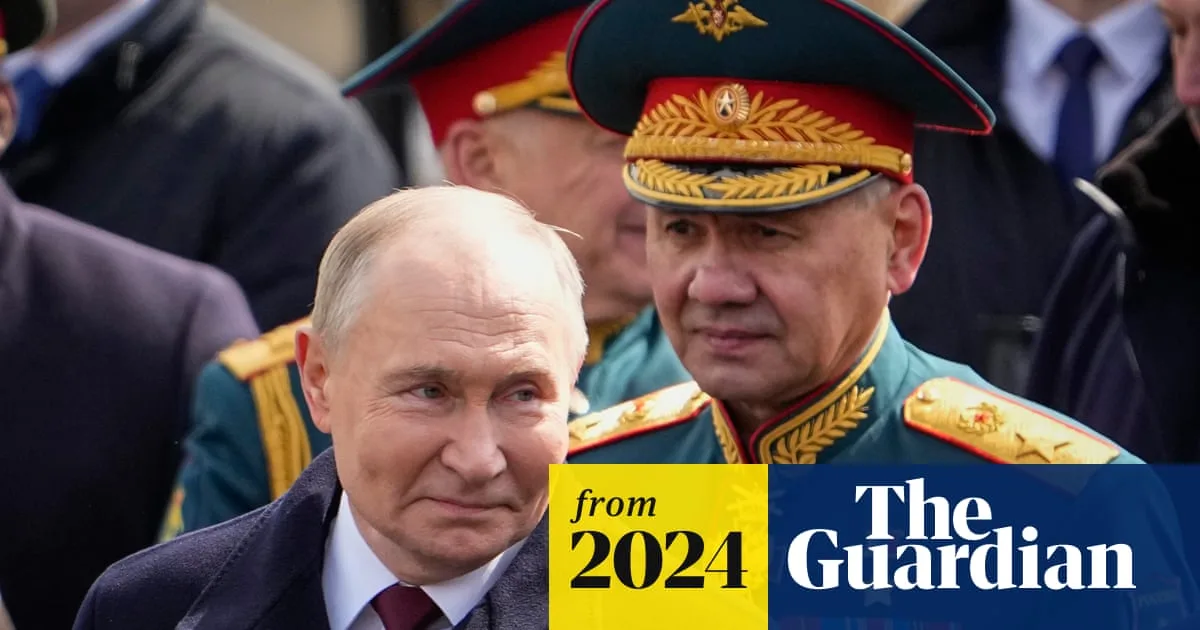
President Vladimir Putin has orchestrated a dramatic shake-up at the heart of Russia's military leadership, removing his long-standing ally Sergei Shoigu from the post of defence minister. The surprise move, part of a wider government reshuffle, sees Shoigu replaced by Andrei Belousov, a civilian economist with no direct military background.
A Civilian Economist Takes the Helm
The appointment of Andrei Belousov marks a significant departure from tradition. Belousov, 65, is a former deputy prime minister who specialises in economic policy and has served as an economic adviser to Putin. His selection signals a clear Kremlin priority: to place Russia's vast defence budget and its militarised economy under tighter, more innovative control.
Analysts suggest Belousov's primary task will be to streamline military spending and harness the entire industrial complex to sustain the prolonged war effort in Ukraine. This move indicates that the Kremlin views the conflict as entering a protracted phase of attrition, where economic resilience and efficient arms production are as crucial as battlefield tactics.
Shoigu's New Role and Lingering Influence
Sergei Shoigu, who had served as defence minister since 2012, is not being cast aside. In a move that ensures his political survival and maintains Putin's balance of power, Shoigu has been appointed secretary of Russia's powerful Security Council. He replaces Nikolai Patrushev, another formidable security hawk, whose own new role will be announced shortly.
This transition allows Shoigu to retain a high-profile position with significant influence over national security policy. It also follows a period of intense scrutiny for the defence ministry, marred by the high-profile arrest of deputy minister Timur Ivanov on bribery charges in April, which cast a shadow over Shoigu's leadership.
Broader Government Reshuffle and Military Continuity
The reshuffle extends beyond the defence portfolio. Putin has proposed that the current foreign minister, Sergei Lavrov, remain in his position, ensuring continuity in Russia's assertive diplomatic stance. Other key figures, including the heads of the interior ministry and the Federal Security Service (FSB), are also expected to retain their posts.
Crucially, the leadership of the military itself remains unchanged. General Valery Gerasimov, the chief of the general staff and commander of the Ukraine campaign, will stay in his role. This suggests that while economic management of the war is being overhauled, battlefield strategy and operational command will continue under the existing military hierarchy.
The proposed cabinet changes require formal approval by the Federation Council, Russia's upper house of parliament, which is considered a procedural formality. This reshuffle, coming just as Putin begins his fifth presidential term, underscores his strategy to optimise the state apparatus for a long-term confrontation with the West while carefully managing elite loyalties.




