
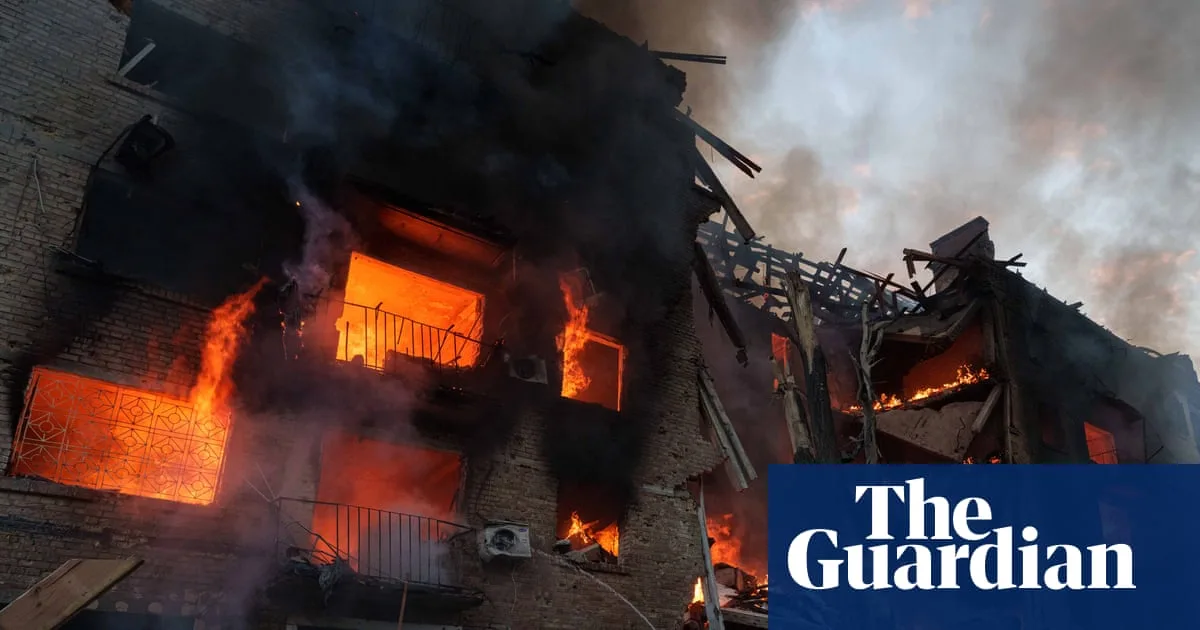
Ukraine's capital Kyiv was hit by a massive missile and drone strike early on Sunday, shortly after the air force warned of a potential launch of a hypersonic Oreshnik ballistic missile. Explosions reverberated through the city shortly after 1am, with officials reporting one person killed and 20 wounded. Mayor Vitali Klitschko said several residential buildings were damaged across the Shevchenkivsky, Dniprovsky and Podilsky districts, and debris set a school on fire in the city centre.
President Volodymyr Zelenskyy warned that any use of such weapons as the Oreshnik missile "sets a global precedent for other potential aggressors." In a social media post, he said: "If Russia is allowed to destroy lives on such a scale, then no agreement will restrain other similar hatred-based regimes from aggression and strikes. We count on a response from the world – and on a response that is not post factum, but preventive."
Canada strongly condemned the attack, with Prime Minister Mark Carney urging Moscow to immediately cease the strikes and its "illegal war of aggression." He said the attacks "prolong human suffering and do nothing to change the fact that Russia will lose this war." On Saturday, Zelenskyy had warned Russia was preparing a strike using the Oreshnik, citing intelligence from Ukraine, the US and Europe.
A 23-year-old Briton, Ayrton Redfearn from Devon, has been killed in Ukraine. He died in the Donetsk region on 9 May while serving with a specialist unit supporting the Ukrainian army. His mother Natasha told the BBC he had joined in 2025 and was due to receive a bravery award days after his death. The Foreign, Commonwealth and Development Office is supporting his family.
Acclaimed Russian director Andrey Zvyagintsev urged Vladimir Putin to end the "carnage" in Ukraine after his new film set during the war came runner-up at the Cannes film festival. He said: "Millions of people on both sides of the line of contact now dream of only one thing: that the massacres finally stop."




