
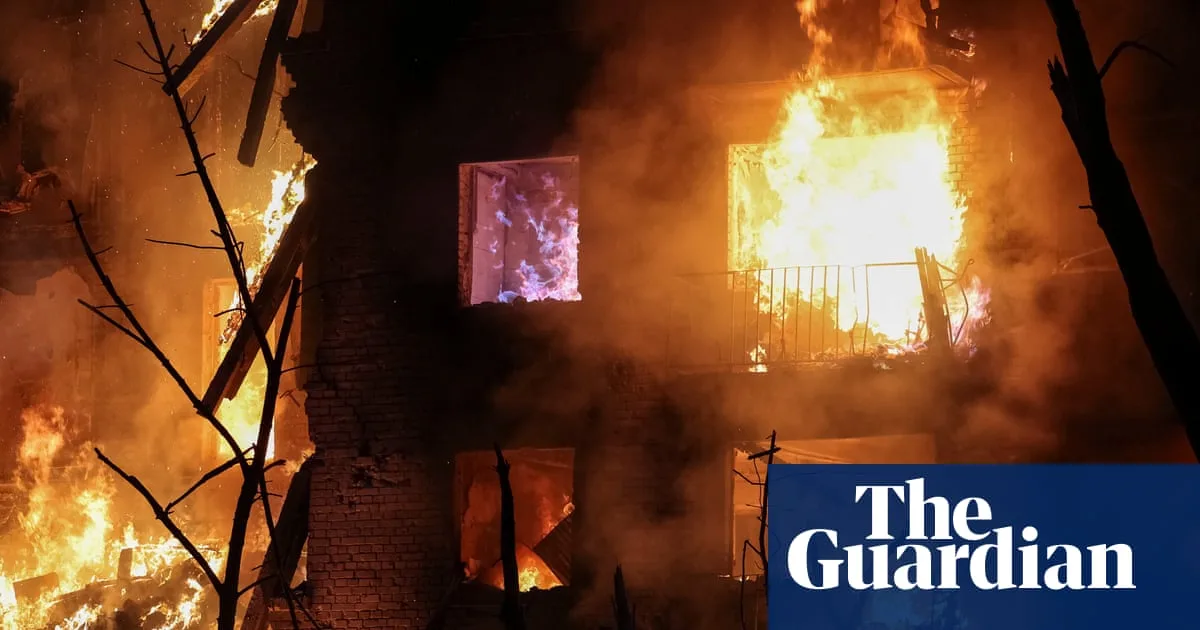
Russia used its Oreshnik hypersonic ballistic missile for the third time in Ukraine as part of a massive attack on Kyiv and the surrounding region that killed at least four people and injured about 100. The assault hit a water supply facility, burned down a market, and damaged dozens of residential buildings and several schools.
President Volodymyr Zelenskyy described the attack as involving 600 drones and 90 missiles, of which 36 were ballistic. He stated that Kyiv was the primary target. Russia’s defence ministry confirmed the use of the Oreshnik, saying the attack was retaliation for Ukrainian strikes on civilian facilities on Russian territory.
Kyiv Mayor Vitali Klitschko reported two people killed in the capital and 56 wounded. The head of the Kyiv region said two were killed and nine wounded. Damage was recorded in every district, with a school set on fire and a business centre shelter trapping people.
Witness Svitlana Onofryichuk, who worked in the destroyed market for 22 years, told the Associated Press: “It was a terrible night... My job is gone, everything is gone.” Another witness, Yevhen Zosin, said he and his dog were thrown by the shockwave, and his apartment was destroyed.
Ukraine’s National Art Museum and the foreign ministry were damaged, the latter for the first time since the second world war. Culture Minister Tetyana Berezhna said Russia is systematically attacking civilian infrastructure and cultural institutions “to intimidate and destroy our identity.”
President Vladimir Putin had vowed revenge after accusing Ukraine of a deadly drone attack on a student dormitory in Russian-controlled Luhansk, a claim Ukraine denied.




