I Tried the Royal Navy's New Fitness Test – And It Wasn't What I Expected
The Royal Navy has introduced a new standard test to ensure recruits meet the required physical standards. I travelled to Portsmouth to give it a go, and the experience was both enlightening and unexpected.
A Daunting Start in Portsmouth
"There's still time to back out," Lieutenant Commander Joseph Wood told me with a grin. I stood opposite an array of heavy sand-filled powerbags, wooden boxes, dumbbells, kettlebells, and a weighted vest – this was the Royal Navy's new Physical Employment Standard (PES) test. The temptation to accept his offer was strong. With 15 minutes to complete the course, the pressure of the clock sent my stomach into somersaults. Before I could conjure any excuses, Chief Petty Officer Darran Hoare – known as Daz – clicked his stopwatch and directed me to a pair of 20kg kettlebells. We were off.
How I Ended Up Here
It all began months earlier when I emailed the Ministry of Defence to inquire about the fitness tests used in the armed forces. As a fitness writer, my plan was to try them in the gym and report on my experiences. Commander Serena Brotherton, Spokesperson at the Directorate of Defence Communications, replied with a succinct message: "Come to Portsmouth. Do it properly."
Understanding the New Royal Navy Fitness Test
In September last year, the Navy replaced its traditional annual fitness test, which included a 1.5-mile run or bleep test, with a new strength-based assessment. This change aims to more accurately reflect the demands of naval duties. "If there's a fire on board a ship, running 1.5 miles won't help very much," one officer joked. The new test, uniform across all ages and genders, is performed annually to ensure all sailors possess the base level of fitness needed to represent the Royal Navy.
Here is how to complete the test within 15 minutes:
- Kettlebell carry x60m (carrying 2x20kg kettlebells for four lengths of a 15m course, stepping over a small hurdle every 15m).
- Powerbag lift x20 (moving a 20kg powerbag between an 18in box and a 48in box – there and back counts as one repetition).
- Kettlebell deadlift x12 (using one 40kg kettlebell, performed to a set tempo with a three-second pause at the top of each rep, without letting go of the handle).
- Rope pull x6m (pulling 2x30kg powerbags along uniform rubber gym flooring).
- At this point, don a 20kg weighted vest for the remainder of the test, simulating firefighting equipment.
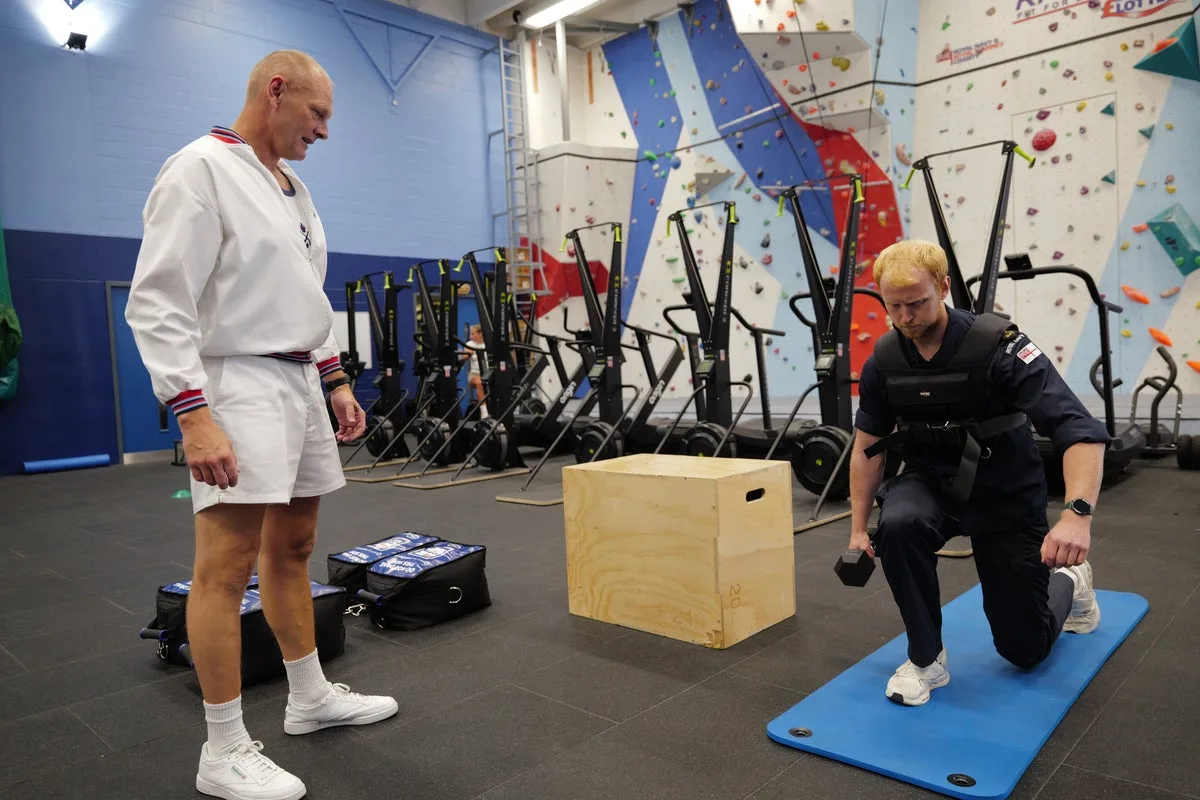
- Lunge (standard or reverse) while holding a 7.5kg dumbbell in one hand x12.
- Casualty drag x15m (dragging four attached 20kg powerbags around a cone and back).
- Kettlebell carry x60m (carrying 2x20kg kettlebells with the weighted vest).
My Experience Taking the Test at HMS Temeraire
I arrived at HMS Temeraire, the Royal Navy's physical training school in Portsmouth, dressed casually. After a confusing tour through maze-like hallways, I was handed a heavy woollen uniform and directed to a changing room. Descending into a modern gym equipped with power racks and climbing ropes, I warmed up while observing three sailors complete the assessment effortlessly.
Finally, it was my turn. The 15-minute countdown began, and I started with the kettlebell carry, which felt manageable compared to previous fitness challenges. The powerbag lift tested my grip and endurance, while the kettlebell deadlifts challenged my strength with a rhythmic tempo. The rope pull required a forceful heave to move the bags, and after donning the weighted vest, the lunges tested my balance more than strength. The casualty drag was surprisingly enjoyable, and I finished with another kettlebell carry, completing the test in roughly six minutes – a pass.
Reflections on the Royal Navy Fitness Test
At 6ft 2in and 90kg, the test played to my strengths, as Lieutenant Commander Wood noted, "mass moves mass." The weights were manageable for me, but it's crucial to understand that this test serves as a "physical employment standard" – ensuring sailors have the entry-level fitness for naval duties. Each element is designed to emulate real emergencies on board ships, such as firefighting or casualty rescue.
The test was developed based on a NATO framework, identifying the most physically demanding tasks through physiological analysis. It aims to be practical, completing within an hour to avoid administrative burdens. Statistics show a high pass rate, with only 0.35% failing overall, though slightly higher among females. Those who fail undergo a 12-week conditioning programme, with most passing on retry.
This assessment doesn't solve broader health issues like obesity but prepares personnel for operations while supporting wellbeing. It represents a shift towards strength-based fitness, reflecting the practical demands of modern naval service.




