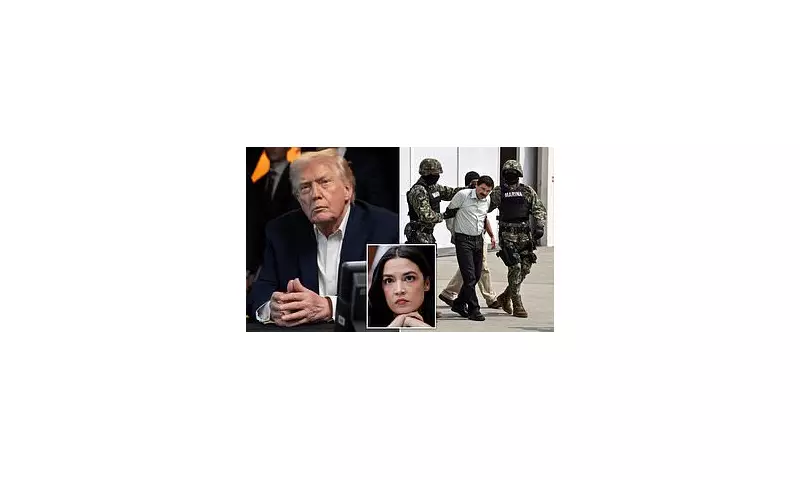
Senior Republican figures in the US Congress have robustly defended President Donald Trump's authority to launch military strikes anywhere in the world without seeking prior approval from lawmakers, setting the stage for a significant constitutional debate.
"Commander in Chief" Has Carte Blanche, Say GOP Chairmen
In conversations with the Daily Mail, the chairmen of two powerful House committees expressed the view that the president's constitutional role grants him extensive, near-unilateral power over military engagements. House Judiciary Chairman Jim Jordan, an Ohio Republican, stated plainly, "He's the commander in chief," when questioned on whether Trump could strike any country he chooses. Jordan pointed to actions in Venezuela as a positive example.
Echoing this sentiment, House Foreign Affairs Committee Chairman Brian Mast, a Florida Republican, asserted that the president's actions fall squarely within his Article II constitutional authority. "Should he want to, based upon his article two authority, if there's a credible and imminent threat to the United States of America, absolutely yes," Mast said, confirming the president could strike any global location at any time.

Focus on Venezuela, Iran, and Mexico
This defence comes despite President Trump not seeking congressional authorisation for recent high-profile military decisions. These include a strike intended to help depose Venezuela's ex-dictator Nicolas Maduro and the bombing of Iran's nuclear facilities earlier this summer. The president made these calls independently, albeit with counsel from his Cabinet.
The discussion extended to Trump's veiled threats against drug cartels in Mexico. Chairman Mast indicated little congressional appetite to restrain the president, starkly remarking, "They're on the menu," in reference to Mexico, and adding, "I think it's a coin flip between them and people in Cuba." He underscored the perceived threat by recounting the grisly fate of a friend who went missing in Mexico, found months later "divided up into a couple separate garbage bags."
President Trump himself stated on Thursday that cartels are "running Mexico" and announced, "We are going to start now hitting land with regard to the cartels."
Democratic Opposition and GOP Dissent
Outside of a core group of Republicans and near-universal Democratic opposition, there appears to be limited will on the political right to curtail the president's strike capabilities. However, dissent exists. The Senate this week voted procedurally to curb Trump's ability to engage militarily in Venezuela, though this measure requires further votes in both the Senate and the House to become law and meaningfully limit presidential war powers—an outcome considered unlikely.
Some Republicans, however, disagree with the broad authority claimed by their colleagues. Ohio Republican Rep. Mike Turner, former head of the House Intelligence Committee, told the Daily Mail a simple "no" when asked if Trump has the authority to strike anywhere at will.
Progressive Democrat Rep. Alexandria Ocasio-Cortez, a potential 2028 presidential candidate, argued the Founding Fathers deliberately designed the Constitution to prevent one person from having sole war-making power. "The Constitution is specifically designed to avoid an instance where any one branch has unilateral power," she told the Daily Mail, emphasising that launching wars requires national consensus, not presidential discretion.
The stage is now set for a continuing and profound debate over the balance of war powers between the White House and Congress, with significant implications for US foreign policy and constitutional law.