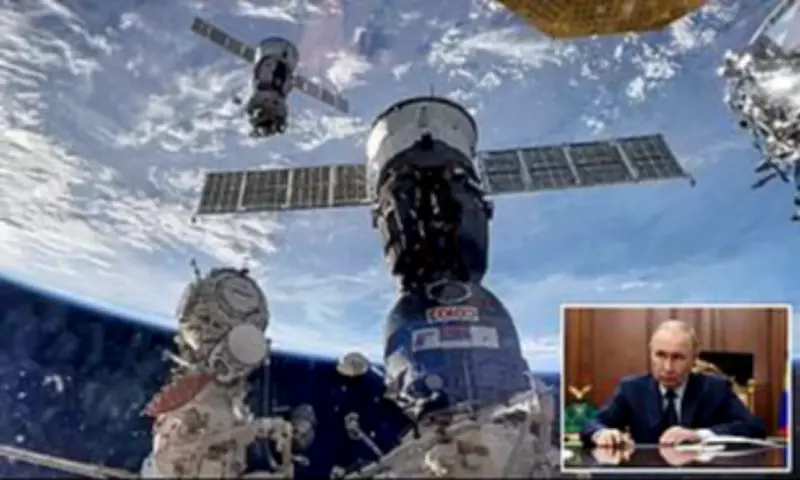
US Military Chief Issues Stark Warning Over Russian Space Weapons Plan
General Stephen Whiting, the commanding officer of US Space Command, has issued a grave warning that Vladimir Putin is orchestrating a Pearl Harbor-style assault targeting satellites in space. This aggressive maneuver could potentially unleash widespread pandemonium across the globe, disrupting critical infrastructure and communications networks.
Nuclear Anti-Satellite Weapons in Orbit
In an interview with the Times, General Whiting revealed that the Trump administration is "very concerned" about Kremlin strategies. He stated, "They are thinking about placing in orbit a nuclear anti-satellite weapon that would hold at risk everyone's satellites in low Earth orbit, and that would be an outcome that we just couldn't tolerate."
Whiting emphasized Russia's continued investment in counter-space weapons, describing the nation as a "sophisticated space power." When questioned about Russia's motivations, he explained, "From a Russian perspective, they look at the United States, they look at NATO and they see an overmatch there of conventional arms. And they believe that novel ways of trying to undermine the United States and NATO, such as by neutralising our space capabilities, helps them to level the battlefield."

Violation of International Treaties
If confirmed, such actions would constitute a major violation of the Outer Space Treaty, to which Russia is a signatory. General Whiting declined to elaborate on how US intelligence obtained this information, but the implications are profound for global security and space governance.
This development represents the latest escalation in Russia's increasingly aggressive space strategy. Whiting highlighted ongoing activities including "sustained satellite communication and GPS jamming" on such an extensive scale that it endangers civilian airliners, demonstrating a pattern of destabilizing behavior.
NATO and EU Response to Growing Threats
In response to Russia's heightened aggression, the leaders of the European Union and NATO have engaged in urgent discussions about bolstering Europe's arms production capabilities. This comes amid uncertainties surrounding Washington's commitment to the transatlantic alliance under President Donald Trump.
European Commission President Ursula von der Leyen emphasized the need for accelerated action, stating online, "We need to invest more, to produce more and to do both faster." This sentiment was echoed following her meeting with NATO Secretary General Mark Rutte.
European nations are actively strengthening their military defenses in light of Russia's ongoing war in Ukraine and increasing pressure from the Trump administration. Concerns have been amplified by Trump's threats to potentially withdraw from NATO, citing dissatisfaction with European responses to international conflicts.
Defense Spending and Industrial Challenges
NATO allies previously committed to increasing core defense spending to 3.5 percent of GDP to address criticisms about inadequate European contributions. However, significant challenges persist within Europe's defense industry, which struggles to meet heightened demands despite numerous EU initiatives.
NATO officials indicate that industrial production capacity will be a central topic at the alliance's upcoming summit in Ankara. Rutte, who recently met with Trump in Washington, affirmed online that "a stronger Europe means a stronger NATO," highlighting discussions with von der Leyen about enhancing NATO-EU cooperation.
Key areas of focus include:

- Ramping up defense industrial production
- Continuing vital support to Ukraine
- Protecting critical infrastructure from emerging threats
Shifting Security Dynamics
The United States has expressed a desire for European allies to assume greater responsibility for conventional defense of their continent, allowing Washington to redirect resources toward other global threats, particularly China. European nations recognize that decades of reliance on American security guarantees are ending, necessitating greater self-sufficiency in defense matters.
The European Union, historically cautious about defense involvement, has significantly increased its efforts to strengthen industrial capabilities in recent years. Some member states are exploring whether the EU can play a more substantial role in collective security.
NATO officials maintain that the EU should concentrate on its core competencies, such as marshalling funding and resources, rather than encroaching on the alliance's traditional domain of military planning and operations. This delicate balance will be crucial as both organizations navigate evolving security landscapes and respond to emerging threats from state actors like Russia.