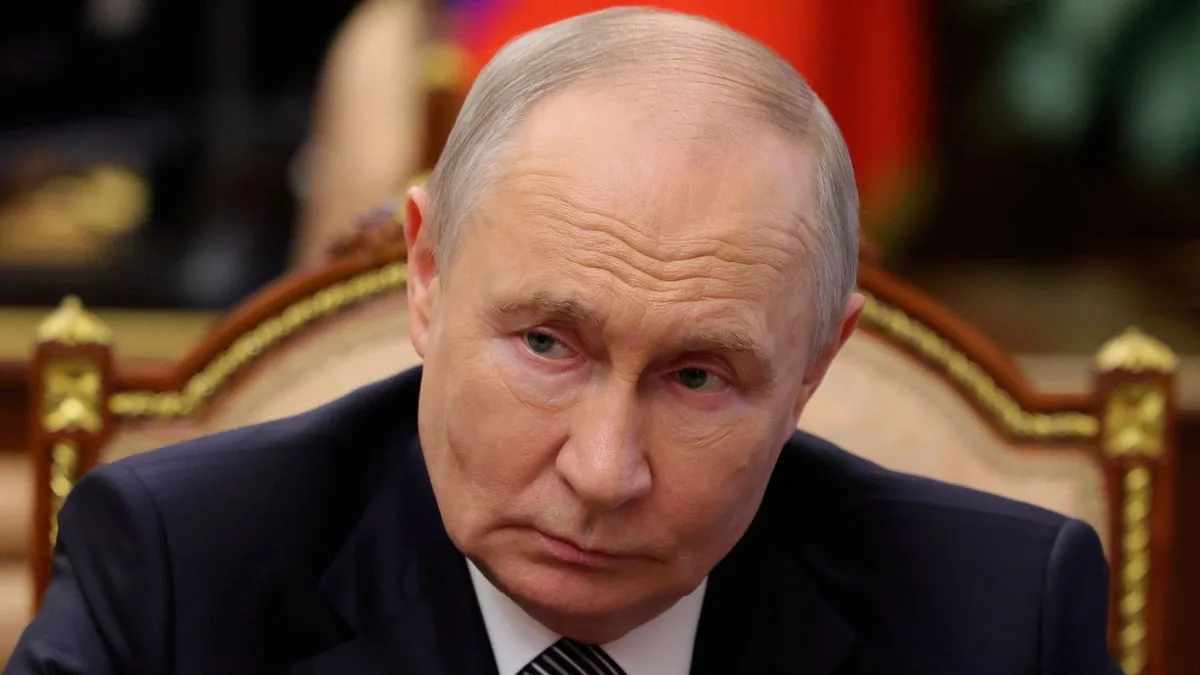
Putin Risks New Chernobyl via Reckless Nuclear Plant Strikes, Experts Warn
Putin Risks New Chernobyl via Nuclear Plant Strikes

Four decades after the Chernobyl Nuclear Power Plant explosion, the world's worst nuclear accident, leading experts warn that Russia's actions in Ukraine show the lessons of the past have not been learned. Volodymyr Kholosha, who witnessed the Chernobyl disaster firsthand, expressed shock at the current situation, where Russian forces are operating near nuclear plants, including the world's largest in Zaporizhzhia.

Russia's Reckless Actions Near Nuclear Sites

Since its invasion of Ukraine in February 2022, Russian forces have repeatedly endangered nuclear safety. Recently, Ukraine accused Moscow of launching drones and missiles near Chernobyl, risking a major accident just days before the 40th anniversary of the 1986 disaster. The Russian-occupied Zaporizhzhia plant experienced its 13th blackout since the invasion began. Last year, a Russian drone pierced the protective shell around Chernobyl's reactor 4, which prevents radioactive release.

Experts Condemn Lack of Urgency

Alexandra Bell, president of the Bulletin of Atomic Scientists, called the failure of world leaders to reduce nuclear risks a "dereliction of duty in both Washington and Moscow." She warned that we are "extremely close to any number of potential catastrophes in the nuclear space," citing a lack of urgency and will to address these challenges.

Wide Pickt banner — collaborative shopping lists app for Telegram, phone mockup with grocery list

Zaporizhzhia at the Heart of Nuclear Risk

An attack on Zaporizhzhia could lead to infrastructure failure or even a meltdown, Bell said. Russian forces have occupied the plant since March 2022, and safety maintenance has collapsed due to ineffective regulation and a reduced workforce. Kholosha, now president of the Ukrainian Nuclear Society, warned that Russia's actions threaten direct damage, causing an "uncontrolled radiation release" lethal to Ukraine and neighboring states.

All six reactors at Zaporizhzhia are currently shut down, but the plant requires continuous power for safety functions, which has been lost multiple times. Necessary maintenance is not being performed, leading to gradual equipment failure. The plant is understaffed, with most workers from Russian facilities, and has been mined with explosives, increasing the risk of accidental or intentional explosion. Moscow plans to connect the plant to the Russian electricity system.

International Community Must Act

Shaun Burnie, senior nuclear specialist at Greenpeace Ukraine, urged the international community to prevent Russia from restarting reactors and to end the illegal occupation of the plant. "They must not be permitted to retain control under any circumstances," he said.

A New Nuclear Age

Kholosha fears a repeat of Chernobyl due to world leaders who engage in nuclear threats. "We are seeing a dangerous lowering of the threshold for nuclear blackmail," he said. Bell believes we are entering a new nuclear age with no active efforts to reduce risks. The Doomsday Clock, set at 85 seconds to midnight in January 2026, is the closest ever, reflecting the lack of dialogue on nuclear risks.

Bell noted that even during the Cold War, leaders talked about strategic stability. "We don't see any of that right now," she added, emphasizing the need for public demand and expert empowerment to reduce risks.

Pickt after-article banner — collaborative shopping lists app with family illustration




