
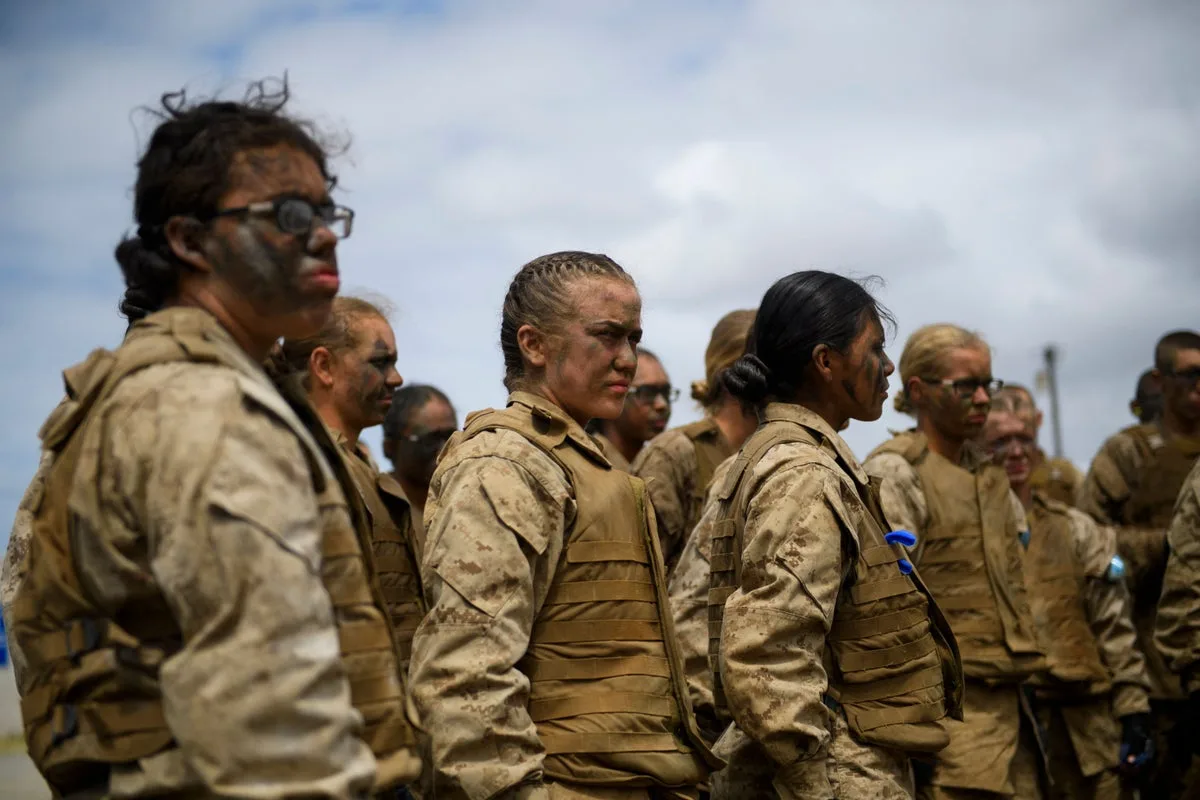
The Pentagon has announced a six-month review of women in ground combat roles, aiming to assess the 'operational effectiveness' of such units a decade after all restrictions were lifted. The move comes amid a broader crackdown on diversity, equity and inclusion (DEI) initiatives within the US military.
Undersecretary of Defense for Personnel Anthony Tata issued a memo last month requesting data from Army and Marine leaders on readiness, training, performance, casualties and command climate. The information, to be provided to the Institute for Defense Analyses by January 15, must include all available metrics on deployability, as well as any internal research on the integration of women in combat.
Pentagon press secretary Kingsley Wilson said the review is meant to 'ensure standards are met and the United States maintains the most lethal military.' She added that standards for combat arms positions will be 'elite uniform, and sex neutral,' and that the department will not compromise standards to satisfy quotas or an ideological agenda.
Defense Secretary Pete Hegseth, a former Fox News host and Army National Guard veteran, has long opposed women in combat roles. In a November 2024 podcast, he said women in combat 'hasn't made us more effective' and 'has made fighting more complicated.' During a September address, he directed that every combat position return to 'the highest male standards,' adding that if no women qualify for some jobs, 'so be it.'
Currently, about 3,800 women serve in infantry, armour and artillery roles in the Army, with over 150 having completed Ranger training and around 10 passing Green Beret training. The Marines have about 700 women in ground combat jobs. Women were admitted into all ground combat positions in 2015 and must meet the same standards as men.
Critics argue the review is a pretext to exclude women. Ellen Haring, a retired Army colonel and West Point graduate, said it is 'exactly what Hegseth said all along' and 'an effort to prove women don't belong.' Another West Point graduate, Khris Fuhr, called the study 'a solution for a problem that doesn't exist.'




