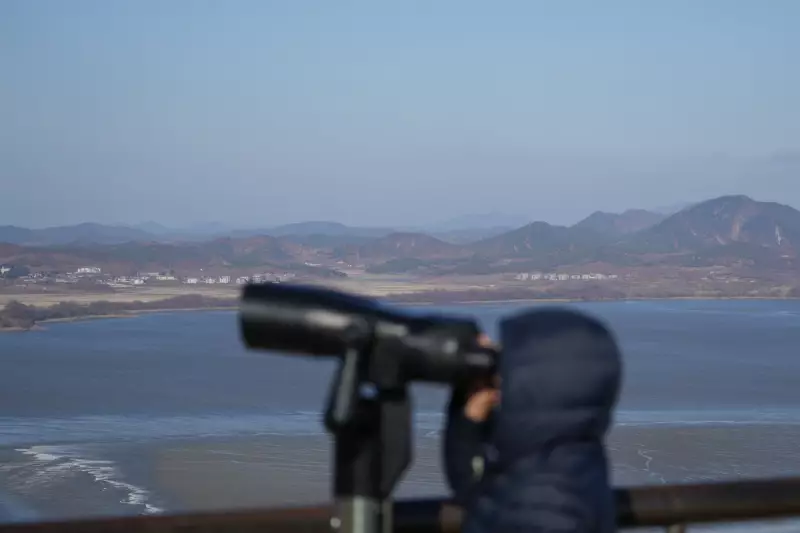
North Korea has carried out a series of hypersonic missile test flights, a move its leader Kim Jong Un directly linked to global instability and perceived American aggression following events in Venezuela. The launches, which took place on Monday 5 January 2026, were detected and condemned by neighbouring South Korea and Japan as destabilising provocations.
Linking Tests to US Action in Venezuela
In a significant escalation of rhetoric, Pyongyang explicitly connected its latest weapons demonstration to the recent US capture of Venezuelan president Nicolas Maduro. The North Korean regime presented this incident as concrete evidence of Washington's readiness to overthrow governments it opposes. Analysts suggest this interpretation has solidified North Korea's long-held conviction that only a formidable arsenal of ballistic missiles and nuclear weapons can deter foreign intervention and guarantee the survival of Kim Jong Un's regime.
Kim Jong Un's Push for Military Upgrades
During the oversight of the tests, Kim Jong Un emphasised the urgent need to enhance the country's offensive weapon systems. He stressed the importance of continuously strengthening North Korea's nuclear deterrent capabilities in the face of what he described as rising global threats. The timing of these tests is also viewed as strategically important, with the country aiming to showcase its military advancements ahead of an upcoming ruling party congress, a key political event.

Regional Condemnation and Global Implications
The multiple missile launches triggered immediate responses from regional powers. Both South Korea and Japan swiftly detected the launches and issued strong condemnations, labelling them as reckless acts that threaten regional security and violate United Nations Security Council resolutions. The tests underscore the persistent challenges in curbing North Korea's weapons programmes and highlight how international events, such as the situation in Venezuela, can be leveraged by Pyongyang to justify its accelerated military development.
The situation presents a complex dilemma for global diplomacy, reinforcing a cycle where perceived external threats are used to validate internal militarisation, further complicating prospects for denuclearisation talks on the Korean Peninsula.