US Navy Reviews Ford-Class Carrier Future Amid Trump Criticism and Cost Concerns
Navy Reviews Ford-Class Carriers After Trump Complaints

US Navy Reviews Ford-Class Carrier Future Amid Trump Criticism and Cost Concerns

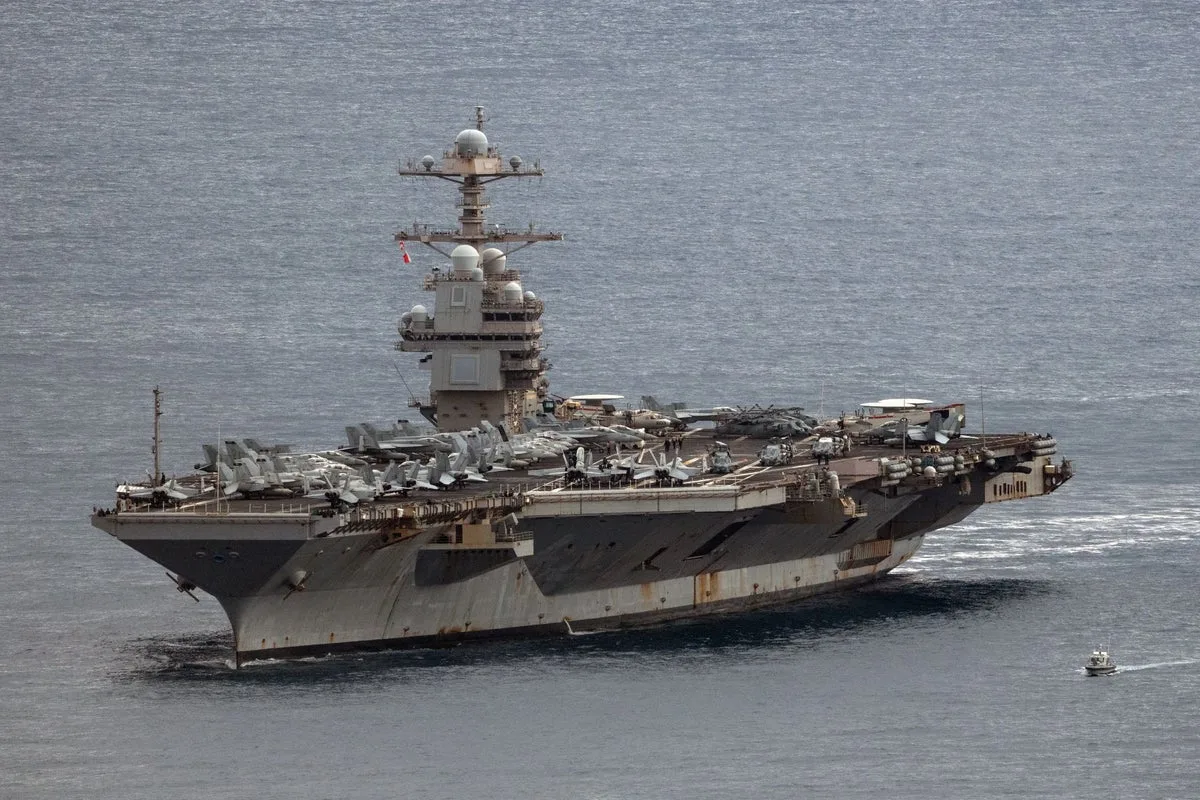
The United States Navy has initiated a comprehensive review of the design and costs associated with its Ford-class aircraft carriers, among the most technologically advanced and expensive warships in its fleet. Navy Secretary John Phelan confirmed the move, describing it as a prudent and practical step to ensure the vessels meet future operational requirements and financial constraints.

Design Review Prompted by Presidential Criticism

This review follows sustained criticism from former President Donald Trump, who has publicly questioned the efficacy of certain technologies on the Ford-class carriers. Specifically, Trump targeted the electromagnetic aircraft launch system, or magnetic catapults, claiming they did not function properly during remarks made in the Oval Office last year.

When pressed on whether the review could lead to the cancellation of future Ford-class carriers, Secretary Phelan remained non-committal, stating it was too early to determine outcomes but affirming the Navy's commitment to maintaining aircraft carrier capabilities.

Wide Pickt banner — collaborative shopping lists app for Telegram, phone mockup with grocery list

Operational Record and Budgetary Ambiguity

The lead ship of the class, USS Gerald R. Ford, has been on an extended deployment exceeding three hundred days since June 2025. During this period, it participated in significant military operations, including the capture of Venezuelan leader Nicolás Maduro and engagements in the war against Iran.

Despite this operational history, recent Navy budget documents released on Tuesday omitted specific references to Ford-class carriers among planned acquisitions, listing only generic aircraft carrier entries. In contrast, other vessel classes like Columbia-class submarines and Arleigh Burke-class destroyers were explicitly named.

Technological Advantages and Verification Process

The Navy has publicly praised the Ford-class design as battle-proven, highlighting its ability to launch aircraft at a faster rate than the older Nimitz-class carriers. Officials claim it offers enhanced combat power and supports high-tempo global strike operations across multiple regions.

Secretary Phelan, however, emphasized the need to verify these claims through the ongoing review. He invoked the Reagan doctrine of trust but verify, indicating the assessment will scrutinize the carrier's aircraft launch and recovery capabilities, among other systems.

The magnetic catapults are a cornerstone of the Ford-class's technological edge. They reportedly impose less stress on aircraft, require reduced maintenance, and diminish freshwater consumption compared to traditional steam-powered systems.

Future Construction and Alternative Projects

Currently, three additional Ford-class carriers are under construction: USS John F. Kennedy, USS Enterprise, and USS Dorie Millier. The review will also examine two planned but uncontracted carriers, USS William Jefferson Clinton and USS George W. Bush, named during the Biden administration.

Simultaneously, former President Trump has unveiled a new warship design dubbed the Trump-class battleship, with estimated costs surpassing seventeen billion dollars, approximately four billion more than Ford-class carriers. The Navy has deferred funding for the first ship, USS Defiant, until the 2028 budget cycle.

Phelan noted that the Trump-class cost projection is an early estimate, likely to decrease as designs are refined and production scales. He did not exclude the possibility of nuclear propulsion, which could substantially increase expenses.

The Navy's review, expected to conclude next month, will critically influence the future trajectory of American naval power and procurement strategies.

Pickt after-article banner — collaborative shopping lists app with family illustration




