
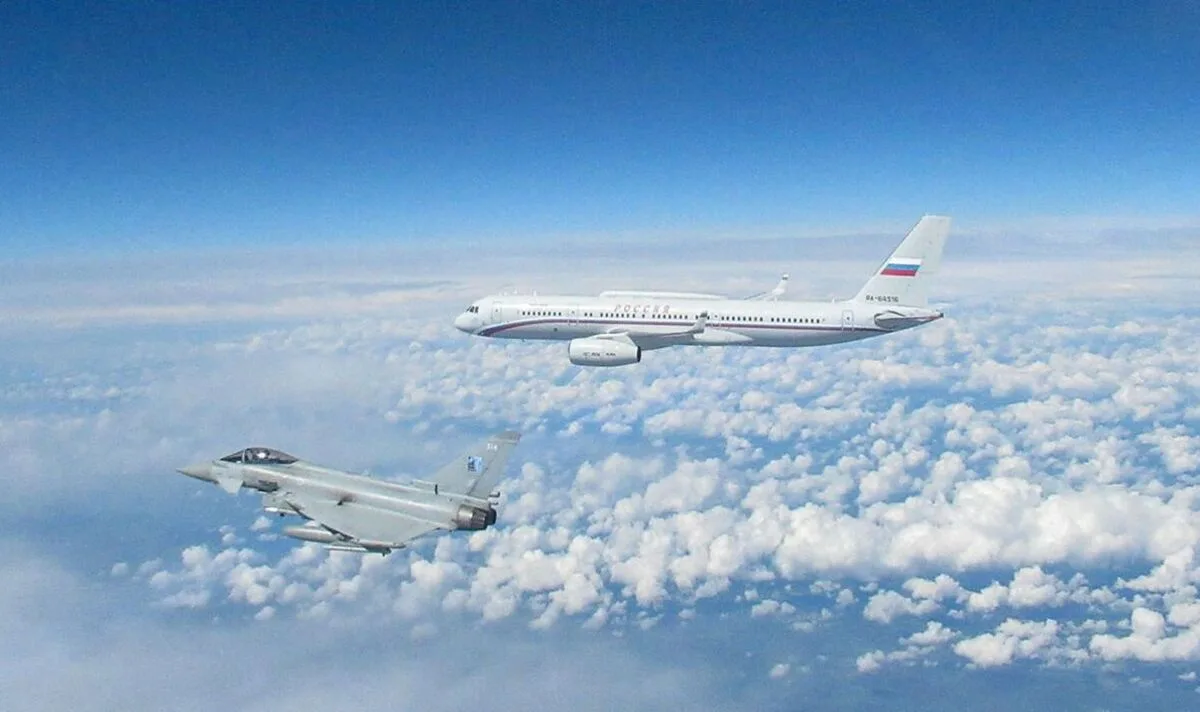
Dramatic images have captured the moment RAF Typhoon jets, stationed in Estonia, intercepted a Russian aircraft known as the 'doomsday plane' over the Baltic Sea. The fighters were scrambled to shadow the Tu-214SR, which was escorted by two Su-30M Flanker H jets, as it transited between mainland Russia and the Kaliningrad Oblast.
The RAF confirmed the interception on Twitter, stating that the Typhoons were operating under NATO control in international airspace. The Tu-214SR is a modified version of the Tupolev Tu-214 airliner, developed for the Russian Presidential Executive Office as a mobile command and control centre in the event of a major catastrophe or global war.
This incident comes amid heightened tensions following reports that Chinese President Xi Jinping personally warned Vladimir Putin against using nuclear weapons in Ukraine during a state visit to Moscow in March. The RAF's Quick Reaction Alert aircraft have been scrambled 21 times in 21 days to respond to Russian aircraft, according to the Ministry of Defence.
Defence Secretary Ben Wallace emphasised the importance of NATO's collective defence and deterrence, stating: 'The RAF has operated alongside our allies over the last three weeks to ensure both member states and our partner nations are protected.' The Baltic Air Policing mission is currently led by the RAF from Estonia, alongside Portuguese and Romanian Air Forces based in Lithuania.




