
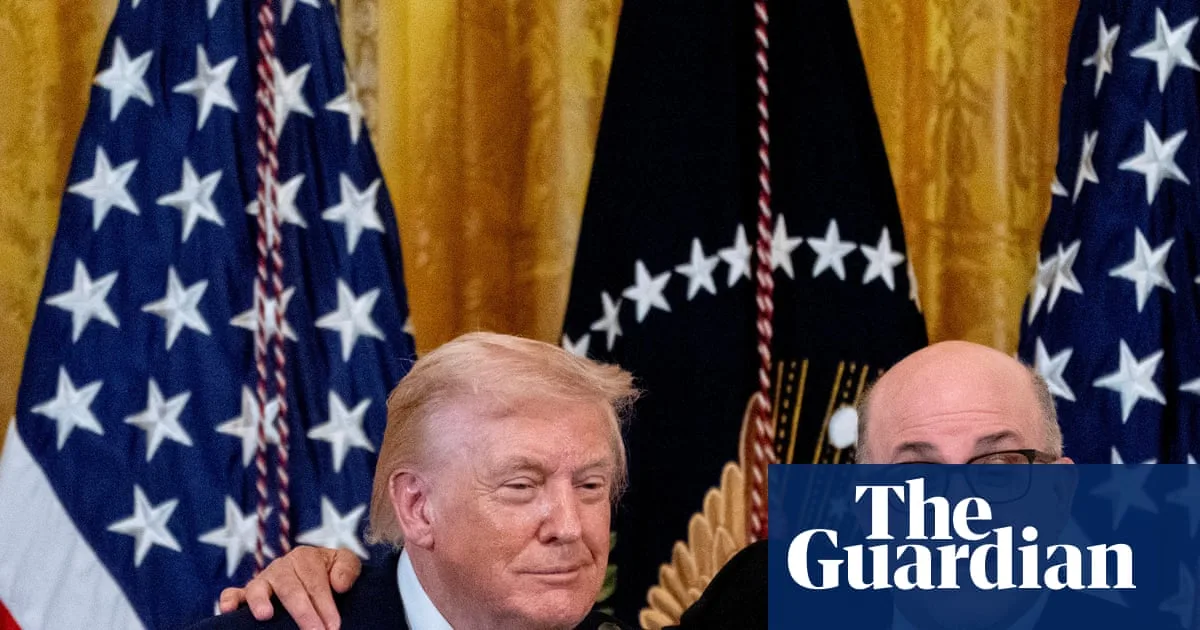
Donald Trump’s intervention in Venezuela has stirred debate among his usual supporters in conservative media, with many rallying behind the president despite his earlier pledges to avoid foreign entanglements. The US-led operation resulted in the abduction of Venezuelan President Nicolás Maduro and his wife, with dozens killed during the night-time raid. Trump’s actions have also included threats against Cuba, Colombia and Greenland.
Former Republican congressman and talk radio host Joe Walsh predicted that the party and conservative media would largely stand by Trump. Mark Levin, a prominent radio host, celebrated the military actions and labelled critics such as Senator Bernie Sanders and New York City Mayor Zohran Mamdani as “pure evil”. Fox News hosts Sean Hannity and Laura Ingraham have championed a “Donroe Doctrine”, asserting US dominance over the Western hemisphere.
Ben Shapiro criticised the “so-called isolationist right” who might oppose the operation, specifically naming former Fox News host Tucker Carlson. However, Carlson expressed cautious optimism after Trump backed Maduro’s former vice-president, Delcy Rodríguez, warning against the kind of regime change that led to chaos in Iraq and Libya. Fox News host Jesse Watters described the operation as a “perfect extraction” rather than regime change.
Some voices have expressed reservations. Former Fox News host Megyn Kelly mocked the network’s uncritical coverage, comparing it to “Russian propaganda”, and argued that Trump’s motives were about global oil dominance. Libertarian commentator Kat Timpf pointed out the inconsistency: Trump’s action in Venezuela appeared to be war despite his previous statements against foreign intervention.




