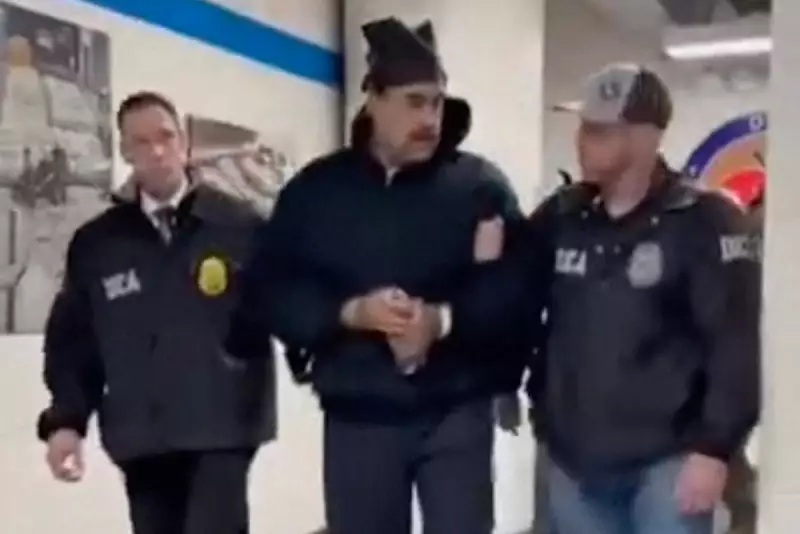
In a dramatic escalation of American intervention in South America, ousted Venezuelan president Nicolás Maduro is scheduled to appear before a New York court on Monday, 5 January 2026, to face serious drug and weapons charges. This follows a stunning US military operation that captured him from his Caracas home.
From Presidential Palace to Brooklyn Cell
The world watched in astonishment as US forces launched strikes on Venezuela in the early hours of Saturday, 3 January. In a meticulously planned raid months in the making, troops seized President Maduro and his wife, Cilia Flores, from their residence. They were subsequently transported to the United States aboard a US Navy vessel.
Maduro is currently held at Brooklyn's notorious Metropolitan Detention Center ahead of his first court appearance. He is set to appear before District Judge Alvin Hellerstein at noon ET on Monday, facing indictments that include charges of narco-terrorism.

Trump's Expanding Threats and Claims of Control
President Donald Trump, speaking from Mar-a-Lago and aboard Air Force One, made a series of bold and controversial statements over the weekend. He insisted that the United States is now "in charge" of Venezuela, though he offered few specifics on the interim governance structure beyond mentioning collaboration with oil companies to revive the nation's infrastructure.
In a significant expansion of his rhetoric, Trump directly threatened neighbouring Colombia. Referring to President Gustavo Petro, Trump claimed, "Colombia is very sick, too, run by a sick man, who likes making cocaine and selling to the United States." When asked if the US would pursue military action there, he replied, "It sounds good to me."
Trump also issued a stark warning to Venezuela's new acting president, Delcy Rodríguez, who was sworn in following Maduro's capture. He suggested she could face a fate "worse than Maduro" if she fails to "do what's right."
Diplomatic Fallout and Domestic Dissent
The audacious operation has triggered significant international and domestic repercussions. Cuba confirmed that 32 of its citizens, members of armed forces and intelligence agencies, were killed during the US raid. The Cuban government declared two days of national mourning.
At home, the action exposed rare Republican fissures. In one of her final acts as a congresswoman, Marjorie Taylor Greene broke with Trump, criticising the Venezuela intervention. Appearing on NBC's Meet the Press, she argued it represented the "Washington playbook" that enriches corporations and oil executives rather than serving the American people.
Meanwhile, Secretary of State Marco Rubio sought to temper expectations, suggesting America would not govern Venezuela day-to-day but would enforce an existing "oil quarantine." He insisted the US was not at war with Venezuela, despite some Democratic lawmakers labelling the capture an "act of war."
The Venezuelan opposition sees an opening. Politician Edmundo González, considered by many the legitimate winner of the 2024 election, called for the country's military to bring him to power, pledging a foundation for national reconstruction.
Despite the geopolitical shockwaves, the financial markets reacted with muted surprise. Oil prices fell by less than one percent, a minor shift analysts attribute to Venezuela's diminished role in global oil markets, with prices settling around $57 per barrel.