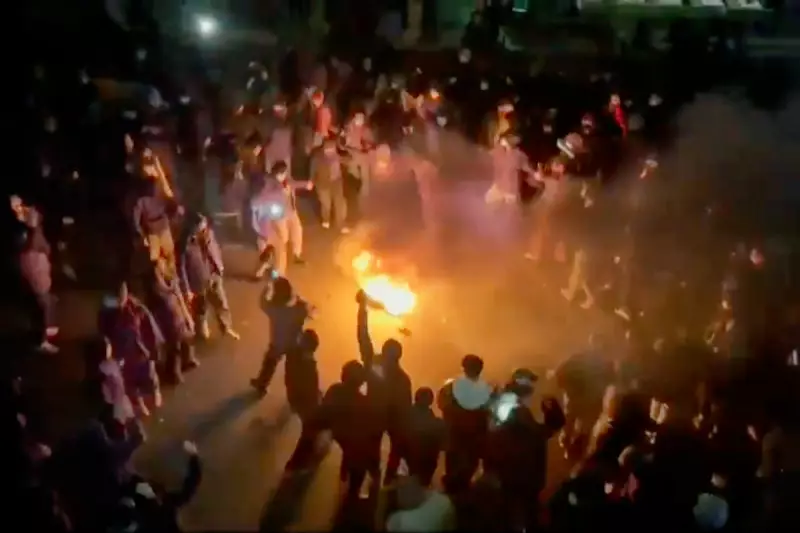
The geopolitical landscape has been plunged into a fresh crisis as Iran declared it is "ready for war" following threats of military action from former US President Donald Trump. The escalation comes amid a brutal crackdown on anti-government protests within Iran, with rights groups reporting a death toll exceeding 500 and more than 10,000 arrests.
Trump's Threats and Tehran's Defiant Response
Donald Trump stated on Sunday, 11 January 2026, that he was considering "some very strong options" for a potential military response against Iran. This warning was issued as monitoring groups, including the US-based Human Rights Activists News Agency (HRANA), reported the soaring death toll from clashes between demonstrators and Iranian security forces.
In a swift and defiant response, Iranian Foreign Minister Abbas Araghchi stated, "We are ready for war but also for dialogue." Araghchi argued that Trump's warnings could motivate what he called "terrorists" to target both protesters and security forces, aiming to provoke foreign intervention. Despite the bellicose rhetoric, both sides indicated a potential diplomatic opening, with Trump claiming Tehran had been in touch and "wants to negotiate."

UK Stance and International Reactions
The UK government has signalled a cautious approach. Business Secretary Peter Kyle suggested the UK would not pursue a ban on Iran's Islamic Revolutionary Guard Corps (IRGC), citing an independent review that found proscribing a foreign state organisation was not an appropriate use of domestic terror legislation.
When pressed on whether Britain would support potential US military strikes, Kyle was non-committal, stating, "We need to understand specifically what Donald Trump and America is proposing." Meanwhile, China's Foreign Ministry voiced opposition to any US intervention. Spokesperson Mao Ning reiterated Beijing's stance against interference in other countries' internal affairs, highlighting the deep political and economic ties between China and Iran.
Graphic Evidence and a Nation in Darkness
The true scale of the violence remains difficult to ascertain due to a near-total internet blackout imposed by the Iranian regime. However, harrowing footage has begun to seep out. Online videos, shared by activist networks, appear to show dozens of body bags laid out in a forensic facility in southern Tehran. Iranian state television also broadcast images of body bags, but claimed the dead were victims of "armed terrorists."
Eyewitness accounts, shared via Starlink connections, describe scenes of widespread violence. One person from Tehran's Narmak neighbourhood reported security forces opening fire into crowds, leaving streets "covered in bloodstains." Another account detailed food shortages and text messages from the regime warning citizens to stay indoors due to "armed terrorists." In a significant development, Foreign Minister Araghchi announced that internet service would be restored, a move that may soon reveal the full extent of the crackdown.
The situation remains volatile, with the shadow of potential military conflict looming over diplomatic manoeuvres. As the international community watches, the fate of thousands of protesters hangs in the balance, caught between a repressive regime at home and the threat of devastating foreign intervention.