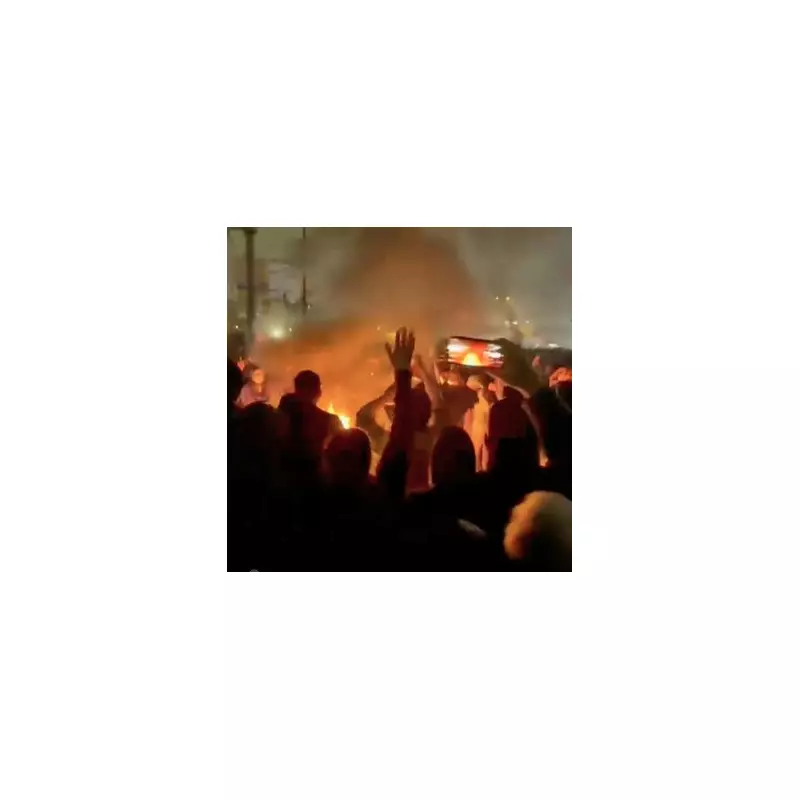
Iran stands on a precipice, with widespread and bloody protests creating a crisis that threatens to topple the regime in Tehran. Experts warn the volatile situation could explode into a full-scale regional war or trigger a sustained wave of terror attacks against Western nations, including the UK.
A Regime Under Siege and Looking Outwards
The internal unrest, marked by citizens joining an estimated 20,000 opposition cells, stems from catastrophic economic mismanagement and the syphoning of billions to proxy groups. This has pushed the country towards near-collapse. In a desperate bid to shift blame, officials are now threatening to take violence beyond Iran's borders, aiming to convince Iranians their problems are externally manufactured.
Parliament Speaker Mohammad Bagher Ghalibaf has declared Iran is already at war with America on four fronts: cognitive, economic, military, and through terrorism. Foreign Minister Abbas Araghchi echoed the bellicose tone, stating "we are ready for war," while cautiously adding "and dialogue." He further claimed, "We are much more prepared than before."

The Military Wildcard and the Spectre of Terror
The pivotal factor in the uprising's success may lie with Iran's powerful security apparatus. Reports suggest there have been defections within the all-powerful Islamic Revolutionary Guard Corps (IRGC). However, persuading large numbers of these hardline elements to switch sides is considered a monumental task.
Should the regime survive, it has already warned of attacks on US bases and Israel. If it falls, the violence may not end but simply move into the shadows. Rogue IRGC operators could leverage extensive international networks—including links to Hezbollah in Lebanon and Syria, and contacts in Venezuela, Chile, and Bolivia—to launch terror attacks across Europe, targeting nations they perceive as interfering.
This presents a direct threat to countries like the UK, which hosts a large Iranian diaspora and has been broadly supportive of regime change, making them prime targets for cyber and physical attacks.
International Stakes and the Path to Escalation
The international landscape is already tense. The US under President Donald Trump has warned of "very strong options" regarding the regime's violent crackdown on protesters. This follows the devastating US air strikes on Iran's nuclear installations in June, which set the programme back by an estimated two years.
US carrier strike groups could be mobilising towards the region, preparing for a potential extended conflict. The regime, desperate to project power and blame America, may feel compelled to act against the West, potentially framing the internal revolt as a foreign creation to justify external aggression.
The coming hours and days are critical. Whether the regime of Supreme Leader Ayatollah Ali Khamenei falls or brutally quashes the uprising, the fallout is unlikely to be contained within Iran. The world must prepare for the severe consequences of either outcome: a regional war or a protracted, shadowy terror campaign aimed at the heart of the West.